The trouble with boys
Reshaping notions of masculinity key to author's moving treatise

Advertisement
Read this article for free:
or
Already have an account? Log in here »
To continue reading, please subscribe:

Digital Subscription
One year of digital access for only $205*
- Enjoy unlimited reading on winnipegfreepress.com
- Read the E-Edition, our digital replica newspaper
- Access News Break, our award-winning app
- Play interactive puzzles
*First annual payment billed as $205.00 + GST for one year. This annual subscription will automatically renew at $233.00 + GST every 52 weeks (10% off the regular annual price of $259.35). Offer available to new and qualified returning subscribers only. Cancel any time.
To continue reading, please subscribe:
Add Free Press access to your Brandon Sun subscription for only an additional
$1 for the first 4 weeks*
- Enjoy unlimited reading on winnipegfreepress.com
- Read the E-Edition, our digital replica newspaper
- Access News Break, our award-winning app
- Play interactive puzzles
*Your next Brandon Sun subscription payment will increase by $1.00 and you will be charged $17.95 plus GST for four weeks. After four weeks, your payment will increase to $24.95 plus GST every four weeks.
Read unlimited articles for free today:
or
Already have an account? Log in here »
Hey there, time traveller!
This article was published 23/06/2018 (3025 days ago), so information in it may no longer be current.
We are living in what has been dubbed “the boy crisis.”
Boys are falling behind in school. They are becoming depressed and dying by suicide at alarming rates. They are radicalizing in online forums. They are hurting themselves, and they are hurting women and girls.
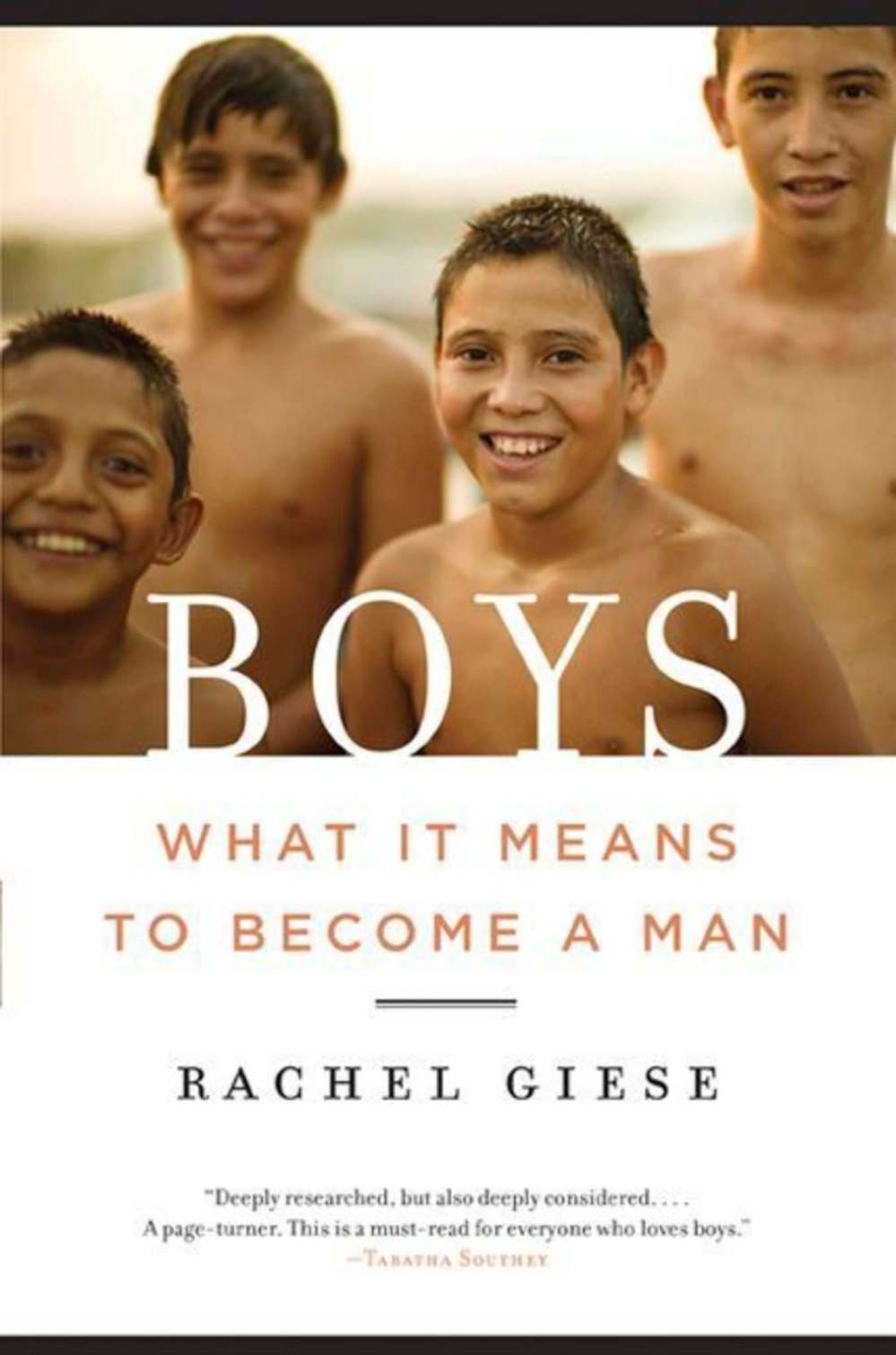
In her vital new book, Boys: What It Means To Become a Man, Rachel Giese, a Toronto-based writer and editor-at-large for Chatelaine, asks an all-important but frequently ignored question when it comes to addressing the very real struggles and challenges facing boys today: “What if the crisis isn’t about boys, but rather, masculinity?”
In eight tightly focused chapters, Giese examines the ways in which masculinity has been shaped by society and culture, how traditional expectations of masculinity can limit and harm our boys and men, and how we can raise boys who grow up into men who don’t feel like they need to be aggressive, domineering, stoic, competitive and tough to be considered men.
Boys is rigorously researched, to be sure; there are no fewer than 40 pages of notes and bibliography. She conducted interviews with educators, advocates, psychologists and sociologists and, perhaps most critically, parents and young men themselves.
But Giese does not take a journalistic “view from nowhere” stance on this issue; she and her wife are mothers to an Anishinaabe son who is navigating his middle-school years. She balances reportage with her lived experience to write a book that’s as compassionate and moving as it is eye-opening.
And Giese’s insights are frequently assumption-shattering. For one, her assertion that gender stereotypes, as they affect boys and men, haven’t been teased apart and challenged the same way they have been for girls and women is absolutely bang on — and yet that’s not a perspective we see often enough.
There is no shortage, for example, of writing about how the lack of complex female leads in TV shows and movies harms girls. But, as Giese points out, despite the fact that popular culture is often geared towards white boys, lack of representation also harms them in big ways.
“White boys are rarely expected to stretch themselves to see the world from a perspective unlike their own, and to root for someone who isn’t like them,” Giese writes. And that’s a big deal, when you consider what’s lost: “an opportunity to develop their capacity for empathy, humility and imagination.”
Elsewhere, she also illustrates how the idea of “boy” being somehow the opposite of “girl” harms everyone — in the classroom and on the field. “If boys and girls are defined as opposites, then what happens when girls are good in school? Does that mean boys aren’t, or shouldn’t be?” And when girls and boys don’t play and compete together in sports, “boys don’t learn to see girls as teammates and competitors.”
In a chapter entitled Dropping the Masculinity Mask: How To Talk To Boys About Sex — which could be its own book, honestly — Giese delves into the ways in which sex education is failing boys in a big way.
The past few years have brought with it a litany of high-profile and horrific cases of sexual assault involving teenagers. “It’s daunting to raise a boy while hearing endless reports of the violence young men are capable of,” Giese writes.
It’s become an adage that we, as a society, must “teach boys not to rape” instead of always putting the onus on girls to protect themselves. How we actually do that involves addressing a giant gap in sexual education.

“Sex educators report that heterosexual young men are the demographic most ignored when it comes to sexual health,” Giese writes. That means boys and men are less likely to seek sexual health care or report abuse — and it also means that they’ve internalized a lot of harmful ideas about what male sexuality looks like.
But Giese doesn’t just unpack the challenges facing boys — she also points to solutions. In one section, Giese profiles WiseGuyz, a pioneering sex-ed program for boys in Calgary that has been game-changing for the guys who have gone through it.

With Boys, Giese beautifully illustrates why feminism — which advocates for the equality of the sexes — is for everyone. Boys and girls are not opposites, and gender equality is what will, ultimately, set us all free.
It’s as Giese writes: “We cannot move forward without each other.”
Jen Zoratti is a Winnipeg Free Press columnist.
Jen Zoratti is a columnist and feature writer working in the Arts & Life department, as well as the author of the weekly newsletter NEXT. A National Newspaper Award finalist for arts and entertainment writing, Jen is a graduate of the Creative Communications program at RRC Polytech and was a music writer before joining the Free Press in 2013. Read more about Jen.
Every piece of reporting Jen produces is reviewed by an editing team before it is posted online or published in print – part of the Free Press‘s tradition, since 1872, of producing reliable independent journalism. Read more about Free Press’s history and mandate, and learn how our newsroom operates.
Our newsroom depends on a growing audience of readers to power our journalism. If you are not a paid reader, please consider becoming a subscriber.
Our newsroom depends on its audience of readers to power our journalism. Thank you for your support.
Boys: What It Means To Become A Man
By Rachel Giese
HarperCollins, 272 pages, $33
Jen Zoratti is a columnist and feature writer working in the Arts & Life department, as well as the author of the weekly newsletter NEXT. A National Newspaper Award finalist for arts and entertainment writing, Jen is a graduate of the Creative Communications program at RRC Polytech and was a music writer before joining the Free Press in 2013. Read more about Jen.
Every piece of reporting Jen produces is reviewed by an editing team before it is posted online or published in print – part of the Free Press‘s tradition, since 1872, of producing reliable independent journalism. Read more about Free Press’s history and mandate, and learn how our newsroom operates.
Our newsroom depends on a growing audience of readers to power our journalism. If you are not a paid reader, please consider becoming a subscriber.
Our newsroom depends on its audience of readers to power our journalism. Thank you for your support.
Advertisement Advertise With Us
Advertisement Advertise With Us