Exiled journalist details three decades of unrest in Iran
Advertisement
Read this article for free:
or
Already have an account? Log in here »
To continue reading, please subscribe:

Digital Subscription
One year of digital access for only $205*
- Enjoy unlimited reading on winnipegfreepress.com
- Read the E-Edition, our digital replica newspaper
- Access News Break, our award-winning app
- Play interactive puzzles
*First annual payment billed as $205.00 + GST for one year. This annual subscription will automatically renew at $233.00 + GST every 52 weeks (10% off the regular annual price of $259.35). Offer available to new and qualified returning subscribers only. Cancel any time.
To continue reading, please subscribe:
Add Free Press access to your Brandon Sun subscription for only an additional
$1 for the first 4 weeks*
- Enjoy unlimited reading on winnipegfreepress.com
- Read the E-Edition, our digital replica newspaper
- Access News Break, our award-winning app
- Play interactive puzzles
*Your next Brandon Sun subscription payment will increase by $1.00 and you will be charged $17.95 plus GST for four weeks. After four weeks, your payment will increase to $24.95 plus GST every four weeks.
Read unlimited articles for free today:
or
Already have an account? Log in here »
Hey there, time traveller!
This article was published 17/01/2015 (4248 days ago), so information in it may no longer be current.
“What’s your name?” asks journalist Nazila Fathi.
“We all have the same name,” replies the young female protester, “Iran.”
The year is 2009, and the streets of Tehran and cities across the country spill over with Iranians outraged by the obvious fraud in the election that has returned incumbent president Mahmoud Ahmadinejad to power. Their demand for a genuine democratic voice is the same demand Iranians have been making for generations.

Students of Iranian history and armchair historians alike will be satisfied with Iranian-born New York Times reporter Nazila Fathi’s in-depth account of three extraordinary decades.
Drawing on news reports, YouTube videos, historical and academic sources, interviews, and her own detailed memories, Fathi pairs her personal story with the story of modern Iran, beginning with the overthrow of the shah in 1979, then as a young adult during the chaotic establishment of the new Islamic Republic of Iran, and finally as a reporter for the New York Times, forced to flee Iran in the events leading up to the Green Movement in 2009.
In a skilful balance of personal history and academic research, Fathi brings to life the complex social, economic and political upheaval of the transition from the shah of Iran’s western-oriented, oil-drunk secular society, to the Ayatollah Khomeini’s vision of a cloistered Shiite Islamic republic.
Fathi was eight in 1979 when a “teary-eyed shah” boarded a plane for Egypt, a plane he piloted himself, never to return. Fathi effectively contrasts her middle-class family’s suspicious reaction to Khomeini’s return from exile that year with that of their poor, uneducated housekeeper’s excited reverence. It is both prophetic and fatal that families like Fathi’s saw Khomeini’s promises as “outlandish,” while the poor and uneducated, like the housekeeper, believed Khomeini was “the savior of the poor.”
Fathi has had remarkable access to significant and diverse Iranian voices: scholars such as writer and philosopher Abdolkarim Soroush; insiders such as the Ayatollah Khomeini’s right-hand man Ali-Akbar Mohtashamipour; and activists such as feminist Nobel Peace Prize recipient Shirin Ebadi are all heard and considered here.
The result is a detailed, vivid chronicle of three decades of oppression, complex power struggle and, as Fathi makes clear, a people who will not be silenced.
The effect of the revolution and its aftermath on her fellow Iranians is Fathi’s primary focus. Fathi underscores an essential paradox of Iranian society by lining up stomach-wrenching details of the new Islamic Republic’s campaign to cleanse the mofsed-fel-arz (“corrupt on earth”), via torture and terror, alongside the domestic lives of average citizens quietly enjoying black-market VHS episodes of Baywatch.
For Westerners, perceptions of Iranian society may always be prejudiced by the iconic television images of the 444-day American hostage crisis, and Hollywood’s version of it: Argo. The jeering, cheering crowds astonished us: who are these people and why do they hate us? Yet Fathi allots it a mere two lines of attention.
Another crisis — a war with Iraq and Saddam Hussein — absorbed the attention of most Iranians.

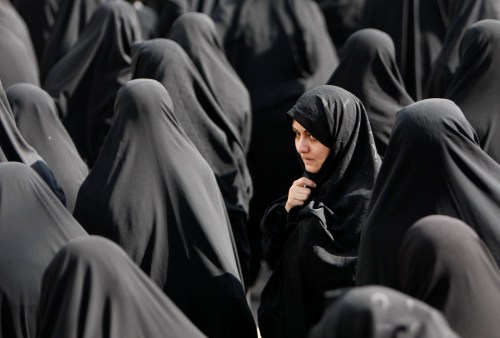
Fathi’s analysis of the politicization and abuse of women through their clothing makes this book essential reading. Fathi was just 10 years old when obligatory veiling was passed into law. Forced into the black, head-to-toe chador that simultaneously symbolizes both tradition and revolution, her bitterness is palpable.
In the end, her work as a journalist for the New York Times makes her an enemy of her own government. In a dramatic conclusion, Fathi is warned that her “photo has been given to snipers.” She escapes to Canada with her husband and children.
The Lonely War makes an important, highly enjoyable contribution to the understanding of modern Iran.
Charlotte Duggan is a teacher librarian in Winnipeg.
History
Updated on Saturday, January 17, 2015 8:15 AM CST: Formatting.