Vietnam War architect’sson mulls father’s legacy

Advertisement

Advertise with us

The opening lines of this memoir are a brutal indictment of the author Craig McNamara’s father, both as a parent and a political leader.

Read this article for free:


or

Already have an account? Log in here »

To continue reading, please subscribe:

Subscribe and receive a limited-edition Free Press branded hat or tote.

Digital Subscription

One year of digital access for only $205*

  • Enjoy unlimited reading on winnipegfreepress.com
  • Read the E-Edition, our digital replica newspaper
  • Access News Break, our award-winning app
  • Play interactive puzzles

*First annual payment billed as $205.00 + GST for one year. This annual subscription will automatically renew at $233.00 + GST every 52 weeks (10% off the regular annual price of $259.35). Offer available to new and qualified returning subscribers only. Cancel any time.

To continue reading, please subscribe:

Add Free Press access to your Brandon Sun subscription for only an additional

$1 for the first 4 weeks*

  • Enjoy unlimited reading on winnipegfreepress.com
  • Read the E-Edition, our digital replica newspaper
  • Access News Break, our award-winning app
  • Play interactive puzzles
Start now

*Your next Brandon Sun subscription payment will increase by $1.00 and you will be charged $17.95 plus GST for four weeks. After four weeks, your payment will increase to $24.95 plus GST every four weeks.

Hey there, time traveller!
This article was published 02/07/2022 (1504 days ago), so information in it may no longer be current.

The opening lines of this memoir are a brutal indictment of the author Craig McNamara’s father, both as a parent and a political leader.

“Just tell me the truth. Seems simple enough. Yet for all my life, I struggled to arrive at the truth with my father.

“He never told me the Vietnam War wasn’t winnable. But he did know, and never admitted it to me. More than a decade after his death, I still wonder why he was no more honest with me than he was with the American public.”
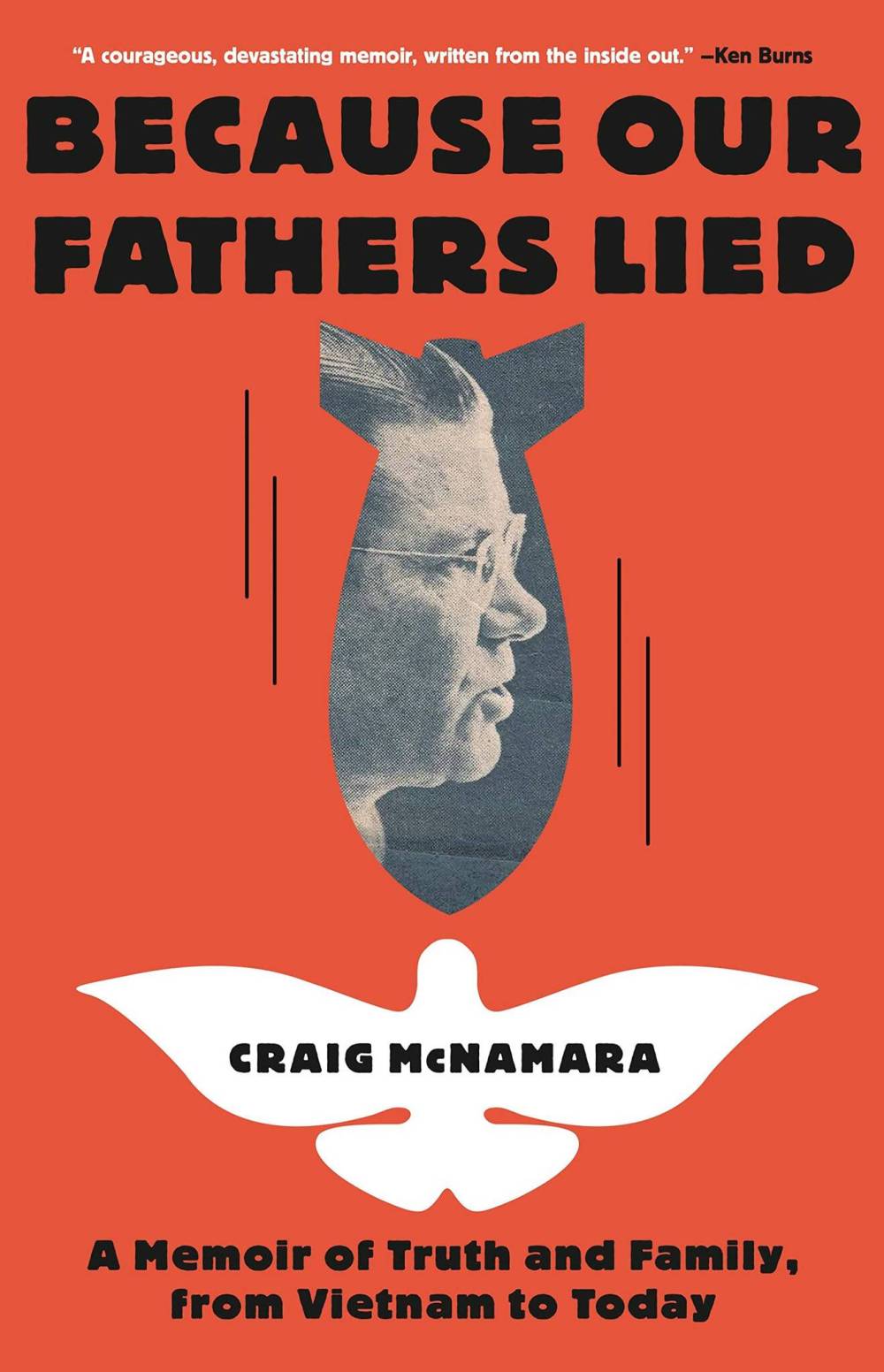
Because Our Fathers Lied

The author’s father was Robert McNamara, former U.S. secretary of defense (1961-68) who served under American presidents John F. Kennedy and Lyndon Johnson, and was the chief architect of the war in South Vietnam.

The U.S. pulled out of Vietnam in 1973. in 1975, Communist North Vietnam defeated the South Vietnamese government and captured its capitol, Saigon (now Ho Chi Minh City).

In the 1990s Robert McNamara admitted that, as early as 1965, he didn’t believe the war was winnable by South Vietnam, even with massive American military involvement. Yet for years thereafter he played a pivotal role in America’s ever escalating military commitments. So much so that it was often dubbed “McNamara’s War.”

Craig McNamara’s memoir follows a nicely rendered traditional narrative — childhood and adolescence through to adulthood, and thereafter to his father’s post-politics career until his death in 2009. But its focus and underpinning is untraditional; it largely revolves around the Vietnam War.

“Craigie,” as his father called him, opposed the war his father led, even as he was leading it. He participated in anti-war demonstrations, traveled Central and South America on a motorcycle to escape the war’s omnipresence in his life, chanted support for Fidel Castro at a rally in Santiago, Chile and befriended Chileans, who subsequently disappeared after Augusto Pinochet led a military coup that overthrew the government of Salvador Allende.

Today, he’s by occupation a California walnut farmer, but his politics still have a leftward tilt.

The book’s title refers to “fathers,” plural. It initially seems an odd choice for a memoir by Robert McNamara’s only son.

But the title becomes more understandable late in the book when McNamara writes about his friendship with Rich Rusk, son of Dean Rusk. Dean Rusk was secretary of state during the Kennedy and Johnson administrations, Robert McNamara’s colleague and also a proponent of the Vietnam War.

Rich Rusk, like Craig McNamara, had become estranged from his father due to his opposition to the war. Rusk was one of the principals of a tour group, composed mainly of Vietnam War vets, scheduled to visit Vietnam “on a mission of peace” in 2018. He’d consulted Craig McNamara about the trip, in light of their historical “common bond in opposing the war.”

Rusk never made that “dedicated to healing wounds” trip to Vietnam. “On January 28, 2018,” writes McNamara, “just weeks before he was scheduled to travel to Vietnam, Rich committed suicide by jumping off a bridge.”

The Vietnam War constituted both a political and personal gulf between father and son — a gulf never bridged.

The result is memoir as paradox: a loving portrait of a father who engineered a dysfunctional relationship with his son that at times bordered on emotional abuse.

Yet, Craig McNamara loved his dad. And that shines through in these pages.

Douglas J. Johnston is a Winnipeg lawyer and writer.

Report Error Submit a Tip

More Stories

Making the right move on rail lines

Editorial 4 minute read Preview

Making the right move on rail lines

Editorial 4 minute read 2:01 AM CDT

It’s a familiar sound in Winnipeg.

(No, not sirens, which are now almost a constant.)

It’s the 3 a.m. distant and lonesome train horn, the sound of a train crew working through the night hours, the horn giving its warning at level crossings. Some Winnipeggers hear far more: when the night is still enough, they can hear the rhythmic “tap-tap, tap-tap” of rail wheels on the tracks as long trains thread through the city.

Sounds romantic, in its own way. Unless, of course, the romance is close enough to your bedroom window to wake you up.

Read
2:01 AM CDT

PCs say Hutterite colonies singled out by Bill 21

Alex Lambert 4 minute read Preview

PCs say Hutterite colonies singled out by Bill 21

Alex Lambert 4 minute read 2:01 AM CDT

SOURIS — Members of Hutterite colonies in the province took aim at the NDP government’s proposed changes to drinking water legislation during a public meeting Thursday in Souris.

The meeting was hosted by Progressive Conservative MLA Colleen Robbins (Spruce Woods) to hear from rural residents about their concerns over Bill 21, which the government says will improve oversight on wells and other water systems in the province.

“There’s not enough clarity, but I feel that the overreach that this bill will bring is not clearly defined, and it could have a lot of negative consequences,” attendee Gilbert Hofer, a member of Green Acres colony near Wawanesa, said after the meeting, which drew about 20 people.

The legislation would allow public health officers to designate the type of water source based on its intended use, water quality and use duration rather than solely the number of connections it has.

Read
2:01 AM CDT

‘Disrespectful’: residents frustrated after Wyatt arrives hour late to committee meeting

Joyanne Pursaga 3 minute read Preview

‘Disrespectful’: residents frustrated after Wyatt arrives hour late to committee meeting

Joyanne Pursaga 3 minute read Yesterday at 4:37 PM CDT

Several Winnipeggers attending a city development hearing on Thursday expressed frustration that one councillor arrived about an hour late, delaying the matter from being heard.

Coun. Russ Wyatt, who continues to attend city hall while facing criminal charges, began participating in the 9:30 a.m. East Kildonan-Transcona community committee meeting at 10:35 a.m.

A resident who hoped to speak at the meeting about a development plan in south Transcona noted the tardiness led the committee to bump the topic down on its agenda, while dozens waited to speak on it.

Christina Pyra eventually opted to leave city hall instead of waiting for her turn to make a presentation, to avoid missing a work commitment.

Read
Yesterday at 4:37 PM CDT

Inman launching new album at WECC

Ben Waldman 5 minute read Preview

Inman launching new album at WECC

Ben Waldman 5 minute read 2:01 AM CDT

Give Richard Inman a moment and a surface, and he’ll cover it with a story.

“I’ve scribbled down lyrics on paper plates, McDonald’s bags — whatever you got,” says Inman, who grew up in southern Manitoba but now lives in a three-bedroom ranch house near Twin Butte, Alta., so close to the American border that he says he can spit into Montana from his backyard.

“The other day I had a line in my head for seven hours before I wrote it down,” says the songwriter, who managed to remember the phrasing after driving home from a music festival in Idaho. “That certainly was lucky.”

Though Inman, 35, first starting sharing his Americana concoctions with crowds at Winnipeg’s Times Change(d) High & Lonesome Club in the late 2000s, learning how to play his compositions with his band, the Mad Trappers, he has spent the bulk of the past decade out west, splitting time between the stage and the sale barn.

Read
2:01 AM CDT

It’s one thing to climb aboard rail-relocation train, quite another to pay for the ride

Dan Lett 5 minute read Preview

It’s one thing to climb aboard rail-relocation train, quite another to pay for the ride

Dan Lett 5 minute read Wednesday, Aug. 12, 2026

Anyone who wants a brighter, safer, healthier future for the city of Winnipeg should really want the renewed hopes of rail relocation to finally become reality. And the sooner, the better.

Premier Wab Kinew announced Wednesday the province was going to forge a plan to relocate the Canadian Pacific Kansas City central yards and many of other the lines that run through Winnipeg to a bypass that runs around the city.

This “plan to design a plan” strategy was devised by a task force headed up by former federal MP and cabinet minister Lloyd Axworthy, who in 2024 was given a two-year mandate to find the best way to rid the city of some or all of its rail infrastructure.

For the record, Kinew and Axworthy said a relocation would likely take 20 years to complete, which makes this week’s announcement an important statement of intent, but little more. The sobering reality is that this promising idea has been proposed by political leaders, and then abandoned, for decades.

Read
Wednesday, Aug. 12, 2026

Vietnam War architect’sson mulls father’s legacy

Reviewed by Douglas J. Johnston 4 minute read Preview

Vietnam War architect’sson mulls father’s legacy

Reviewed by Douglas J. Johnston 4 minute read Saturday, Jul. 2, 2022

The opening lines of this memoir are a brutal indictment of the author Craig McNamara’s father, both as a parent and a political leader.

“Just tell me the truth. Seems simple enough. Yet for all my life, I struggled to arrive at the truth with my father.

“He never told me the Vietnam War wasn’t winnable. But he did know, and never admitted it to me. More than a decade after his death, I still wonder why he was no more honest with me than he was with the American public.”

The author’s father was Robert McNamara, former U.S. secretary of defense (1961-68) who served under American presidents John F. Kennedy and Lyndon Johnson, and was the chief architect of the war in South Vietnam.

Read
Saturday, Jul. 2, 2022