WEATHER ALERT

Warrior mentality

Thomas-Müller chronicles turmoil and triumphs in brave new memoir

Advertisement

Advertise with us

According to Free Press columnist Niigaan Sinclair, there is a stark difference between settler and First Nation understandings of what it means to be a warrior. For white settlers, we tend to associate the notion with power, violence and fame; for the Anishinaabe, specifically, warrior is associated with terms like honour, protection, love, gift and heart.

Read this article for free:

or

Already have an account? Log in here »

To continue reading, please subscribe:

Subscribe and receive a limited-edition Free Press branded hat or tote.

Digital Subscription

One year of digital access for only $205*

  • Enjoy unlimited reading on winnipegfreepress.com
  • Read the E-Edition, our digital replica newspaper
  • Access News Break, our award-winning app
  • Play interactive puzzles

*First annual payment billed as $205.00 + GST for one year. This annual subscription will automatically renew at $233.00 + GST every 52 weeks (10% off the regular annual price of $259.35). Offer available to new and qualified returning subscribers only. Cancel any time.

To continue reading, please subscribe:

Add Free Press access to your Brandon Sun subscription for only an additional

$1 for the first 4 weeks*

  • Enjoy unlimited reading on winnipegfreepress.com
  • Read the E-Edition, our digital replica newspaper
  • Access News Break, our award-winning app
  • Play interactive puzzles
Start now

*Your next Brandon Sun subscription payment will increase by $1.00 and you will be charged $17.95 plus GST for four weeks. After four weeks, your payment will increase to $24.95 plus GST every four weeks.

Hey there, time traveller!
This article was published 16/10/2021 (1729 days ago), so information in it may no longer be current.

According to Free Press columnist Niigaan Sinclair, there is a stark difference between settler and First Nation understandings of what it means to be a warrior. For white settlers, we tend to associate the notion with power, violence and fame; for the Anishinaabe, specifically, warrior is associated with terms like honour, protection, love, gift and heart.

Hearing and seeing Clayton Thomas-Müller for the first time in 2015, I was astounded by his courage, audacity and intellect. At a rally in Winnipeg, he took then-NDP leader Tom Mulcair to task, pulling the rug out from under his inability to take a stand on climate change. Mulcair was on the verge of potentially winning the first ever federal election for the NDP, but at the packed rally, Thomas-Müller stopped him in his tracks, revealing the leader’s superficiality and lack of social democratic roots. Mulcair was unable to articulate in any real way a plan for ensuring environmental justice for Canadians.

Standing up for Indigenous rights, the biosphere and justice has been the heart of Thomas-Müller’s work for decades. In his latest memoir, Life in the City of Dirty Water, he painfully and bravely reveals his journey through catastrophic pain, unbelievable odds and a reconnection to land, language and culture through his work defending Mother Earth.
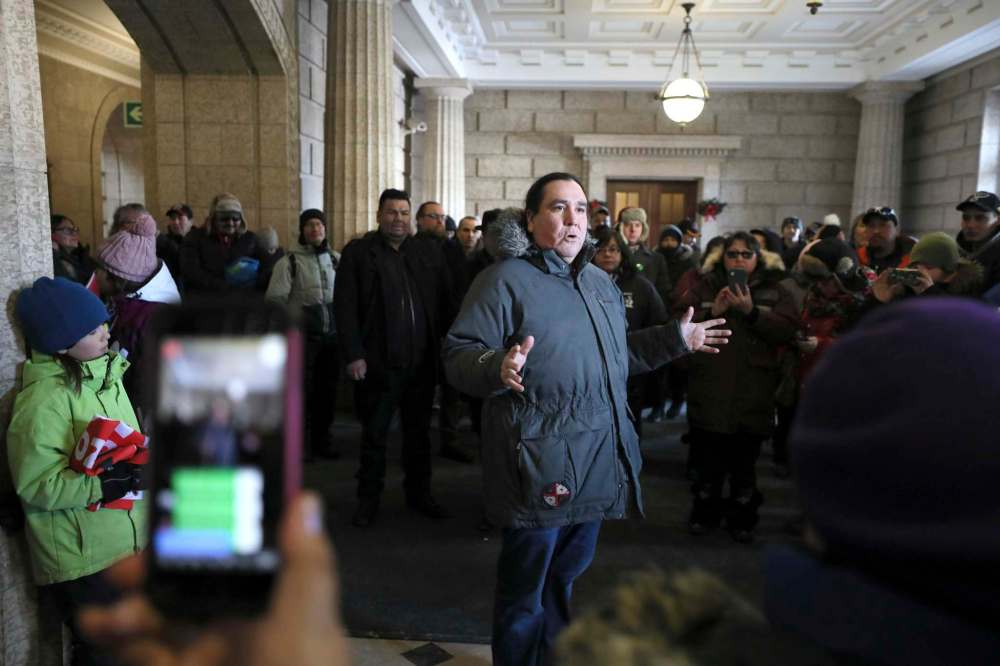
RUTH BONNEVILLE / WINNIPEG FREE PRESS files
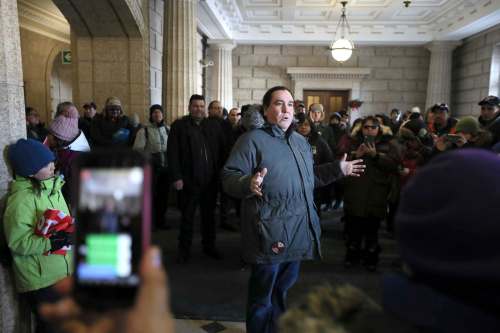
In this 2019 photo, Clayton Thomas-Müller talks to the media inside the Legislative Building. Standing up for Indigenous rights, the biosphere and justice has been at the heart of Thomas-Müller’s work for decades.
RUTH BONNEVILLE / WINNIPEG FREE PRESS files In this 2019 photo, Clayton Thomas-Müller talks to the media inside the Legislative Building. Standing up for Indigenous rights, the biosphere and justice has been at the heart of Thomas-Müller’s work for decades.

Written in almost two parts — one consisting of childhood recollections, written in the voice of a child, and the other as he begins to engage in resistance to colonial and neoliberal forces — the memoir begins with his account of how his family was systematically ripped from the land. (Thomas-Müller grew up a member of the Treaty #6 based Mathias Colomb Cree Nation, also known as Pukatawagan, located in Northern Manitoba, and now lives in Winnipeg.)

Every step of his journey seemed to be coated with a certain degree of violence, isolation and anger. The genocidal policies of the Canadian state fundamentally changed his life forever and, as Thomas-Müller states, “My culture was slipping through my fingers.”

But after bouncing from home to home, prairie city to prairie city, and escaping a life within the Manitoba Warriors, Thomas-Müller begins connecting with various social justice organizations, including the Aboriginal Council of Winnipeg, where he begins to learn to be an activist and an organizer, is mentored by elders and where his eyes begin to open up to a larger world. For Thomas-Müller, “You can’t be an Indian and not be political.”

And so following his escape from the streets of Winnipeg and youth correction centers, Thomas-Müller begins to work for Indigenous and youth organizations throughout Turtle Island and beyond, learning to support community action while fiercely engaging with the hegemonic and corporate forces which collude to govern and extract jointly. Not deterred by the constant struggle of being outgunned, Thomas-Müller develops a keen and focused path: “…a warrior is defined by the struggle… It is his purpose.”

As he recounts his entry into his life as a land and water defender, Thomas-Müller connects more and more with the land, his Cree culture and his own healing. His honesty about his mistakes and the pain he has caused others is a beautiful cautionary tale for all of us — that life is not a binary transition from bad to good, or vice versa. The human condition is complex, in a state of flux.

Throughout the memoir Thomas-Müller admits to and confronts his rage: “I was angry. I was hard.” His anger manifested itself from a tough childhood marshalled from a loss of connection with his land, language and people coupled with generations of trauma.

And the anger was, and is, inevitable. “I saw violence and broken lives when I looked around downtown Winnipeg,” Thomas-Müller writes. “I saw communities systemamtically robbed all over Turtle Island. I saw the land itself raped and plundered. Who wouldn’t be angry?”

But as he grew and has grown, elders, his partner and now his two sons have helped focus his tremendous work with 350.org and communities all over the world. As he explains, “anger is not enough if what you want is justice.”
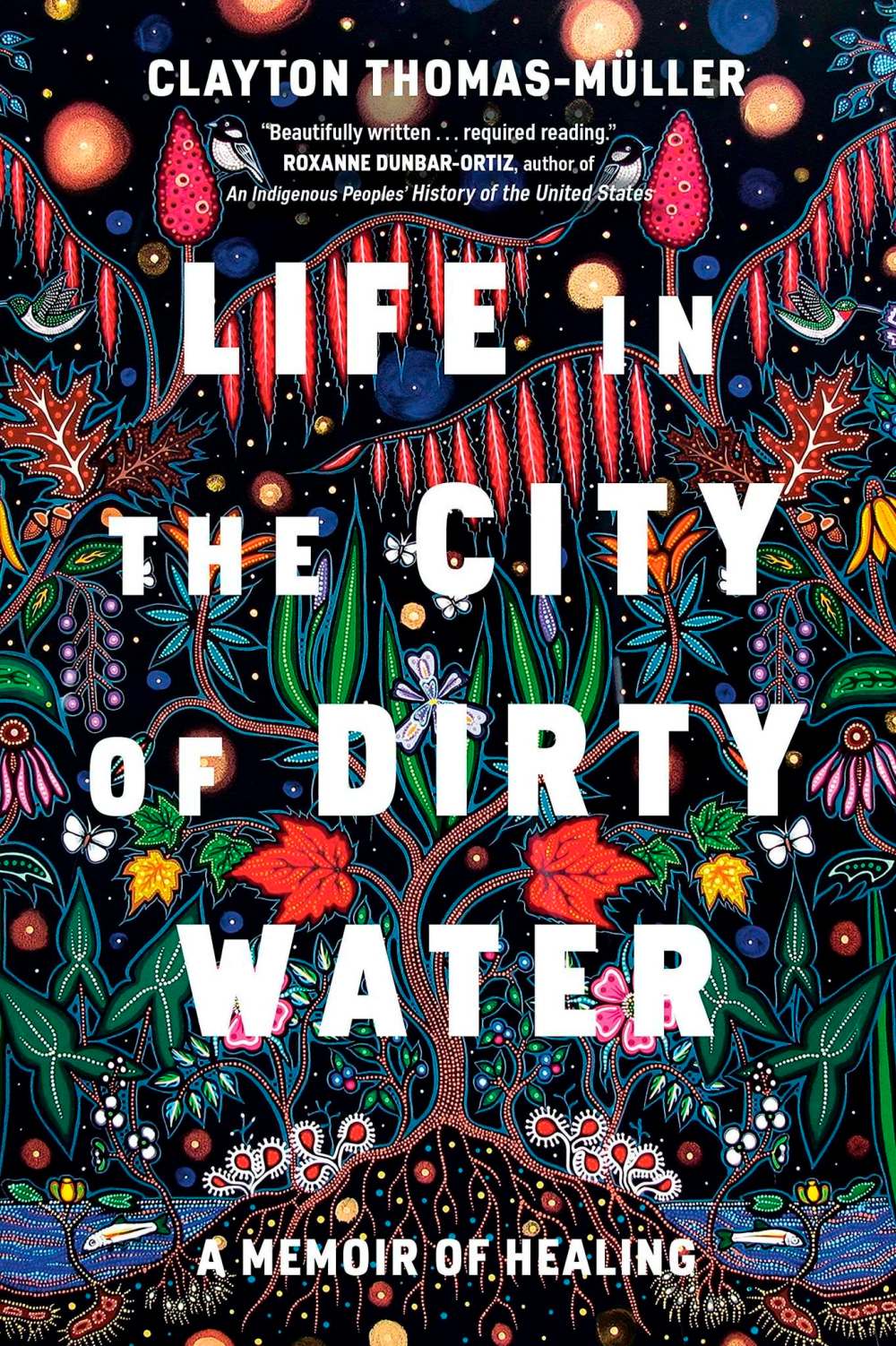
His memoir is an artefact of transformation — a transformation of a hardened youth who endured more tragedy and danger than most of us can imagine into a defender of people, land and the notion that all species and systems are connected.

For Thomas-Müller, this transformation is still ongoing, one in which, he writes, “I convert my anger into love.”

And it is this love that situates him back on the land, back dancing and connecting back to what it means to be Cree. Despite the anger, violence and isolation, Thomas-Müller continues to embody what it means to be a warrior: “Warriors are not defined by fighting. They are defined by fighting for.”

Matt Henderson is assistant superintendent of Seven Oaks School Division.
Report Error Submit a Tip

More Stories

Fort Garry Hotel on Métis federation’s radar

Scott Billeck 4 minute read Preview

Fort Garry Hotel on Métis federation’s radar

Scott Billeck 4 minute read Updated: Yesterday at 3:51 PM CDT

One of Winnipeg’s most iconic buildings, the Fort Garry Hotel on Broadway, is next on the Manitoba Métis Federation’s list of acquisitions.

“We are not done with our commitment to investing in Winnipeg’s downtown,” president David Chartrand said Friday, the same day the federation announced it has purchased the former National Research Council property on Ellice Avenue downtown.

“One potential new acquisition we’re considering, if the price is right and the partnership is positive, is the Fort Garry Hotel. It is an iconic part of Winnipeg’s history and its future, just like the Red River Métis,” Chartrand said.

The 113-year-old hotel was co-listed for sale in May by real estate brokerage firms Avison Young and Cushman & Wakefield Winnipeg, but doesn’t have a list price.

Read
Updated: Yesterday at 3:51 PM CDT

Province has ‘serious concerns’ with Winnipeg personal care home

Tyler Searle 5 minute read Preview

Province has ‘serious concerns’ with Winnipeg personal care home

Tyler Searle 5 minute read Yesterday at 5:51 PM CDT

The Manitoba government has placed licensing conditions on a Winnipeg personal care home after an inspection uncovered “serious concerns” related to the safety of senior residents.

Health Minister Uzoma Asagwara confirmed the province issued the order against the Extendicare Heritage Lodge — an 86-bed nursing home at 3555 Portage Ave. — effective June 9.

“This is an important oversight tool, and it is not used lightly. Conditions are imposed when there are serious concerns that require enhanced oversight and clear, corrective action,” Asagwara said in a statement.

“Our expectation is simple: Extendicare must meet the standards Manitoba seniors and families deserve. We will continue working with the (Winnipeg Regional Health Authority) to monitor this facility closely and ensure the required improvements are made.”

Read
Yesterday at 5:51 PM CDT

Burger-slinger brings Minnedosa its own version of a sloppy classic

David Sanderson 8 minute read Preview

Burger-slinger brings Minnedosa its own version of a sloppy classic

David Sanderson 8 minute read Yesterday at 2:23 PM CDT

MINNEDOSA — It could have been his chili-smothered secret.

One of the first things Zac Easton did four years ago after he and his wife Cass became the latest set of owners of the Dari Isle Drive-In, a seasonal, 70-seat restaurant that has operated in Minnedosa since 1965, was introduce a fatboy hamburger to the menu.

The 31-year-old grew up in Westwood. As an homage to the burger haunts of his youth — iconic spots such as the Burger Place, Nick’s Inn and the Dairi-Wip Drive-in — he was excited to show off his version of the Greek-style favourite at their new premises.

The interesting thing was, many of the people from the southwestern Manitoba town didn’t have a clue what a fatboy was, and those who ordered it that first summer assumed it was the Eastons’ own creation.

Read
Yesterday at 2:23 PM CDT

Police can’t arrest away city drug crisis

Tom Brodbeck 5 minute read 2:02 AM CDT

Winnipeggers have debated how to respond to the city’s worsening drug crisis for years.

There has never been much disagreement that open drug use, trafficking and disorder in public spaces are serious problems. The disagreement has been about how to respond without making a deadly crisis even worse.

The Winnipeg Police Service’s recent 10-day crackdown on open drug use has made one thing abundantly clear: while enforcing the law is entirely appropriate, the operation appears to have been poorly planned and insufficiently co-ordinated with the people who understand the crisis best.

Police have every right — and indeed an obligation — to enforce laws on drug trafficking and other criminal activity. Nobody should expect officers to simply ignore illegal behaviour on city streets.

Indigenous theatre founder gets nod for prestigious prize

Ben Waldman 3 minute read Preview

Indigenous theatre founder gets nod for prestigious prize

Ben Waldman 3 minute read 2:02 AM CDT

For her work as the founding artistic director of Oshkagoojin Indigenous Theatre for Youth, Winnipeg’s Nova Courchene has been named the recipient of one of Manitoba theatre’s highest honours for emerging arts leaders.

Since 2023, the Cherry Karpyshin Arts Management Prize has been given out by Prairie Theatre Exchange to early-career or aspiring arts managers. Named for PTE’s longtime general manager, for whom the company’s mainstage is also named, the Cherry Prize is accompanied by professional supports and a $2,500 cash award.

Meaning “new moon” in Anishinaabemowin, Oshkagoojin runs a variety of initiatives in Winnipeg, including the teen-focused Rising Voices, the middle years Growing Voices, and the early years Young Voices programs. Through storytelling, movement, narrative games and guided play, the Young Voices program introduces Indigenous children aged five through nine to the fundamentals of collaborative and co-operative theatre with a curriculum devised through a cultural lens.

“As I continue to grow Oshkagoojin Indigenous Theatre for Youth, I look forward to strengthening the organization’s capacity, sustainability, and national reach so that more Indigenous young people can access theatre, cultural learning, and artistic leadership opportunities in their own communities,” says Courchene in a release. “I believe that when Indigenous youth are empowered to tell their stories, entire communities benefit, and I am excited to continue building these pathways for future generations.

Read
2:02 AM CDT

Carney’s pick for Manitoba senator called a curious choice

Carol Sanders 5 minute read Preview

Carney’s pick for Manitoba senator called a curious choice

Carol Sanders 5 minute read Thursday, Jul. 9, 2026

Manitoba’s newest representative in the Senate only moved to the province in 2019.

Unlike former Manitoba Senate candidates, Geeta Tucker hasn’t known this province for very long — and that’s raised the eyebrows of some experienced politicians and academics.

Retired Manitoba senator Don Plett said he hadn’t heard of Tucker until this week. The Conservative said he has nothing against her personally, but he questioned whether she knows Manitoba well enough to represent its interests in the chamber of sober second thought.

“I think it is imperative that you have strong roots to the region you’re representing,” Plett said Wednesday.

Read
Thursday, Jul. 9, 2026