Media faces challenges in covering coronavirus outbreak
Advertisement
Read this article for free:
or
Already have an account? Log in here »
To continue reading, please subscribe:

Digital Subscription
One year of digital access for only $205*
- Enjoy unlimited reading on winnipegfreepress.com
- Read the E-Edition, our digital replica newspaper
- Access News Break, our award-winning app
- Play interactive puzzles
*First annual payment billed as $205.00 + GST for one year. This annual subscription will automatically renew at $233.00 + GST every 52 weeks (10% off the regular annual price of $259.35). Offer available to new and qualified returning subscribers only. Cancel any time.
To continue reading, please subscribe:
Add Free Press access to your Brandon Sun subscription for only an additional
$1 for the first 4 weeks*
- Enjoy unlimited reading on winnipegfreepress.com
- Read the E-Edition, our digital replica newspaper
- Access News Break, our award-winning app
- Play interactive puzzles
*Your next Brandon Sun subscription payment will increase by $1.00 and you will be charged $17.95 plus GST for four weeks. After four weeks, your payment will increase to $24.95 plus GST every four weeks.
Read unlimited articles for free today:
or
Already have an account? Log in here »
Hey there, time traveller!
This article was published 02/03/2020 (2407 days ago), so information in it may no longer be current.
NEW YORK – Covering the coronavirus story requires careful navigation and constant attention.
News organizations trying to responsibly report on the growing health crisis are confronted with the task of conveying its seriousness without provoking panic, keeping up with a torrent of information while much remains a mystery and continually advising readers and viewers how to stay safe.
“It’s a 24-hour-a-day, seven-day-a-week, around-the-world story,” said Michael Slackman, assistant managing editor, international at The New York Times.
The Times maintains a live news blog about the coronavirus that is refreshed 24 hours a day, with editors in New York, London and Hong Kong dividing responsibility. The Slack channel set up by Associated Press journalists to discuss coverage among themselves and contribute to the story has more than 400 members. Starting Monday, NBC News is turning its morning newsletter solely into a vehicle for talking about the disease.
The coronavirus has sickened thousands, quarantined millions and sent financial markets reeling — all while some cultural critics say the story is overblown.
“It’s hard to tell people to put something into context and to calm down when the actions being taken in many cases are very strong or unprecedented,” said Glen Nowak, director of the Grady College Center for Health and Risk Communication at the University of Georgia.
But that’s what journalists in charge of coverage say they need to do.
“We have been providing a lot of explainers, Q-and-A’s, trying to lay out in clear, simple language what the symptoms are and what the disease means for people,” said Jon Fahey, health and science editor at the AP.
Fear is a natural response when people read about millions of people locked down in China, he said. Yet it’s also true that, right now, the individual risk to people is very small.
Late last week, the Times’ Vivian Wang tried to illustrate some of the complexities in writing about a disease that has struck more than 80,000 people, with a death toll approaching 3,000. Most people have mild symptoms — good fortune that paradoxically can make the disease harder to contain because many won’t realize they have the coronavirus, she noted.
“I keep reminding the viewers that still, based on two very large studies, the vast majority of people who get this infection are not going to get sick,” said Dr. Sanjay Gupta, CNN’s medical correspondent. “They’re going to have a mild illness, if any, and they’re going to recover. This tends to be very reassuring to people. But I don’t want to minimize this. We’re dealing with something that is growing and becoming a legitimate pandemic.”
“Pandemic” — defined by Webster’s as an outbreak that occurs over a wide geographic area and affects an exceptionally high proportion of the population — is one of the scary-sounding words and phrases that some journalists take care about using.
Fahey said the AP avoids calling it a “deadly” disease because, for most people, it isn’t. Dr. John Torres, medical correspondent at NBC News, edits out phrases like “horrific” or “catastrophic.”
“I try not to delve too much in adjectives,” Torres said.
Nearly every day brings word of more cases, in more countries. That’s news. Yet should journalists consider the cumulative impact of a statistical drumbeat? “At some point the numbers become less meaningful,” Gupta said.
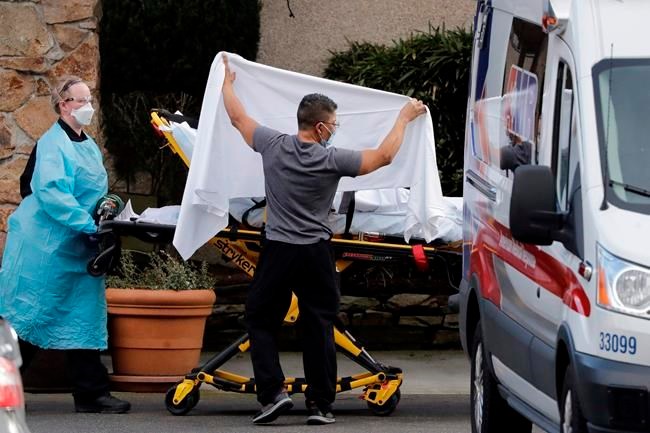
Images, too, merit careful consideration. Pictures of people wearing face masks often illustrate stories, despite evidence that the masks matter little in transmission of the virus, Nowak said.
Sensational headlines can grab attention yet also unnecessarily frighten. An Atlantic magazine article last week was headlined “You’re Likely to Get the Coronavirus.”
Sensationalism actually tends to decline in these situations, said Peter Sandman, a consultant and expert in risk communication.
“Reporters love to sensationalize trivia or rare risks — think flesh-eating bacteria — to give their audience a vicarious thrill,” Sandman said. “But when risks get serious and widespread, media coverage gets sober.”
The words and actions of journalists and other public figures send signals of their own.
CNN’s Gupta has talked about people needing to consider “social distancing” if pockets of infection build in the United States. He has revealed on the air that his own house is stocked with supplies in case his family has to remain home for any period of time.
“People could be frightened by that,” Gupta conceded. “It’s not the intent. It’s in the way that you convey these things.”
It was news last week, and also a little scary, when it was revealed that a federal health official had checked on the coronavirus readiness of her child’s school district. Donald G. McNeil, a science reporter at The New York Times, attracted attention for talking about his own preparedness on the newspaper’s podcast, “The Daily.”
“I spend a lot of time thinking about whether I’m being too alarmist or whether I’m not being alarmist enough,” he said.
Besides constantly reminding people about basics of the disease, journalists say it’s important to explain what they don’t know.
“It lets them know that we’re not just ignoring the questions or dismissing them, and it’s an opportunity to show readers how science progresses in real time,” said Laura Helmuth, health and science editor at The Washington Post.
The Post’s Lena H. Sun and Yasmeen Abutaleb wrote last week about the U.S. Department of Health and Human Services sending workers without proper training or protective gear to meet the first Americans who left the coronavirus epicenter of Wuhan, China.
The virus produces a seemingly endless supply of stories that stretch beyond the medical: Wall Street’s tumble, school and business closings, concert cancellations. The makers of Corona beer denied reports that the similarity of its name to the virus was hurting business. Italians are shying away from traditional kisses on the cheek. Churchgoers are nervous about handshake greetings of peace.

Last Thursday, the AP listed 17 coronavirus stories on the digest it sends to subscribers, including pieces from Japan, Italy, Australia, South Korea and China.
The Times takes pride in how it profiled the lives of people stuck in Wuhan, through reporting by Chris Buckley, Amy Qin and Elsie Chen. Such front-line reporting illustrates another need: The paper maintains a hotline with a medical professional to answer questions from reporters concerned about their own health, Slackman said.
As is inevitable in divided times, the coronavirus has become a political issue in the United States, where commentators are weighing in on how President Donald Trump is reacting to the crisis. On Fox News, Donald Trump Jr. said of the Democrats: “For them to try to take a pandemic, and hope it comes here and kills millions of people so they can end Donald Trump’s streak of winning, is a new level of sickness.”
CNN’s Gupta said he tries to be wary of what politicians say about the coronavirus.
“As a medical journalist, I don’t have the luxury of just getting somebody’s opinion about something,” he said.
Related Articles
Federal help coming for local COVID-19 fights: PM
Advertisement Advertise With Us
Advertisement Advertise With Us