‘Riveting’ coverage of Alaska policing wins Pulitzer Prize

Advertisement

Advertise with us

NEW YORK - The Anchorage Daily News and ProPublica won the Pulitzer Prize in public service Monday for illuminating the sparse policing of remote Alaska villages, as a delayed awards ceremony recognized writing, photos and — for the first time — audio reporting on topics ranging from climate change to the legacy of slavery.

Read this article for free:


or

Already have an account? Log in here »

To continue reading, please subscribe:

Subscribe and receive a limited-edition Free Press branded hat or tote.

Digital Subscription

One year of digital access for only $205*

  • Enjoy unlimited reading on winnipegfreepress.com
  • Read the E-Edition, our digital replica newspaper
  • Access News Break, our award-winning app
  • Play interactive puzzles

*First annual payment billed as $205.00 + GST for one year. This annual subscription will automatically renew at $233.00 + GST every 52 weeks (10% off the regular annual price of $259.35). Offer available to new and qualified returning subscribers only. Cancel any time.

To continue reading, please subscribe:

Add Free Press access to your Brandon Sun subscription for only an additional

$1 for the first 4 weeks*

  • Enjoy unlimited reading on winnipegfreepress.com
  • Read the E-Edition, our digital replica newspaper
  • Access News Break, our award-winning app
  • Play interactive puzzles
Start now

*Your next Brandon Sun subscription payment will increase by $1.00 and you will be charged $17.95 plus GST for four weeks. After four weeks, your payment will increase to $24.95 plus GST every four weeks.

Hey there, time traveller!
This article was published 04/05/2020 (2322 days ago), so information in it may no longer be current.

NEW YORK – The Anchorage Daily News and ProPublica won the Pulitzer Prize in public service Monday for illuminating the sparse policing of remote Alaska villages, as a delayed awards ceremony recognized writing, photos and — for the first time — audio reporting on topics ranging from climate change to the legacy of slavery.

The public service winners contacted 600 village, tribal and other local governments and travelled by plane, sled and snowmobile to reveal that a third of rural Alaska communities had no local police protection, among other findings.

The “riveting” series spurred legislative changes and an influx of spending, the judges noted in an announcement postponed several weeks and held online because of the coronavirus pandemic.

An Indian paramilitary soldier stands guard as Kashmiri Muslims offer Friday prayers on a street outside a local mosque during curfew like restrictions in Srinagar, India, Aug. 16, 2019. The image was part of a series of photographs by Associated Press photographers which won the 2020 Pulitzer Prize for Feature Photography. (AP Photo/Mukhtar Khan)

Anchorage Daily News Editor David Hulen said the series “called attention to some really serious problems in Alaska that have needed attention for a long time.”

“There’s more to be done,” and the paper will keep pursuing the issue, he said in a phone interview.

The New York Times won the investigative reporting prize for an expose of predatory lending in the New York City taxi industry and also took the international reporting award for what the judges called “enthralling stories, reported at great risk,” about Russian President Vladimir Putin’s government.

The Times also was awarded the commentary prize for an essay that Nikole Hannah-Jones wrote as part of the paper’s ambitious 1619 Project, which followed the throughlines of slavery in American life to this day.

Times Executive Editor Dean Baquet told the staff — in a virtual meeting — that this year’s prizes were “particularly meaningful because they come as we are managing our lives under great difficulty even as we produce great journalism.”

The Washington Post’s work on global warming was recognized for explanatory reporting. The newspaper tracked nearly 170 years of temperature records to show that 10% of the planet’s surface has already exceeded a rise of 2 degrees Celsius (3.6 Fahrenheit) over pre-industrial times, the threshold world leaders have agreed they’d try not to exceed.
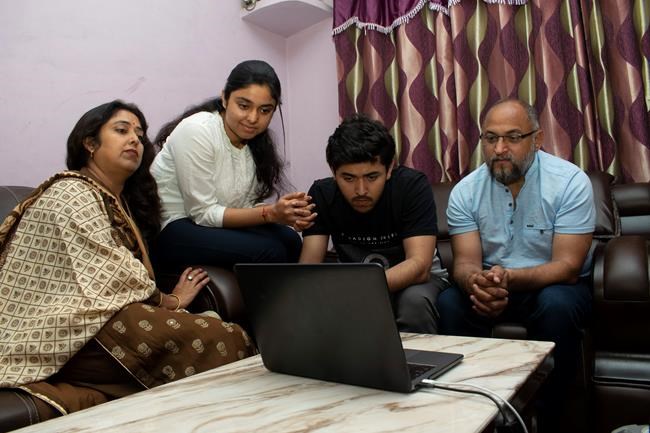
Associated Press photographer Channi Anand watches the announcement of the Pulitzer Prizes via video conferencing from his home in Jammu, India, Tuesday, April 5, 2020. Anand was one of three AP photographers who won the Pulitzer Prize in Feature Photography for their coverage of the conflict in Kashmir and in Jammu, India. (AP Photo)

While the country is now focused on the coronavirus, “another worldwide public-health crisis is upon us” as the world warms, Executive Editor Martin Baron said.

Monday’s awards recognized reporting last year, before the virus sparked a pandemic.

In a development that recognized how podcasting has brought new attention to reporting aimed at listeners rather than readers or viewers, a first-ever award for audio reporting went to “This American Life,” the Los Angeles Times and Vice News for “The Out Crowd,” an examination of the Trump administration’s “remain in Mexico” immigration policy.

In another prize for the Los Angeles Times, Christopher Knight won the criticism award for what the judges called “extraordinary community service by a critic” in examining a proposal to overhaul of the L.A. County Museum of Art.

The staff of The Courier-Journal of Louisville, Kentucky, took the breaking news reporting award for unpacking racial disparities and other issues in a spate of governor’s pardons.

Two different projects won the national reporting award: ProPublica’s look at deadly accidents in the U.S. Navy and The Seattle Times’ examination of design flaws in the troubled Boeing 737 MAX jet.

Kashmiri men shout freedom slogans during a protest against New Delhi's tightened grip on the disputed region, after Friday prayers on the outskirts of Srinagar, Indian controlled Kashmir, Aug. 23, 2019. The image was part of a series of photographs by Associated Press photographers which won the 2020 Pulitzer Prize for Feature Photography. (AP Photo/Dar Yasin)

ProPublica Managing Editor Robin Fields said its reporting “laid bare the avoidance of responsibility by the military’s most senior leaders.”

The local reporting award went to The Baltimore Sun for shedding light on a previously undisclosed financial relationship between the mayor and the public hospital system, which she helped oversee.

The New Yorker took the feature reporting prize for Ben Taub’s piece on a detainee at the U.S. military base at Guantanamo Bay, Cuba. New Yorker contributor Barry Blitt got the editorial cartooning award for work that “skewers the personalities and policies emanating from the Trump White House,” as the judges saw it.

The Associated Press won the feature photography prize for images made during India’s clampdown on Kashmir, where a sweeping curfew and shutdowns of phone and internet service added to the challenges of showing the world what was happening in the region.

AP photographers Dar Yasin, Mukhtar Khan and Channi Anand snaked around roadblocks, sometimes took cover in strangers’ homes and hid cameras in vegetable bags to capture images of protests, police and paramilitary action and daily life. Then they headed to an airport to persuade travellers to carry the photo files out with them and get them to the AP’s office in New Delhi.

“These journalists’ courage and compelling storytelling show the absolute best of what we do,” AP Executive Editor Sally Buzbee said.
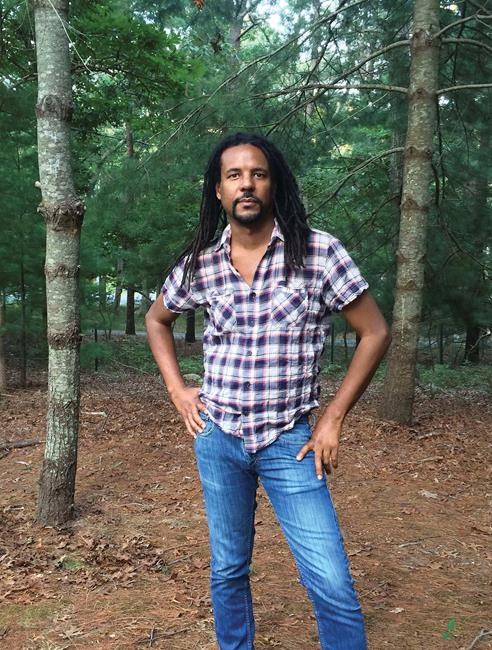
This image released by Doubleday shows a portrait of author Colson Whitehead, author of
This image released by Doubleday shows a portrait of author Colson Whitehead, author of "The Nickel Boys," winner of the Pulitzer Prize for Fiction. (Madeline Whitehead/Doubleday via AP)

Reuters won the breaking news photography award for its coverage of protests that shook Hong Kong. Editor-in-Chief Stephen Adler said the photos “brilliantly captured the magnitude of the protests.”

While big outlets and collaborations got plenty of recognition, the small Palestine Herald-Press, in East Texas, got a Pulitzer for Jeffery Gerritt’s editorials on the deaths of jail inmates awaiting trial.

In the arts categories, Michael R. Jackson’s musical “A Strange Loop” won the drama prize. And Colson Whitehead’s “The Nickel Boys” won the fiction prize; he also won in 2017 for “The Underground Railroad.”

The Pulitzer board also issued a special citation Monday to the trailblazing African American journalist and civil rights activist Ida B. Wells, noting “her outstanding and courageous reporting” on lynchings.

Wells was a journalist and publisher in the late 1800s and later helped found civil rights and women’s suffrage groups; she died in 1931. The board said the citation comes with a bequest of at least $50,000 in support of Wells’ mission, with recipients to be announced.

The initial Pulitzer ceremony, which had been scheduled for April 20, was pushed to give Pulitzer Board members who were busy covering the pandemic more time to evaluate the finalists.
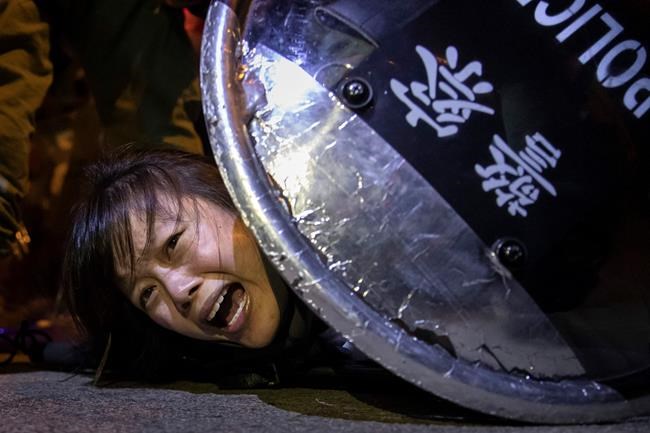
This Sept. 2, 2019 photo by Reuters photographer Tyrone Siu, provided by Columbia University, shows an anti-extradition bill protester detained by riot police during skirmishes between the police and protesters outside Mong Kok police station, in Hong Kong, China. The photography staff of Reuters was awarded the 2020 Pulitzer Prize for Breaking News Photography, in New York, Monday May 4, 2020, for wide-ranging and illuminating photographs of Hong Kong as citizens protested infringement of their civil liberties and defended the region's autonomy by the Chinese government. (Courtesy of Reuters via AP)

The Pulitzer Prizes in journalism were first awarded in 1917 and are considered the field’s most prestigious honour in the U.S.

___

Associated Press writer Deepti Hajela contributed to this report.

Report Error Submit a Tip

More Stories

Letters, Sept. 12

7 minute read 2:00 AM CDT

An overreaction

Re: Winnipeg teacher disciplined for ‘liking’ student’s post, Sept. 1.

I’ve been stewing about the article for a few days and trying to decide what’s been bothering me.

I feel that the school division overreacted with its disciplinary measures, and that a public servant has been publicly shamed on the front page for what I can only describe as a questionable act.

Is Trump about to poke Quebec’s political beehive?

Peter McKenna 6 minute read Preview

Is Trump about to poke Quebec’s political beehive?

Peter McKenna 6 minute read 2:00 AM CDT

When was the last time that a U.S. president seriously stirred the hornet’s nest of Quebec politics?

My best recollection is former U.S. president Bill Clinton. During the 1994 Quebec referendum campaign, Clinton made clear that the U.S. wholly endorsed a united and strong federal Canada — as opposed to a dismembered one. He went on to add that an independent Quebec would have no guarantee of joining the North American Free Trade Agreement as a full-fledged member.

Today, we see U.S. President Donald Trump inserting himself — unwittingly or wittingly — into the electoral and sovereignty politics of Quebec. It’s pretty clear that the resurgent Coalition Avenir Québec government is trying to make the Oct. 5 provincial election about anything other than its own governmental record and more about Trump’s economic coercion against Canada. Of course, the Parti Québécois, the odds-on-favourite, wants to make the electoral contest a referendum on the CAQ and its party leader, Christine Fréchette.

But what if Trump really wanted to make his presence felt in Quebec’s political life? How much influence could he have on shaping political outcomes in Quebec? How much of an “X factor” could he be?

Read
2:00 AM CDT

Debut adult novel proves a twisty, satisfying cozy mystery

Reviewed by Anita Daher 4 minute read Preview

Debut adult novel proves a twisty, satisfying cozy mystery

Reviewed by Anita Daher 4 minute read 2:00 AM CDT

The Mystic and the Missing Girl by Toronto author Vikki VanSickle is a metaphysical mystery with identity and self-acceptance at its core. It leans into the “cosy” category, despite a spatter of salty language.

VanSickle is a writing instructor and TV commentator, and is best-known for her books for children and teens, including the award-winning The Winnowing.

The 1998 disappearance of 17-year-old Ginny Evans haunts the Ontario town of Stanfield. The girl’s mother clings to hope that Ginny ran away to escape her abusive father, and is living a safe and happy life elsewhere.

Others believe she was murdered — but not dumped in a nearby lake, as the recently deceased and long-maligned “Hannah the Mystic” once suggested.

Read
2:00 AM CDT

Injuries reported after police pursuit on Broadway

Free Press staff 2 minute read Preview

Injuries reported after police pursuit on Broadway

Free Press staff 2 minute read Updated: Yesterday at 6:12 PM CDT

Winnipeg police are investigating a “serious incident” in which people were injured following a police pursuit near Broadway and Young Street Friday afternoon.

Police said the scene would remain secured as officers investigate. No details about the number or severity of injuries were released.

Broadway was closed between Furby and Young streets until further notice and motorists were asked to avoid the area.

Shaelyn Desmarais McLeod, whose car sustained minor damage, said she witnessed the end of the police pursuit.

Read
Updated: Yesterday at 6:12 PM CDT

Multiple factors add up to difficult harvest

Laura Rance-Unger 4 minute read Preview

Multiple factors add up to difficult harvest

Laura Rance-Unger 4 minute read 2:00 AM CDT

Earlier this month, farmers sent agriculture publications some heartbreaking photos showing how heavy rains across the Prairies had pummelled a promising harvest.

An idled combine up to its axles in a flooded Saskatchewan field, straw bales surrounded by water and field equipment stranded on the far side of a washed-out section told the obvious story.

The Sept. 6-7 event was just the latest in a series of heavy rainfall events that have plagued this year’s growing season. Similar deluges hit different regions July 15-17, Aug. 14, and Aug. 31 — some of which were accompanied by tornadoes.

“What’s made this season challenging is the intensity of these rainfalls,” said Manitoba Agriculture ag meteorology specialist Alison Sass as she reviewed the summer’s weather patterns on an extension webinar.

Read
2:00 AM CDT

Chrétien says Canada bows to no one in fiery address at 9/11 commemoration

Sarah Smellie, The Canadian Press 7 minute read Preview

Chrétien says Canada bows to no one in fiery address at 9/11 commemoration

Sarah Smellie, The Canadian Press 7 minute read Updated: Yesterday at 8:15 PM CDT

GANDER - Former prime minister Jean Chrétien drew a standing ovation inside a Gander, N.L., hockey arena on Friday as he delivered a pointed message to American leaders during a ceremony marking the 9/11 terrorist attacks in the United States, 25 years ago.

The 92-year-old warned Americans never to mistake Canadian generosity for weakness, nor its kindness for softness.

U.S. Ambassador Pete Hoekstra looked on as Chrétien insisted his pointed words were a sign of friendship. Friends tell each other the truth, he said.

“We embraced our friends and we helped them in their moment of need, but we bow to no one,” Chretien said, as the crowd erupted again.

Read
Updated: Yesterday at 8:15 PM CDT