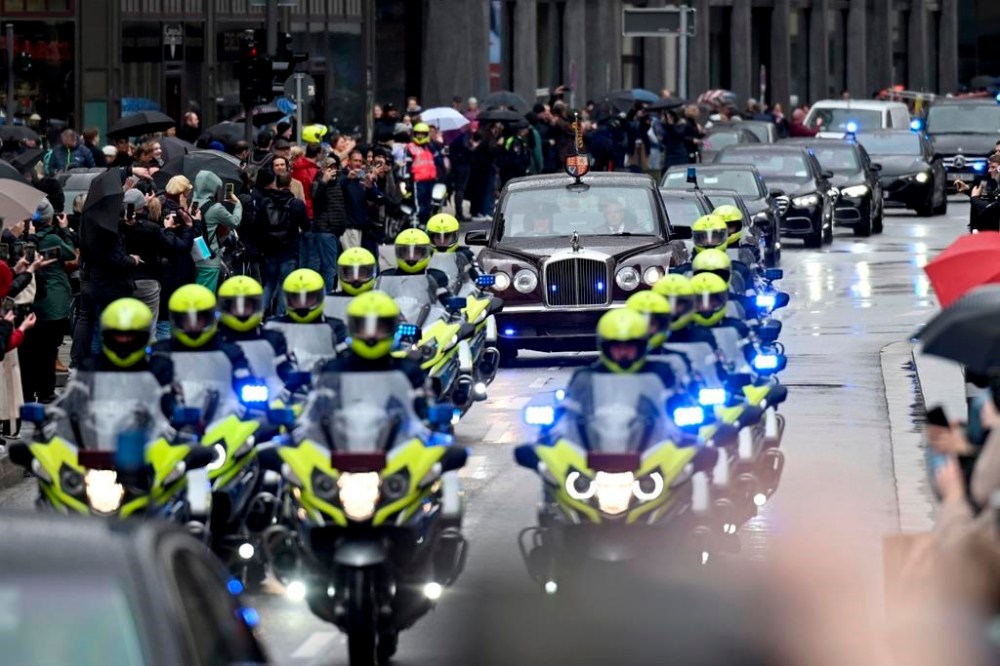
Charles III commorates WWII dead, child refugees in Hamburg
Advertisement
Read this article for free:
or
Already have an account? Log in here »
To continue reading, please subscribe:
Monthly Digital Subscription
$0 for the first 4 weeks*
- Enjoy unlimited reading on winnipegfreepress.com
- Read the E-Edition, our digital replica newspaper
- Access News Break, our award-winning app
- Play interactive puzzles
*No charge for 4 weeks then price increases to the regular rate of $19.95 plus GST every four weeks. Offer available to new and qualified returning subscribers only. Cancel any time.
Monthly Digital Subscription
$4.99/week*
- Enjoy unlimited reading on winnipegfreepress.com
- Read the E-Edition, our digital replica newspaper
- Access News Break, our award-winning app
- Play interactive puzzles
*Billed as $19.95 plus GST every four weeks. Cancel any time.
To continue reading, please subscribe:
Add Free Press access to your Brandon Sun subscription for only an additional
$1 for the first 4 weeks*
*Your next subscription payment will increase by $1.00 and you will be charged $16.99 plus GST for four weeks. After four weeks, your payment will increase to $23.99 plus GST every four weeks.
Read unlimited articles for free today:
or
Already have an account? Log in here »
Hey there, time traveller!
This article was published 31/03/2023 (1013 days ago), so information in it may no longer be current.
BERLIN (AP) — King Charles III commemorated the more than 30,000 people, mostly German civilians, who were killed in the Allied bombing of Hamburg almost 80 years ago as he visited the northern city Friday on the last leg of his first foreign trip since becoming monarch.
The attack in July 1943 carried out by British and American planes using incendiary bombs was a response to Nazi Germany’s deadly aerial raids on Britain. It resulted in a firestorm which destroyed large parts of the city and remains a painful memory in the Hanseatic port’s proud history.
Charles laid a wreath at the ruined church of St. Nikolai, now a memorial site, and listened to Hamburg’s Bishop Kirsten Fehrs read the Coventry Litany of Reconciliation, written to commemorate the destruction of the English city of Coventry by German bombers in 1940.
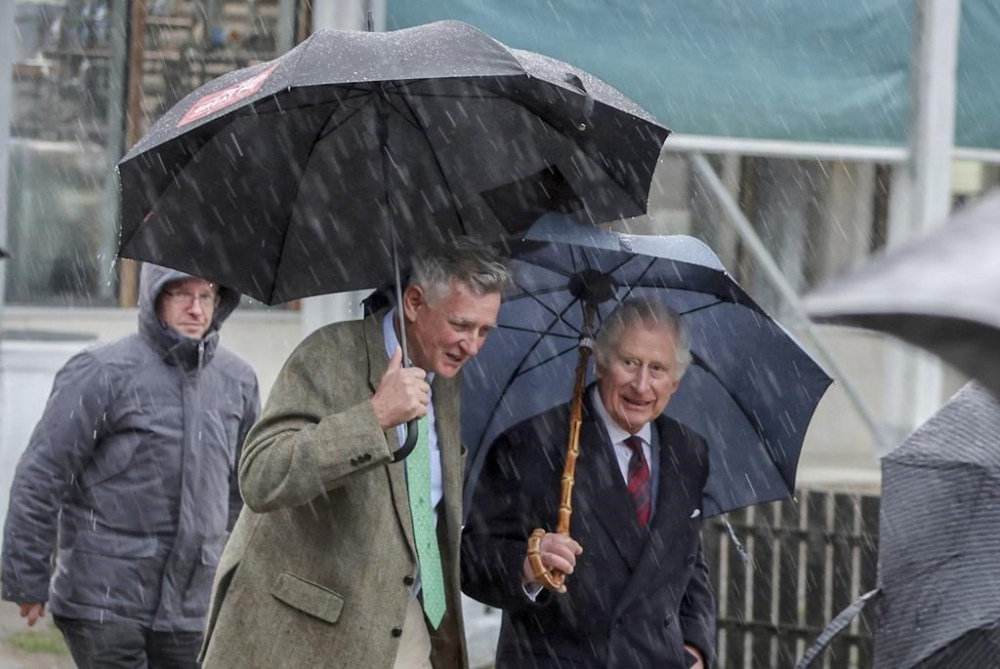
Earlier, Charles and Camilla, the queen consort, visited a memorial to the Kindertransporte, or children’s transports, that saw more than 10,000 Jewish children receive refuge from Nazi Germany in the U.K. in 1938.
The royal couple were accompanied to Hamburg by German President Frank-Walter Steinmeier, making the two-hour journey from Berlin by high-speed train.
The couple landed in the German capital on Wednesday, where Steinmeier greeted them at the Brandenburg Gate with full military honors and later hosted a banquet in their honor.

On Thursday, Charles became the first monarch to address the German parliament, telling assembled lawmakers that “together we must strive for the security, prosperity and well-being that our people deserve.” He then met with Ukrainian refugees and a German-British military unit before visiting an organic farm where he tried his hand at making cheese.
Charles’ trip is part of a carefully calibrated effort by the U.K. government to mend frayed ties with its continental partners after Brexit.
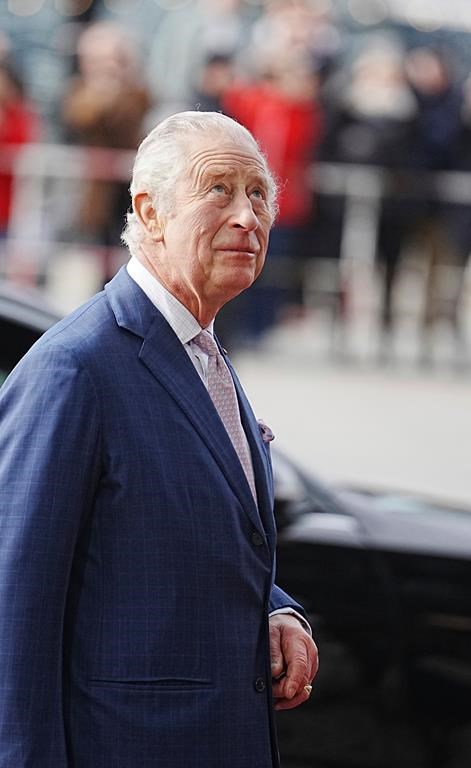
Charles originally planned to visit France first, but anti-government protests in the country led both governments to postpone that part of his trip. The new itinerary put the focus on Germany, where Charles has family roots and the royals have long been the subject of fascination.
Despite persistent drizzle, well-wishers waited patiently to greet Charles and Camilla at their stops in Hamburg, a city that sees itself as having a particularly close connection to Britain due to its long seafaring and trading ties.
A boat trip and a farewell reception involving musical performances, including by a Beatles cover band and a sea shanty group, will round off the king’s visit.