Meet this year’s MacArthur ‘genius grant’ recipients, including a hula master and the poet laureate
Advertisement
Read this article for free:
or
Already have an account? Log in here »
To continue reading, please subscribe:

Digital Subscription
One year of digital access for only $205*
- Enjoy unlimited reading on winnipegfreepress.com
- Read the E-Edition, our digital replica newspaper
- Access News Break, our award-winning app
- Play interactive puzzles
*First annual payment billed as $205.00 + GST for one year. This annual subscription will automatically renew at $233.00 + GST every 52 weeks (10% off the regular annual price of $259.35). Offer available to new and qualified returning subscribers only. Cancel any time.
To continue reading, please subscribe:
Add Free Press access to your Brandon Sun subscription for only an additional
$1 for the first 4 weeks*
- Enjoy unlimited reading on winnipegfreepress.com
- Read the E-Edition, our digital replica newspaper
- Access News Break, our award-winning app
- Play interactive puzzles
*Your next Brandon Sun subscription payment will increase by $1.00 and you will be charged $17.95 plus GST for four weeks. After four weeks, your payment will increase to $24.95 plus GST every four weeks.
Read unlimited articles for free today:
or
Already have an account? Log in here »
Hey there, time traveller!
This article was published 04/10/2023 (1095 days ago), so information in it may no longer be current.
A scientist who studies the airborne transmission of diseases, a master hula dancer and cultural preservationist, and the sitting U.S. poet laureate were among the 20 new recipients of the prestigious fellowships from the John D. and Catherine T. MacArthur Foundation, known as “genius grants,” announced on Wednesday.
MacArthur fellows receive a grant of $800,000 over five years to spend however they want. Fellows are nominated and endorsed by their peers and communities through an often yearslong process that the foundation oversees. They do not apply and are never officially interviewed for the fellowship before it’s awarded.
Each year, the foundation calls the new class of fellows in advance of the public announcement and fellows described being shocked and stunned by the news after receiving a call from an unknown number, which they had sometimes initially ignored.
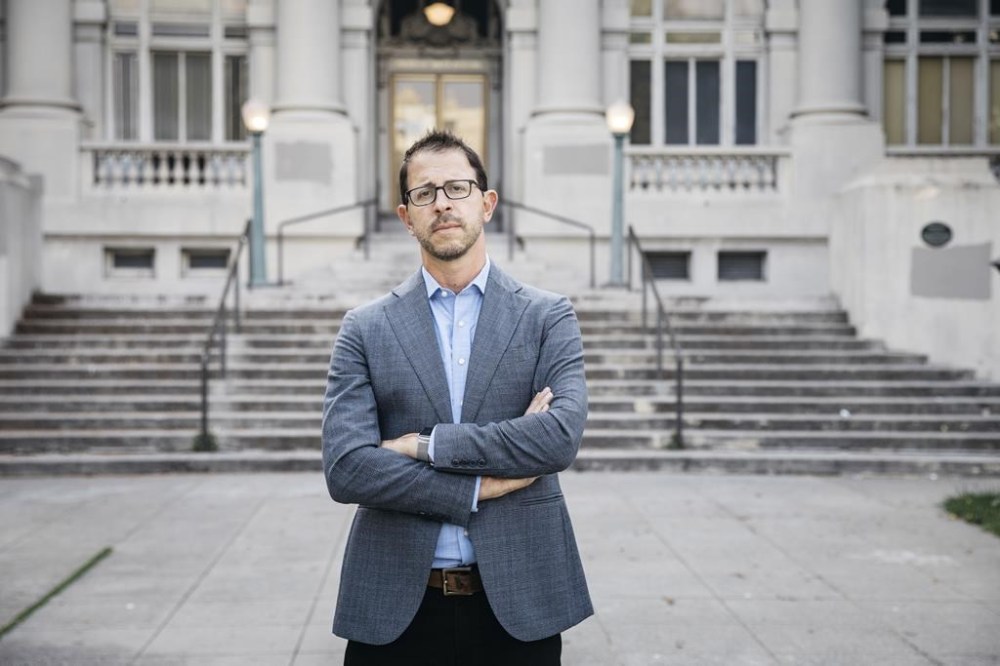
Ada Limón, who recently began her second term as the country’s poet laureate, said she first missed a call the day after her grandmother, Allamay Barker, had died at the age of 98. It wasn’t until the foundation emailed her that she called back. She said she wept when she heard the news.
“I felt like losing the matriarch of my family and then receiving this, it felt like it was a gift from her in some ways,” she said, speaking from her home in Lexington, Kentucky.
Limón will be reading poetry to an audience at the University of Montevallo, a public university in Alabama, and speaking to a creative writing class in the hours after this year’s class of MacArthur fellows are announced.
As poet laureate, she commissioned an anthology of poems “ You Are Here: Poetry in the Natural World, ” to be published in April and also arranged for historic poems to be installed at seven national parks. NASA is planning to send a poem Limón wrote for an upcoming mission to Jupiter’s moon Europa as part of a time capsule. The poem will be engraved on the spacecraft.
“One of the things that feels most emotional and remarkable to me is that this recognition is coming from within the poetry community,” Limón said.
The foundation has run the fellowship since 1981 and selected more than 1,030 recipients. The awards are given to individuals “of outstanding talent to pursue their own creative, intellectual, and professional inclinations,” according to the foundation’s website, and the grants are not tied to a specific project or institution. Many past fellows like Octavia Butler, Paul Farmer and Twyla Tharp are luminaries in their fields and Marlies Carruth, who directs the MacArthur Fellows program, emphasized that they hope fellows will support and inspire each other. The foundation also hosts events for current and past recipients.
“The prize is financial, but it’s also access and being part of a community of extraordinary thinkers and doers,” said Carruth. Last year, the foundation raised the award amount from $625,000 to $800,000. The foundation previously increased the award amount a decade ago from $500,000 to $625,000.
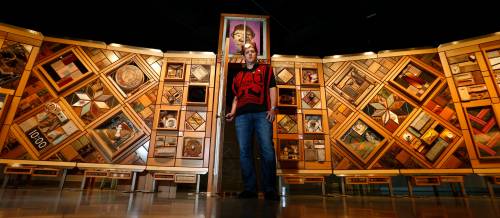
The 2023 class of fellows includes Andrea Armstrong, professor at Loyola University New Orleans, College of Law, who created a database of everyone in Louisiana who has died in prison or jail since 2015; Patrick Makuakāne, a master teacher of hula who is dedicated to preserving Hawaiian cultural heritage; and National Book Award winner Imani Perry, who has authored multiple books about the resistance and activism of Black Americans in the face of injustice.
Linsey Marr, an environmental engineer, was in her office when an unknown number called her cellphone, which she did not answer. When the same number called her office line, she picked up with some skepticism, Marr said.
“To think that I’ve actually been selected as one is really mind-blowing,” she said, of the MacArthur fellows.
Before the pandemic, Marr, who is a distinguished professor of civil and environmental engineering at Virginia Tech, studied questions about how viruses moved through the air and how much transmission happens by people breathing in the virus versus from contaminated objects.
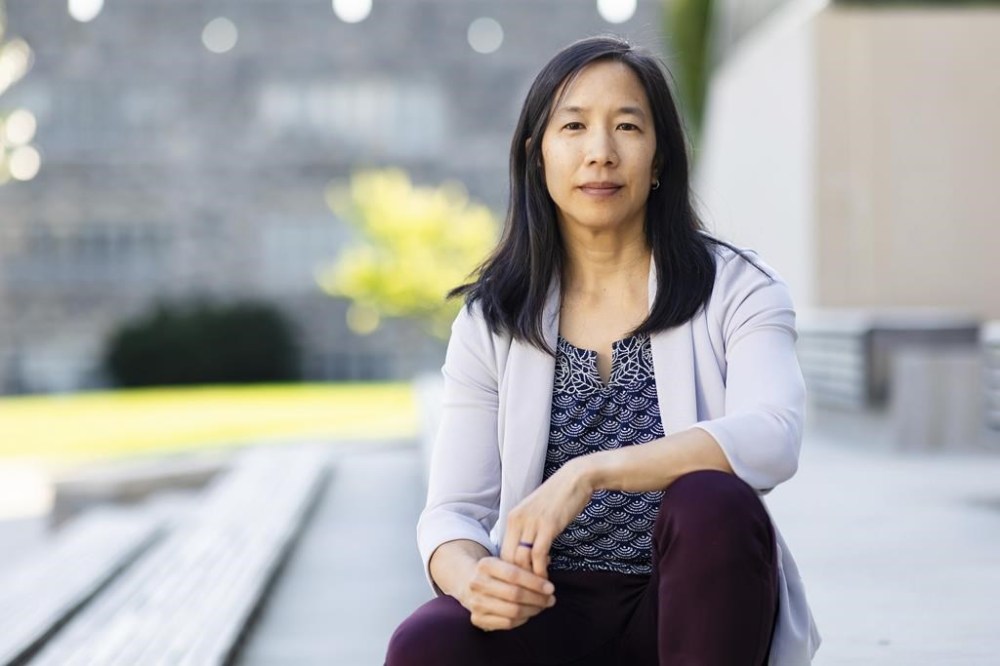
Her expertise became extremely relevant after the outbreak of COVID-19 when she argued that airborne transmission was likely a major way the virus was spreading. She said she hopes this recognition of her work will help her gain access to data to better understand the seasonality of the flu.
Ian Bassin is the co-founder and executive director of Protect Democracy, a nonpartisan organization that helped to shape legislation passed in December 2022 to overhaul the Electoral Count Act. The changes clarify parts of the 1887 law to make it harder for future presidents to seek to prevent the transfer of power.
When he received the call from MacArthur, Bassin was standing in his kitchen and said his mind immediately went to his late grandparents, with whom he wished he could share the news. He said he sees himself as just one of a multitude of organizations and people working to create a more inclusive and resilient democratic system.
“This fellowship feels both like a tremendous opportunity, but also a responsibility because the work of protecting and perfecting our democracy is far from complete,” Bassin said. “And so this just underscores for me the obligation I think I now have to do my part in finishing that work.”
The other recipients of the MacArthur fellowship in 2023 are: E. Tendayi Achiume, a legal scholar examining global migration; Rina Foygel Barber, a statistician who has developed tools to improve the accuracy of predictions made by machine learning models; Courtney Bryan, a composer and pianist whose work draws on contemporary voices and crosses genres; Jason D. Buenrostro, a cellular and molecular biologist who developed new methods and tools to better understand how and when genes are expressed; multidisciplinary artist María Magdalena Campos-Pons whose work often foregrounds histories of the Caribbean; composer and artist Raven Chacon who blends performance and visual art to interrogate European colonialism of the Americas; Diana Greene Foster, a demographer and reproductive health researcher who has documented the impact of access to contraception or abortion on women’s lives; Lucy Hutyra, an environmental ecologist who studies the movement of carbon through urban environments; artist Carolyn Lazard whose multidisciplinary work centers disability and accessibility; Lester Mackey, a computer scientist and statistician whose has helped improve the predictions of machine learning techniques; fiction writer Manuel Muñoz whose stories explore the experiences of the Mexican American community in California’s Central Valley; Dyani White Hawk, a multidisciplinary artist who uplifts Indigenous art practices and aesthetics and their connections to contemporary art; A. Park Williams, a hydroclimatologist studying the impact of climate change on wildfires, drought and forest growth; and Amber Wutich, an anthropologist who studies the impact of water scarcity on communities and how they adapt.
___
Associated Press coverage of philanthropy and non-profits receives support through the AP’s collaboration with The Conversation US, with funding from Lilly Endowment Inc. The AP is solely responsible for this content. For all of AP’s philanthropy coverage, visit https://apnews.com/hub/philanthropy.