‘I know who I am:’ Buffy Sainte-Marie calls Indigenous identity questions hurtful
Advertisement
Read this article for free:
or
Already have an account? Log in here »
To continue reading, please subscribe:

Digital Subscription
One year of digital access for only $205*
- Enjoy unlimited reading on winnipegfreepress.com
- Read the E-Edition, our digital replica newspaper
- Access News Break, our award-winning app
- Play interactive puzzles
*First annual payment billed as $205.00 + GST for one year. This annual subscription will automatically renew at $233.00 + GST every 52 weeks (10% off the regular annual price of $259.35). Offer available to new and qualified returning subscribers only. Cancel any time.
To continue reading, please subscribe:
Add Free Press access to your Brandon Sun subscription for only an additional
$1 for the first 4 weeks*
- Enjoy unlimited reading on winnipegfreepress.com
- Read the E-Edition, our digital replica newspaper
- Access News Break, our award-winning app
- Play interactive puzzles
*Your next Brandon Sun subscription payment will increase by $1.00 and you will be charged $17.95 plus GST for four weeks. After four weeks, your payment will increase to $24.95 plus GST every four weeks.
Read unlimited articles for free today:
or
Already have an account? Log in here »
Hey there, time traveller!
This article was published 26/10/2023 (1073 days ago), so information in it may no longer be current.
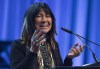
Buffy Sainte-Marie, a musician known for decades of Indigenous activism, says she’s always been honest that she doesn’t know the identity of her birth parents, as a CBC report was expected to question her First Nations ancestry.
“I don’t know where I’m from or who my birth parents were, and I will never know. Which is why to be questioned in this way today is painful,” Sainte-Marie said Thursday in a statement.
“To those who question my truth, I say with love, I know who I am.”
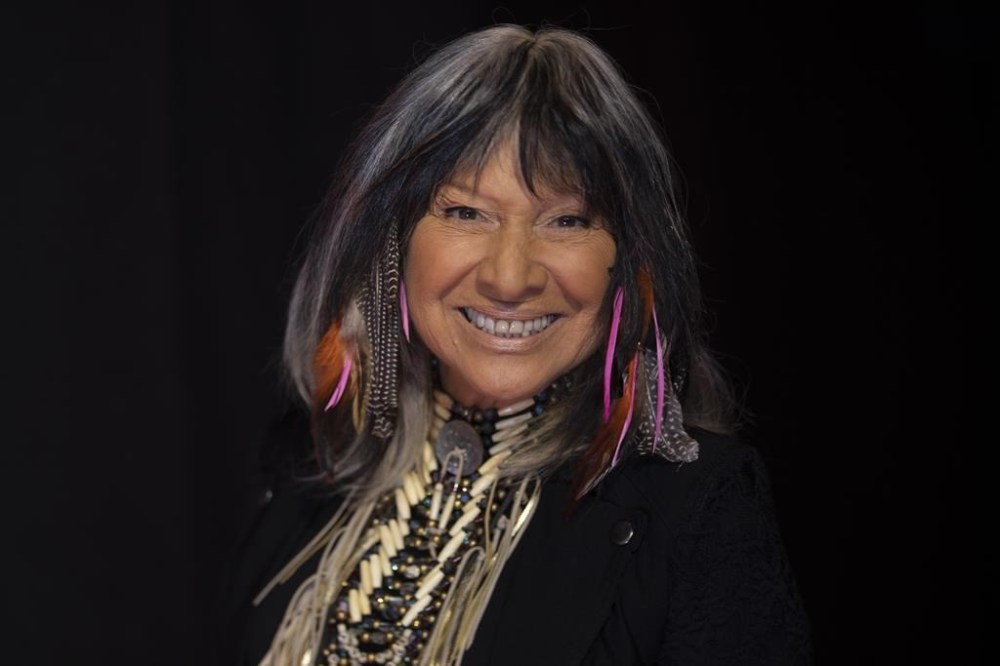
Sainte-Marie, who’s in her early ’80s, said she was contacted last month by CBC and called allegations about her identity “deeply hurtful.”
CBC’s investigative show “The Fifth Estate” is scheduled to air an episode titled “Making an Icon” on Friday. A description of the episode does not name Sainte-Marie but says an icon’s “claims to Indigenous ancestry are being called into question by family members” and its investigation includes genealogical documentation and historical research.
Chuck Thompson with CBC said in an email Thursday, “Beyond what’s in the program description, we have nothing more to add.”
Sainte-Marie also posted a video on social media addressing the upcoming episode, saying she has shared her story for 60 years. She called herself “a proud member of the Native community with deep roots in Canada.”
“But there are also many things I don’t know, which I’ve always been honest about. I don’t know where I’m from, who my birth parents are or how I ended up a misfit in a typical white Christian New England home,” she said in the video.
“I realized decades ago that I would never have the answers.”
Sainte-Marie Sainte-Marie became popular in the 1960s for her singing and songwriting, and used her fame to elevate Indigenous issues at a time when they weren’t receiving much attention. Her debut record, “It’s My Way!,” featured several notable songs, including “Universal Soldier,” written about the individual responsibility for war.
The musician also appeared on “Sesame Street” and is credited with being the first Indigenous person to win an Oscar. She won for best original song in 1982 for co-writing “Up Where We Belong,” the ballad from the movie “An Officer and a Gentleman.”
Other accolades include a Gemini, a Golden Globe and the Governor General’s Performing Arts Award. She was also named to the Canadian Music Hall of Fame in 1995.
Sainte-Marie has repeatedly spoken about her adoption, saying she is First Nations from Canada but was raised by Albert and Winifred Sainte-Marie, the latter who identified as part Mi’kmaq, in Massachusetts.
Her 2018 authorized biography says there’s no official record of her birth. It says she was probably born Cree on Piapot First Nation in the Qu’Appelle Valley in Saskatchewan in the early 1940s. Named Beverly, she was nicknamed Buffy in high school.
“To be born Cree in the 1940s in Canada was to be a person who was not always counted, at least not in a formal and legal fashion,” the biography says. “Birth records from the time, particularly on reserves, were spotty, and there are countless reports of records being lost or destroyed.”
The biography says Sainte-Marie was adopted for reasons that are unclear.
Delia Opekokew, the musician’s former lawyer, was tasked with delving into Sainte-Marie’s Indigenous identity.
Opekokew said in an affidavit that she conducted interviews with First Nations people of the area at that time, including Noel Starblanket, a former national chief of the National Indian Brotherhood, which is now the Assembly of First Nations.
Starblanket shared oral history saying family had explained that Sainte-Marie was born north of Piapot to a single woman“who could not care for her,” and then gave the baby to an American family who happened to be in the area, the affidavit said.
Sainte-Marie said Thursday that her “growing-up mom,” Winifred Sainte-Marie, told her she was adopted and may have been born “on the wrong side of the blanket,” meaning born out of wedlock.
Accounts of her life say Sainte-Marie searched for answers about her birth family early in her career, which led her to a Saskatchewan couple — Emile Piapot, grandson of then-chief of the Piapot reserve, and Clara Starblanket, daughter of the chief of the File Hills reserve.
The biography says the couple “reportedly had a daughter taken from the reserve around the time Sainte-Marie was born.” Other accounts say the couple had other children who died. About 1964, Sainte-Marie was adopted as an adult through Cree traditions into the Piapot family.
“But we never have known whether I’m a (biological) relative or not,” Sainte-Marie says in the book.
Sainte-Marie, who announced she was retiring from live performances earlier this year, referred to her relationship with Piapot in a podcast earlier this month, calling parts of the story an urban legend.
Throughout her career, conflicting stories about her adoption have been published. Some say she was an infant, others that she was two to three years old when she was taken by the American family. Some say her birth parents died, and her mother was killed in a car crash.
“I was adopted into the Piapot family, not I was adopted out of Piapot reserve. That makes a big difference.”
The Piapot family said in a statement that allegations against Sainte-Marie are “hurtful, ignorant, colonial — and racist.” They said the singer was adopted in the traditional way.
“We claim her as a member of our family and all of our family members are from the Piapot First Nation. To us, that holds far more weight than any paper documentation or colonial record keeping ever could,” the family said.
CBC has reported on numerous notable people who have claimed to be Indigenous, including acclaimed film director Michelle Latimer, former judge Mary Ellen Turpel-Lafond and former University of Saskatchewan professor Carrie Bourassa.
This report by The Canadian Press was first published Oct. 26, 2023.
— With files from David Friend in Toronto
Related Articles
Report raises questions about Buffy Sainte-Marie's Indigenous claim

Advertisement Advertise With Us
Advertisement Advertise With Us