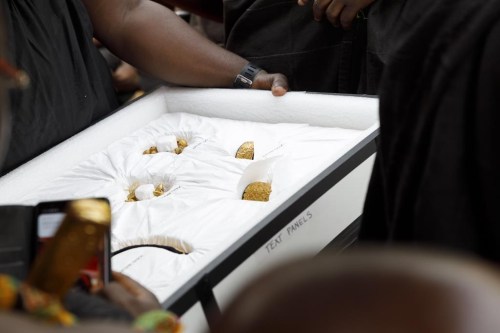
Ghana artifacts that were looted 150 years ago by British forces have been returned by a US museum
Advertisement
Read this article for free:
or
Already have an account? Log in here »
To continue reading, please subscribe:

Digital Subscription
One year of digital access for only $205*
- Enjoy unlimited reading on winnipegfreepress.com
- Read the E-Edition, our digital replica newspaper
- Access News Break, our award-winning app
- Play interactive puzzles
*First annual payment billed as $205.00 + GST for one year. This annual subscription will automatically renew at $233.00 + GST every 52 weeks (10% off the regular annual price of $259.35). Offer available to new and qualified returning subscribers only. Cancel any time.
To continue reading, please subscribe:
Add Free Press access to your Brandon Sun subscription for only an additional
$1 for the first 4 weeks*
- Enjoy unlimited reading on winnipegfreepress.com
- Read the E-Edition, our digital replica newspaper
- Access News Break, our award-winning app
- Play interactive puzzles
*Your next Brandon Sun subscription payment will increase by $1.00 and you will be charged $17.95 plus GST for four weeks. After four weeks, your payment will increase to $24.95 plus GST every four weeks.
Read unlimited articles for free today:
or
Already have an account? Log in here »
Hey there, time traveller!
This article was published 09/02/2024 (974 days ago), so information in it may no longer be current.
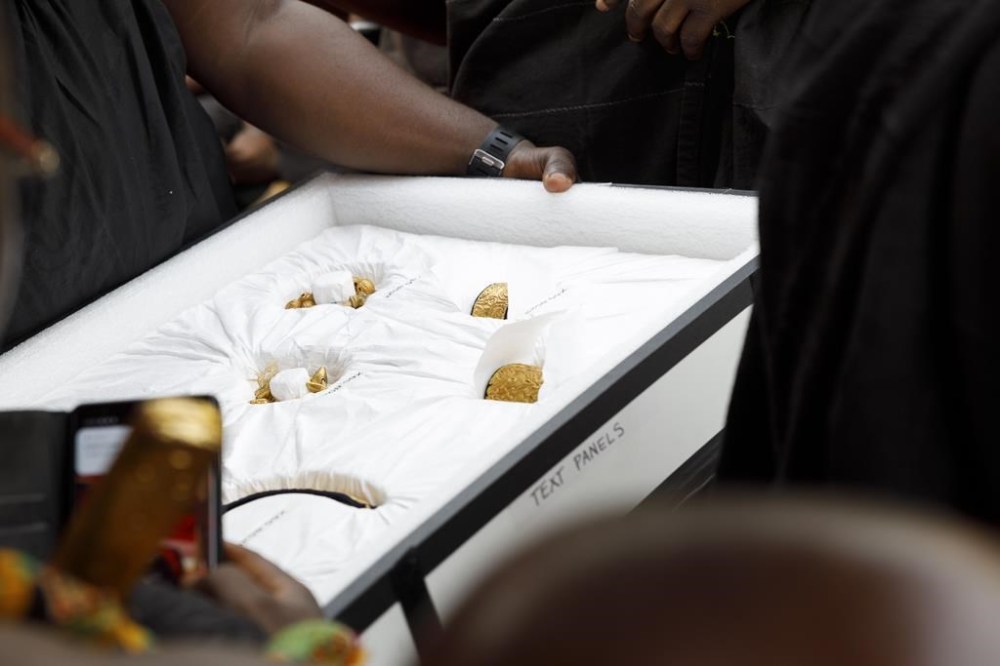
ACCRA, Ghana (AP) — Seven royal artifacts looted 150 years ago by British colonial forces from Ghana’s ancient Asante kingdom and kept by a United States museum have been returned and presented to the kingdom on Thursday, the latest of a series of stolen treasured items being repatriated to several African countries.
Looted from British-colonized Ghana in the 19th century before being transferred to Fowler Museum at the University of California, Los Angeles, in the 1960s, the artifacts included an elephant tail whisk, an ornamental chair made of wood, leather and iron, two gold stool ornaments, a gold necklace and two bracelets.
““We are here … (because) the white man came into Asanteman to loot and destroy it,” Otumfuo Osei Tutu, the king of the Assante kingdom in Ghana’s largest city of Kumasi, said at a presentation ceremony that brought joy and relief to the kingdom.
After decades of resistance from European and Western governments and museums, the efforts of African countries to repatriate stolen artifacts are paying off with the increasing return of treasured pieces. Activists, though, say thousands more are still out of reach.
The royal items were first received by the kingdom on Monday, which marked the 150th anniversary of when British colonial forces sacked the Asante city in 1874. That was when four of the items were looted while the other three were part of an indemnity payment made by the Asante kingdom to the British, the museum said.
The repatriation of the artifacts to Ghana “signifies the return of our souls,” said Kwasi Ampene, a lecturer who helped negotiate their return.
All seven items are being returned unconditionally and permanently though the kingdom allowed their replicas to be made, the museum added.
“We are globally shifting away from the idea of museums as unquestionable repositories of art, as collecting institutions entitled to own and interpret art based primarily on scholarly expertise, to the idea of museums as custodians with ethical responsibility,” said Silvia Forni, director of the Fowler Museum.

The items are seen as symbols of prestige and reverence for the Asante ruler and having them back is a dream come true, according to Samuel Opoku Acheampong, a staff of the Asante palace.
“Our forefathers and our fathers told us about the artifacts,” Acheampong said. “And ever since, as a kid, I had the vision that one day we shall have all these artifacts back to our Asante nation.”