King Charles III won’t be out and about much over the next six weeks amid election campaign
Advertisement
Read this article for free:
or
Already have an account? Log in here »
To continue reading, please subscribe:

Digital Subscription
One year of digital access for only $205*
- Enjoy unlimited reading on winnipegfreepress.com
- Read the E-Edition, our digital replica newspaper
- Access News Break, our award-winning app
- Play interactive puzzles
*First annual payment billed as $205.00 + GST for one year. This annual subscription will automatically renew at $233.00 + GST every 52 weeks (10% off the regular annual price of $259.35). Offer available to new and qualified returning subscribers only. Cancel any time.
To continue reading, please subscribe:
Add Free Press access to your Brandon Sun subscription for only an additional
$1 for the first 4 weeks*
- Enjoy unlimited reading on winnipegfreepress.com
- Read the E-Edition, our digital replica newspaper
- Access News Break, our award-winning app
- Play interactive puzzles
*Your next Brandon Sun subscription payment will increase by $1.00 and you will be charged $17.95 plus GST for four weeks. After four weeks, your payment will increase to $24.95 plus GST every four weeks.
Read unlimited articles for free today:
or
Already have an account? Log in here »
Hey there, time traveller!
This article was published 24/05/2024 (865 days ago), so information in it may no longer be current.
LONDON (AP) — King Charles III won’t be out and about much over the next six weeks — and it’s not because of his ongoing cancer treatments.
Shortly after U.K. Prime Minister Rishi Sunak called an early parliamentary election for July 4, Buckingham Palace said that all members of the royal family were canceling most public engagements until after the vote to avoid doing anything that might divert attention from the campaign.
That announcement is just one of the ways that Charles will seek to play his part as a unifying head of state during the election, without violating a constitutional ban on interfering in politics. While the king’s role in government is largely ceremonial, it’s bound up by traditions that embody the way royal powers were gradually transferred to Parliament over the last 800 years.
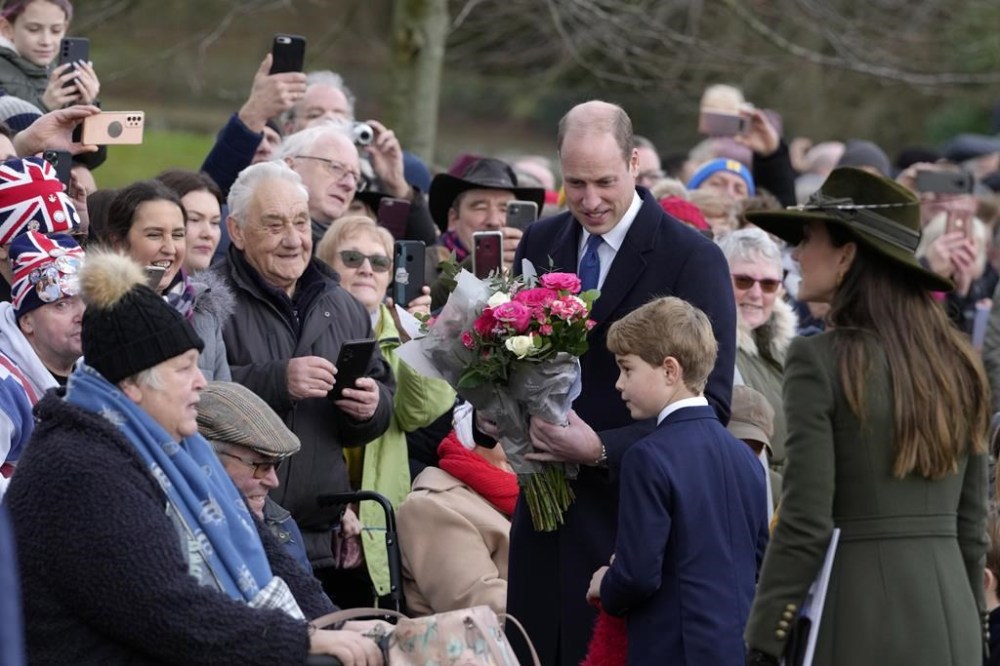
Here’s a look at the monarch’s role in the run up to the election, including a few dos and don’ts.
DID CHARLES PLAY ANY ROLE IN CALLING THE ELECTION?
The decision to call an election was entirely Sunak’s. But before he could do so, the king had to grant permission to dissolve Parliament early.
Technically, the king still has the power to refuse a dissolution request if he believes an election would be detrimental to the nation. But no prime minister in modern times has been refused permission to dissolve Parliament.
Ignoring that precedent “would expose the monarch to allegations of political interference of an undemocratic nature, even if the intention of the refusal was to preserve the good functioning of democracy,” according to the Institute for Government, an independent think tank.
The last time a British monarch unilaterally brought down a government that had a majority in the House of Commons was in November 1834, when King William IV dismissed Lord Melbourne because of concerns about radical reforms supported by some members of his administration. But Robert Peel, the king’s choice as successor, was unable to command a majority in Parliament, and Melbourne returned to office five months later.
WHAT’S NEXT FOR THE KING?
The current session of Parliament will be “prorogued,” or ended, on Friday based on an order that Charles approved during a meeting of the Privy Council on Thursday at Buckingham Palace.
The king won’t attend the formal end of the session, a ceremonial affair where the speaker of the House of Commons and other members of Parliament will troop into the House of Lords to hear a speech written by the government.
WHAT ABOUT THOSE PUBLIC APPEARANCES?
The royal family is barred by law and tradition from interfering in politics at any time, but ensuring that those rules are strictly followed is even more important during an election.
That means the royals can’t campaign for candidates, endorse policies, or even let their political preferences be known.
Buckingham Palace spelled it out soon after Sunak’s announcement, announcing that members of the royal family would postpone all engagements that “may appear to divert attention or distract from the election campaign.’’
That meant the king on Friday ditched trips to a Bentley car factory and a community center helping people who are struggling financially.

WHAT’S A MONARCH TO DO?
Well, some things are above reproach.
The king and queen still plan to attend ceremonies marking the 80th anniversary of D-Day on June 6.
Other engagements will be examined on a case-by-case basis, the palace said.
WHY DOES THIS MATTER?
One of the modern monarchy’s primary roles is to provide a unifying figurehead who is seen as above politics and can provide a sense of stability in difficult times.
This is the first general election of Charles’ reign. His mother, Queen Elizabeth II, oversaw 21 during her 70 years on the throne.
George Gross, a royal expert at King’s College London, said elections are by definition moments of turbulence in which people look to the monarchy for continuity.
“There is … a power vacuum in political terms. Power is now handed back to the British people, and they will review the offering over the next six weeks,’’ Gross said. “So what that means, though, is that the head of state has a new role. Or rather, (the) key role of stability and continuity comes to the fore. Now, (the royals) cannot be political in any way.”
___
Follow AP stories on King Charles III at https://apnews.com/hub/king-charles-iii