Canadian media a target for foreign interference: national security committee chair

Advertisement

Advertise with us

OTTAWA - Foreign actors are trying to interfere with the Canadian media, and journalists and their bosses need to be aware of it, the chairman of Parliament's nonpartisan national security committee warned on Wednesday.

Read this article for free:


By clicking the button above, an account will be created and you will begin to receive some of our recommended newsletters. You may opt out of any newsletter by visiting your Email and Communication Preferences page or by clicking "unsubscribe" at the bottom of any email.

or

Already have an account? Log in here »

To continue reading, please subscribe:

Digital Subscription

One year of digital access for only $1.44 a week*

  • Enjoy unlimited reading on winnipegfreepress.com
  • Read the E-Edition, our digital replica newspaper
  • Access News Break, our award-winning app
  • Play interactive puzzles

*Billed as $5.77 plus GST every four weeks. After 52 weeks, price increases to the regular rate of $19.95 plus GST every four weeks. Offer available to new and qualified returning subscribers only. Cancel any time.

To continue reading, please subscribe:

Add Free Press access to your Brandon Sun subscription for only an additional

$1 for the first 4 weeks*

  • Enjoy unlimited reading on winnipegfreepress.com
  • Read the E-Edition, our digital replica newspaper
  • Access News Break, our award-winning app
  • Play interactive puzzles
Start now

*Your next Brandon Sun subscription payment will increase by $1.00 and you will be charged $17.95 plus GST for four weeks. After four weeks, your payment will increase to $24.95 plus GST every four weeks.

Hey there, time traveller!
This article was published 12/06/2024 (859 days ago), so information in it may no longer be current.

OTTAWA – Foreign actors are trying to interfere with the Canadian media, and journalists and their bosses need to be aware of it, the chairman of Parliament’s nonpartisan national security committee warned on Wednesday.

All forms of media, including mainstream media, are being subjected to interference by bad actors, Liberal MP David McGuinty said.

He said he can’t divulge specifics because the information is classified.

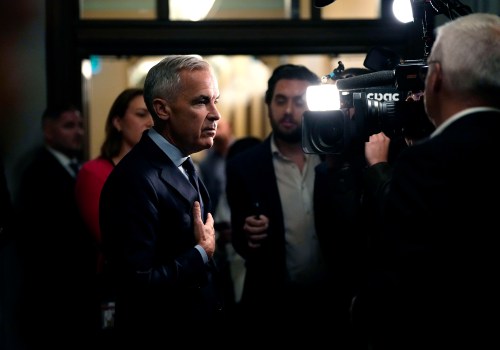
Liberal MP David McGuinty, Chair of the National Security and Intelligence Committee of Parliamentarians, responds to questions from reporters before heading into a meeting of the Liberal Caucus in Ottawa, on Wednesday, June 5, 2024. THE CANADIAN PRESS/Justin Tang

The media was singled out in a recent report by the National Security and Intelligence Committee of Parliamentarians, which McGuinty chairs.

The document highlights how China and India are interfering with Canadian media content through direct engagement with journalists and media executives.

“Foreign interference is definitely in the media, and it is singled out in the review, not only in our most immediate review but in our past review,” McGuinty told reporters Wednesday.

“You should read it and take it to your owners and editors.”

The latest report said there are examples of China paying to publish media articles without attribution, sponsoring media travel to China, pressuring journalists to withdraw articles and creating false accounts on social media to spread disinformation.

Different Chinese-language media outlets in Canada were found to have adopted the language of a People’s Republic of China state media article, without attributing it, the report alleges.

“Most of these media outlets were linked to the PRC via partnership agreements with the China News Service, the Chinese Communist Party’s primary media entity servicing Chinese ethnocultural communities, which reports directly to the United Front Work Department, the Chinese Communist Party’s central co-ordinating body for foreign interference activities,” the report reads.

And it found India demonstrated the intent and capability to engage in foreign interference by manipulating the media, saying an example of this was India’s effort to discredit a political party leader “using materials drafted by Indian intelligence organizations.”

The intelligence community also observed states manipulating traditional media to spread propaganda in what otherwise appeared to be independent news publications, the report says, without specifying which countries were involved.

The redacted report is based on secret intelligence, which often doesn’t paint a full picture and does not equate to evidence.

Green Party Leader Elizabeth May read the unredacted report, and relayed some of her findings to media on Tuesday.

She is not bound by the same Security of Information Act that McGuinty and other members of the committee are subject to, which requires them to keep quiet about their work.

The report does not specify what media organizations, at any level, are being targeted, May said.

But she said it shows journalists are part of a group alongside community organizations and politicians that are being infiltrated and co-opted by foreign interference.

“We need to protect our democracy by better understanding what hostile foreign governments see as their targets,” May said.

“And it’s basically a lot more aspects of our society than I would have imagined, including journalists.”

The medium- and long-term goal of foreign states is to reduce the public’s trust in democratic institutions, increase polarization and lower trust in the media while promoting their strategic foreign interests, security officials have cautioned parliamentarians.

That includes by manipulating the media, which a 2019 spy watchdog report said poses a significant risk to the rights and freedoms of Canadians and the country’s sovereignty.

A 2023 study by Statistics Canada shows only 58 per cent of Canadians who say they have a high level of confidence in four or more institutions trusted news and information from the media.

That level of trust dropped to 15 per cent among those who reported low confidence in institutions, the report said.

This report by The Canadian Press was first published June 12, 2024.

Report Error Submit a Tip

More Stories

Community-based care a move in the right direction

Editorial 4 minute read Preview

Community-based care a move in the right direction

Editorial 4 minute read 2:01 AM CDT

It’s not a case of reinventing the wheel. It’s a case of recognizing how the wheel actually works and realizing that a symptom can be far away from the whole illness.

Read
2:01 AM CDT

Deaths, injuries as fire hits Alberta military base: McGuinty

Fakiha Baig, The Canadian Press 4 minute read Preview

Deaths, injuries as fire hits Alberta military base: McGuinty

Fakiha Baig, The Canadian Press 4 minute read Updated: Yesterday at 2:17 AM CDT

WAINWRIGHT - Defence Minister David McGuinty says there have been deaths and injuries after a fire broke out Saturday at a military base in Alberta.

Fire crews scrambled late into the night as fierce winds whipped flames beyond CFB Wainwright, a massive military training base located 200 kilometres southeast of Edmonton.

McGuinty, speaking to reporters in Ottawa, confirmed the casualties but had no other details to share, including numbers or what happened.

"I cannot recall such an incident in my short time for sure as a minister, but I cannot recall an incident like this in recent memory,” McGuinty said.

Read
Updated: Yesterday at 2:17 AM CDT

State Industries, StateMix, StateCraft: trio of Winnipeg firms under one roof, one mantra

Aaron Epp 6 minute read Preview

State Industries, StateMix, StateCraft: trio of Winnipeg firms under one roof, one mantra

Aaron Epp 6 minute read 2:01 AM CDT

Popcorn, rollerblades and the Baha’i faith are all part of Payam Towfigh’s story.

Born in Iran, the 59-year-old is the president and CEO of the State Group, a collection of three companies all headquartered under the same roof in Winnipeg.

They include State Industries Ltd., the manufacturer of polyurethane parts where Towfigh started his career in 1989 while completing an engineering degree at the University of Manitoba. He purchased the company from founder Stan Baldwin three years later.

“I really wasn’t planning to take over State Industries,” Towfigh says, before adding with a smile: “My kids tell me that I’m not very employable since I’ve only had one job in my life.”

Read
2:01 AM CDT

Consumer apprehension grows as US retailers adopt AI-assisted pricing tools

Dee-ann Durbin And Anne D'innocenzio, The Associated Press 7 minute read Preview

Consumer apprehension grows as US retailers adopt AI-assisted pricing tools

Dee-ann Durbin And Anne D'innocenzio, The Associated Press 7 minute read Yesterday at 2:10 AM CDT

U.S. consumers aren't just frustrated with high prices. They're angry and confused about the increasingly high-tech ways that restaurant chains and major retailers are setting those prices.

Digital price tags are rapidly replacing paper ones in grocery aisles. Artificial intelligence tools help businesses decide what to charge by predicting how customers might respond. Terms like “dynamic pricing” and “surveillance pricing” are stirring anxiety on social media, where users wonder if different people are getting different prices for the same product.

Americans have grown accustomed to changing prices when booking flights, hotel rooms and rides, but the prospect of everyday spending shaped by algorithms they don’t understand and personal data they may not realize they’re sharing has touched a nerve.

“There are major tensions happening right now between who’s really going to have the power with some of these algorithms and usage of bots and AI: the companies or the shopper,” said Katie Thomas, who leads an internal consumer behavior think tank at the management consulting firm Kearney.

Read
Yesterday at 2:10 AM CDT

Officials say catastrophic base fire was known ahead of time, allowed to burn

Jack Farrell and Fakiha Baig, The Canadian Press 5 minute read Preview

Officials say catastrophic base fire was known ahead of time, allowed to burn

Jack Farrell and Fakiha Baig, The Canadian Press 5 minute read Updated: Yesterday at 9:33 PM CDT

Canada's military says a grass fire that killed four soldiers and sent scores more to hospital with bad burns was known well beforehand but not considered a threat.

Maj.-Gen. Wade Rutland, commander of 1st Canadian Division, says the grass fire was a kilometre away and considered sufficiently under control that training exercises were allowed to continue Saturday afternoon at Canadian Forces Base Wainwright in central Alberta.

However, he said conditions — including a violent, sudden windstorm — sent those flames racing over the Prairie landscape at lightning speed, landing right on top of the soldiers.

"This was a very uncommon occurrence," Rutland told a news conference Sunday.

Read
Updated: Yesterday at 9:33 PM CDT

Four councillor candidates vie for wide-open Fort Rouge-East Fort Garry ward

Malak Abas 6 minute read Preview

Four councillor candidates vie for wide-open Fort Rouge-East Fort Garry ward

Malak Abas 6 minute read Yesterday at 3:21 PM CDT

One of Winnipeg’s most densely populated wards is up for grabs come election day.

Four candidates are in the running in Fort Rouge-East Fort Garry, with the councillor position wide open after area Coun. Sherri Rollins announced in July she would be withdrawing her candidacy.

Journalist Brook Jones, hospitality worker and union organizer Carson Mauthe, city planner Jeff Palmer and retired finance worker Kevin Stuart have thrown their hats in the race.

Palmer has worked as a city planner for more than 20 years, in both the non-profit and private sectors, including CentreVenture and the University of Winnipeg Community Renewal Corporation.

Read
Yesterday at 3:21 PM CDT