Sean Baker’s improvised road to ‘Anora’
Advertisement
Read this article for free:
or
Already have an account? Log in here »
To continue reading, please subscribe:

Digital Subscription
One year of digital access for only $205*
- Enjoy unlimited reading on winnipegfreepress.com
- Read the E-Edition, our digital replica newspaper
- Access News Break, our award-winning app
- Play interactive puzzles
*First annual payment billed as $205.00 + GST for one year. This annual subscription will automatically renew at $233.00 + GST every 52 weeks (10% off the regular annual price of $259.35). Offer available to new and qualified returning subscribers only. Cancel any time.
To continue reading, please subscribe:
Add Free Press access to your Brandon Sun subscription for only an additional
$1 for the first 4 weeks*
- Enjoy unlimited reading on winnipegfreepress.com
- Read the E-Edition, our digital replica newspaper
- Access News Break, our award-winning app
- Play interactive puzzles
*Your next Brandon Sun subscription payment will increase by $1.00 and you will be charged $17.95 plus GST for four weeks. After four weeks, your payment will increase to $24.95 plus GST every four weeks.
Read unlimited articles for free today:
or
Already have an account? Log in here »
Hey there, time traveller!
This article was published 15/10/2024 (730 days ago), so information in it may no longer be current.
NEW YORK (AP) — Sean Baker’s interest in the lives of sex workers began with his 2012 drama “Starlet.” For that film, set around the adult film world of San Fernando Valley, Baker spent time listening to the stories of sex workers. Some co-starred in the movie. Many became friends.
“I remember being on set and Radium Cheung, my DP, was like, ’There’s a whole other movie. And there’s a whole other movie,’” Baker recalls. “I was like, ‘There’s a million stories to be told in this world.’”
Since then, Baker has traversed a wide swath of America in films set everywhere from West Hollywood donut shops to industrial rural Texas. But he has kept the lives of sex workers in focus. The iPhone-shot “Tangerine” (2015) is about a pair of Los Angeles trans sex workers out to avenge a cheating boyfriend. In “The Florida Project” (2017), a single mother turns to sex work to support herself and her daughter in an Orlando motel. “Red Rocket” (2021) comically captures a washed-up porn star.
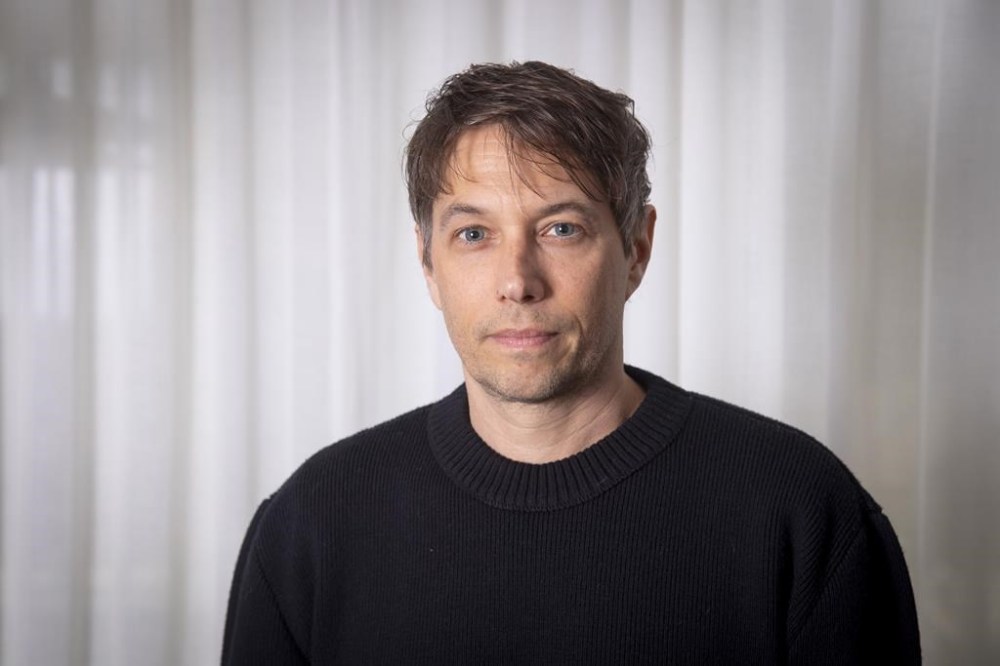
When his latest film “Anora,” starring Mikey Madison as a Brooklyn exotic dancer who spontaneously marries the son of a Russian oligarch, won the Palme d’Or at the Cannes Film Festival earlier this year, Baker dedicated the award to “all sex workers, past, present and future.”
It was a crowning moment for the 53-year-old who has long considered the French festival the pinnacle.
“It was the dream. You’re sort of in an existential crisis after that. I’m still figuring it out, quite honestly,” Baker said in a recent interview. “It’s not about opening doors. It’s certainly not about trying to get into the studio. To tell you the truth, it does the exact opposite. It says: OK, good. Now we can continue to do this.”
Baker, a resolutely independent filmmaker, is less comfortable at center stage than he is behind the camera. His movies, likewise, relish the communities of seldom-chronicled American subcultures. Samantha Quan, a producer of “Anora” and Baker’s wife, says he has always been interested in “people and situations that are always there but people choose not to see them.”
But “Anora,” one of the year’s most acclaimed movies, has brought Baker perilously close to the mainstream. “Anora” is widely considered a contender for best picture at the Academy Awards, alongside other categories including best actress for its lauded young star.
Baker has arrived at this moment despite charting what, nowadays, is an unconventional path for a filmmaker. He has no interest in television or franchise movies, remaining devoted to the big screen. He makes scrappy indie movies built from real-life experience and research that balance both screwball comedy and social realism. “Anora” is the unusual film to draw comparisons to both British social realists like Mike Leigh, a favorite of Baker’s, and masters of farce like Ernst Lubitsch.
In a Hollywood that churns out big-budget fantasies, Baker has ascended by crafting what you might call anti-fairy tales. His movies suggest there’s something bankrupt in what and who we collectively value. In “Anora,” Madison’s Ani isn’t the only one selling herself. The Russian oligarch’s henchmen are doing a job they’d rather not. The transactional nature of everything is both absurd and tragic.
It’s a sentiment Baker has come by through experience as well as research.
“I don’t want to say in any way that I ever faced the hardships of an undocumented immigrant or a marginalized sex worker,” he says. “But being an independent filmmaker for 30 years, there was a hustle. Up until fairly recently, I was struggling to pay rent.”
Baker grew up in New Jersey outside New York City. He attended film school at NYU. When he began, he envisioned himself making “Die Hard.” But as his exposure to arthouse and international film expanded, so did his interests as a filmmaker. Still, his Richard Linklater-influenced first feature, 2000’s “Four Letter Words,” drew heavily from his suburban upbringing.
But in the four years between that film and his next, he “finally” had some life experience, he says. Baker became less interested in himself than in other parts of the world. He also developed a debilitating drug addiction that took years to shake. While living above a Chinese restaurant, Baker would talk to the delivery people, many of them undocumented immigrants, in the stairwell. Those conversations led to “Take Out,” co-directed with Shih-Ching Tsou.
“That really gave me a chance to restart myself because I was down and out,” Baker says. “I lost all my friends. I lost everything. I had no more contacts. Everybody who I went to school with had been in Hollywood working. Todd Phillips, I went to school with. He was already making his first film, and I was getting off of heroin.”
With “Take Out,” Baker hit on an approach that he’s carried through to “Anora.” He leaned into immersive research, after which he built screenplays that served as a blueprint for improvisation-heavy films, eclectically populated by professional and non-professional actors. In “Anora,” he cast Madison (as well as Yura Borisov and Mark Eydelshteyn) before writing the script. He and Quan also lived briefly in the Brooklyn neighborhood of Brighton Beach to soak up the setting.
“Even though my films are taking place pretty much now, they’re contemporary stories, I want it to feel like it’s shot in 1974,” Baker says.
As much as Baker might connect his films to a ’70s sensibility, he’s largely focused on where movies might go from here — and how he might nudge its direction a little bit. The attention for “Anora” Baker hopes will carry independent, arthouse cinema into a wider arena, and, maybe, convince Hollywood that smaller, less expensive movies can punch well above their weight.
That “Anora” and Brady Corbet’s “The Brutalist” — a 3 1/2-hour epic shot in VistaVision and made for less than $10 million — seem to be in the awards mix, Baker says, is telling of a shift.
“That’s going to be a signal to the industry,” Baker says. “Right now, it’s panic in LA. I’m like: We don’t have to make films for that much.”