

Lawsuit against UK security agency by survivors of Ariana Grande concert bombing is rejected
Advertisement
Read this article for free:
or
Already have an account? Log in here »
To continue reading, please subscribe:
Monthly Digital Subscription
$0 for the first 4 weeks*
- Enjoy unlimited reading on winnipegfreepress.com
- Read the E-Edition, our digital replica newspaper
- Access News Break, our award-winning app
- Play interactive puzzles
*No charge for 4 weeks then price increases to the regular rate of $19.95 plus GST every four weeks. Offer available to new and qualified returning subscribers only. Cancel any time.
Monthly Digital Subscription
$4.99/week*
- Enjoy unlimited reading on winnipegfreepress.com
- Read the E-Edition, our digital replica newspaper
- Access News Break, our award-winning app
- Play interactive puzzles
*Billed as $19.95 plus GST every four weeks. Cancel any time.
To continue reading, please subscribe:
Add Free Press access to your Brandon Sun subscription for only an additional
$1 for the first 4 weeks*
*Your next subscription payment will increase by $1.00 and you will be charged $16.99 plus GST for four weeks. After four weeks, your payment will increase to $23.99 plus GST every four weeks.
Read unlimited articles for free today:
or
Already have an account? Log in here »
Hey there, time traveller!
This article was published 22/11/2024 (413 days ago), so information in it may no longer be current.
LONDON (AP) — A legal claim against Britain’s domestic intelligence agency by more than 300 survivors of a bombing that killed 22 people at a 2017 Ariana Grande concert in Manchester was rejected Friday by a special tribunal.
Judges on the U.K.’s Investigatory Powers Tribunal said the claimants waited too long to bring their case, which alleged that MI5 violated their human rights by failing to take measures that could have prevented the disaster.
Suicide bomber Salman Abedi set up a knapsack bomb in Manchester Arena at the end of Grande’s concert on May 22, 2017, as thousands of young fans were leaving. As well as the 22 dead, more than 100 people were injured, many of them children and teenagers. Abedi died in the explosion.
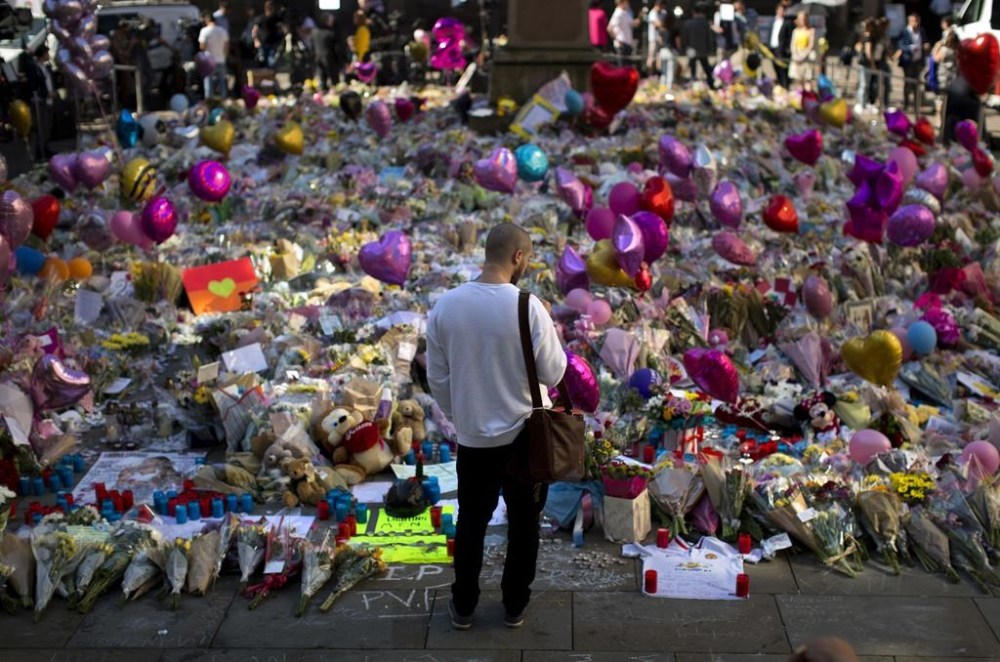
An official inquiry reported last year that MI5 didn’t act swiftly enough on key information and missed a significant opportunity to prevent the bombing, the deadliest extremist attack in the U.K. in recent years.
Abedi had been a “subject of interest” to MI5 officials in 2014, but his case was closed shortly after because he was deemed to be low risk.
The report also found one MI5 officer considered intelligence about Abedi to be a possible national security concern, but didn’t discuss it with colleagues quickly enough.
Ken McCallum, the head of MI5, said in a rare televised statement that he was “profoundly sorry” his agency was unable to prevent the attack.
Justice Rabinder Singh said the tribunal was “conscious of the horrendous impact of the atrocity” on the victims but said it would not be fair to let the claims proceed when they could have been filed sooner.
“Any reasonable person would have sympathy for them,” Singh said. “The grief and trauma which they have suffered, particularly where young children were killed, is almost unimaginable.”
Singh also noted that if the case had proceeded it would have taken MI5 away from its core mission.
Three law firms representing the victims said in a statement that the ruling was “extremely disappointing.”
“Our clients have had to endure continued delays but have done so with great patience and understanding in the hope that by allowing all legal processes to be fully explored, transparency and justice would be achieved,” the statement said.