

Book Review: ‘Air-borne’ transforms scientific history into detective story
Advertisement
Read this article for free:
or
Already have an account? Log in here »
To continue reading, please subscribe:
Monthly Digital Subscription
$1 per week for 24 weeks*
- Enjoy unlimited reading on winnipegfreepress.com
- Read the E-Edition, our digital replica newspaper
- Access News Break, our award-winning app
- Play interactive puzzles
*Billed as $4.00 plus GST every four weeks. After 24 weeks, price increases to the regular rate of $19.95 plus GST every four weeks. Offer available to new and qualified returning subscribers only. Cancel any time.
Monthly Digital Subscription
$4.99/week*
- Enjoy unlimited reading on winnipegfreepress.com
- Read the E-Edition, our digital replica newspaper
- Access News Break, our award-winning app
- Play interactive puzzles
*Billed as $19.95 plus GST every four weeks. Cancel any time.
To continue reading, please subscribe:
Add Free Press access to your Brandon Sun subscription for only an additional
$1 for the first 4 weeks*
*Your next subscription payment will increase by $1.00 and you will be charged $16.99 plus GST for four weeks. After four weeks, your payment will increase to $23.99 plus GST every four weeks.
Read unlimited articles for free today:
or
Already have an account? Log in here »
Hey there, time traveller!
This article was published 24/02/2025 (397 days ago), so information in it may no longer be current.
A history of aerobiology would normally be a book that would have little interest beyond the science community. But in “Air-Borne: The Hidden History of the Life We Breath,” Carl Zimmer transforms the topic into something that reads like a combination of detective and horror stories.
Zimmer creates a highly relevant and gripping history of the study of the air that spans from Louis Pasteur holding a glass globe on a glacier to scientists racing to fight COVID-19 during the pandemic.
The book shows what a vital role the science of airborne life has played in the fight against COVID, influenza and other diseases. Zimmer also introduces readers to figures little known to the mass public who have played a role in the field’s evolution.
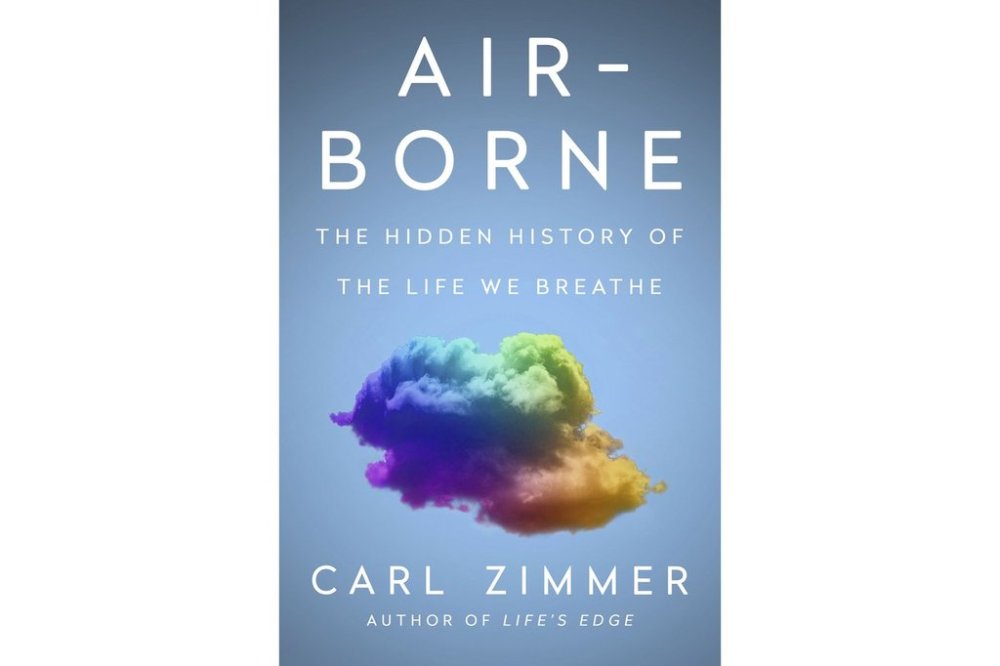
They include William Firth Wells, a pioneer in aerobiology whose work was crucial in understanding how airborne diseases spread, especially during the pandemic.
Zimmer’s book also shows how the work of Wells and other scientists was distorted into something that was used as the basis of biological weapons.
Using the outbreak among a Washington state choir, Zimmer chillingly describes how COVID-19 spread through the air and the frustrating rifts among health officials during the pandemic about addressing to the public that the virus was airborne.
As Zimmer puts it, the pandemic “made the ocean of gases surrounding us visible.” His book is a key guide for understanding that ocean.
___
AP book reviews: https://apnews.com/hub/book-reviews