

Animal skins, bells, ritual chaos: Ancient burnout remedy is still at the heart of Greece’s carnival
Advertisement
Read this article for free:
or
Already have an account? Log in here »
To continue reading, please subscribe:
Monthly Digital Subscription
$1 per week for 24 weeks*
- Enjoy unlimited reading on winnipegfreepress.com
- Read the E-Edition, our digital replica newspaper
- Access News Break, our award-winning app
- Play interactive puzzles
*Billed as $4.00 plus GST every four weeks. After 24 weeks, price increases to the regular rate of $19.95 plus GST every four weeks. Offer available to new and qualified returning subscribers only. Cancel any time.
Monthly Digital Subscription
$4.99/week*
- Enjoy unlimited reading on winnipegfreepress.com
- Read the E-Edition, our digital replica newspaper
- Access News Break, our award-winning app
- Play interactive puzzles
*Billed as $19.95 plus GST every four weeks. Cancel any time.
To continue reading, please subscribe:
Add Free Press access to your Brandon Sun subscription for only an additional
$1 for the first 4 weeks*
*Your next subscription payment will increase by $1.00 and you will be charged $16.99 plus GST for four weeks. After four weeks, your payment will increase to $23.99 plus GST every four weeks.
Read unlimited articles for free today:
or
Already have an account? Log in here »
Hey there, time traveller!
This article was published 03/03/2025 (389 days ago), so information in it may no longer be current.
DISTOMO, Greece (AP) — Feeling overwhelmed by everyday obligations or doom-scrolling? The ancient Greeks had a remedy for burnout still practiced annually by their rural descendants.
In the mountain village of Distomo, the “Koudounaraioi” — literally, the “Bell People” — transform themselves into half-human, half-beast revelers in a ritual dating back to pre-Christian times.
Clad in sheep and goatskins with heavy hand-forged bronze bells chained to their waists, the Bell People danced through the streets Monday of this red-roofed village, a two-hour drive northwest of Athens.
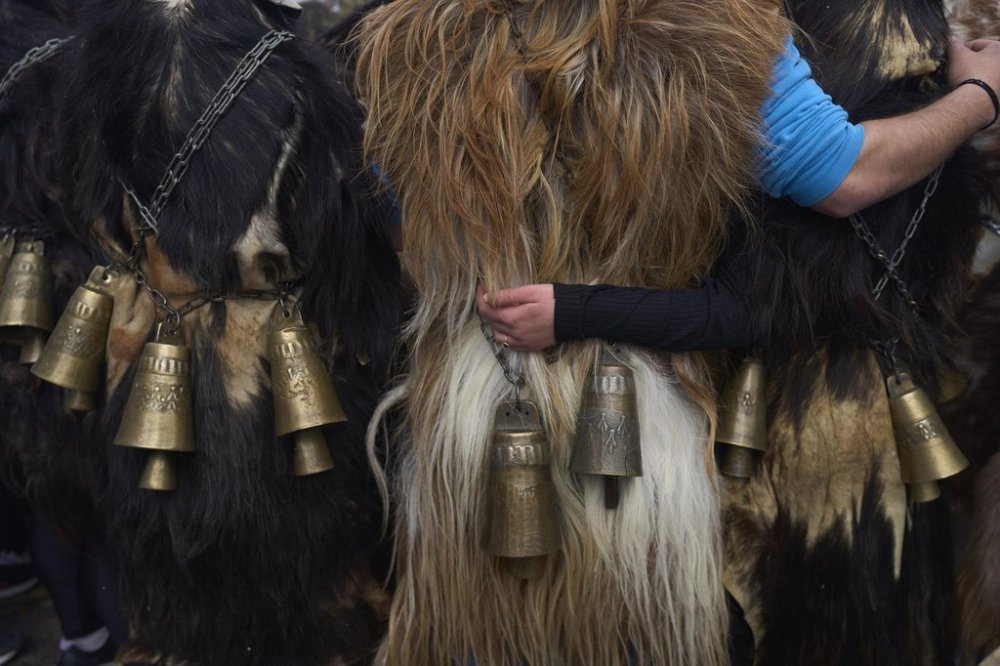
The deafening clatter the dancers make and their profanity-filled chants as they bound around a fire in the main square are a wine-fueled sonic assault. And that’s the point.
Hedonistic carnival traditions across the Greek heartland and islands trace back to the ecstatic processions in ancient times honoring Dionysus, the god of wine, fertility and revelry and were then, as now, a cultural pressure valve.
“We give society a jolt … and try to take away their misfortunes, their problems, to lift their spirits so they can feel something,” said Giorgos Papaioannou, a 29-year-old aluminum plant worker known during carnival as president of Distomo’s Bell People.
“We even visit cemeteries, making noise to ‘wake up’ the souls of those who have passed, reminding them and the living alike that we are here, celebrating life,” he said.
The ancient tradition practiced by farming communities to usher in spring was eventually incorporated into the Christian calendar. Monday marks the end of carnival and the start of Lent, a period of dietary restrictions and increased religious observance before Easter, which this year falls on April 20.
Distomo is known to Greeks as a symbol of wartime hardship. In June 1944, occupying Nazi forces slaughtered 230 civilian villagers, including more than 50 children in reprisals for attacks by resistance fighters.
An austerely-styled World War II mausoleum overlooks the village.
“After the massacre, we managed to keep the tradition alive. It’s to awaken the spring,” Distomo Mayor Ioannis Stathas said. “This is a tradition that is many centuries old, a pre-Christian tradition, and it has been carried from generation to generation.”
This year’s Bell People, many of them schoolchildren, held up flares and olive-wood staffs as they entered the village, trailed by giggling children and their parents dressed up as dinosaurs, police officers and other carnival costumes.
Revelers were handed plastic cups filled with wine and portions of bean soup, as children danced to a mix of Greek folk music, Western chart hits and K-pop.
Amalia Papaioannou, a historian and curator of the Distomo Museum, said that the once male-dominated celebrations have remained relevant by incorporating pieces of modernity but remain rooted in rural traditions.

Agrarian societies, historically reliant on favorable conditions in nature for their survival, created these rituals to ward off evil and misfortune, she said. Carnival revelry has for centuries served as a sanctioned period of chaos before returning to structure and restraint.
“It allows a brief period of social inversion: People wear disguises, and speech, including crude jokes, is temporarily liberated. Even the Church historically tolerated such festivities, recognizing their deep-rooted cultural and communal significance,” she said.
“You could call it a reset.”
___
Lefteris Pitarakis contributed to this report.
The Free Press acknowledges the financial support it receives from members of the city’s faith community, which makes our coverage of religion possible.