CBC urges stricter CanCon rules for homegrown programming, foreign partners
Advertisement
Read this article for free:
or
Already have an account? Log in here »
To continue reading, please subscribe:

Digital Subscription
One year of digital access for only $205*
- Enjoy unlimited reading on winnipegfreepress.com
- Read the E-Edition, our digital replica newspaper
- Access News Break, our award-winning app
- Play interactive puzzles
*First annual payment billed as $205.00 + GST for one year. This annual subscription will automatically renew at $233.00 + GST every 52 weeks (10% off the regular annual price of $259.35). Offer available to new and qualified returning subscribers only. Cancel any time.
To continue reading, please subscribe:
Add Free Press access to your Brandon Sun subscription for only an additional
$1 for the first 4 weeks*
- Enjoy unlimited reading on winnipegfreepress.com
- Read the E-Edition, our digital replica newspaper
- Access News Break, our award-winning app
- Play interactive puzzles
*Your next Brandon Sun subscription payment will increase by $1.00 and you will be charged $17.95 plus GST for four weeks. After four weeks, your payment will increase to $24.95 plus GST every four weeks.
Read unlimited articles for free today:
or
Already have an account? Log in here »
Hey there, time traveller!
This article was published 26/05/2025 (468 days ago), so information in it may no longer be current.
CBC is urging Canada’s regulator to tighten restrictions around what constitutes Canadian screen content, pushing back against foreign streamers seeking looser rules.
The public broadcaster says at least 60 per cent of key creative positions should be filled by Canadians, including the top two leads and director, writer and showrunner.
Under current rules, productions must earn at least six out of 10 points by filling key creative roles with Canadians — with only one Canadian required as director or writer, and one as a lead actor.
CBC executives including the head of English services appeared at a CRTC hearing Monday to stress the need for strong Canadian creative and financial control, especially when collaborating with foreign partners.
They also say Canadians should own the copyright to Canadian productions.
“We believe that relaxing these rules is a slippery slope that does not serve the interests of the Canadian broadcasting system,” Barbara Williams, CBC’s executive vice-president of English services, told the hearing.
“The best way to support the viability and sustainability of our system is a definition that requires Canadian creative control over and the retention of meaningful economic benefits derived from television productions by Canadians.”
The Canadian Radio-television and Telecommunications Commission is in the midst of a two-week hearing with key industry players to update the Online Streaming Act, including what obligations should be imposed on foreign streaming giants like Netflix and Prime Video.
“(Foreign streamers) have benefited enormously from being here in this country and we look for opportunities through the system to be sure that they pay back and that they contribute and be a partner in a meaningful way,” Williams said.
“And that’s not about giving away some of our Canadian control — creative, financial or otherwise. It’s about maintaining and holding on to what we have and finding ways for them to be a meaningful participant.”
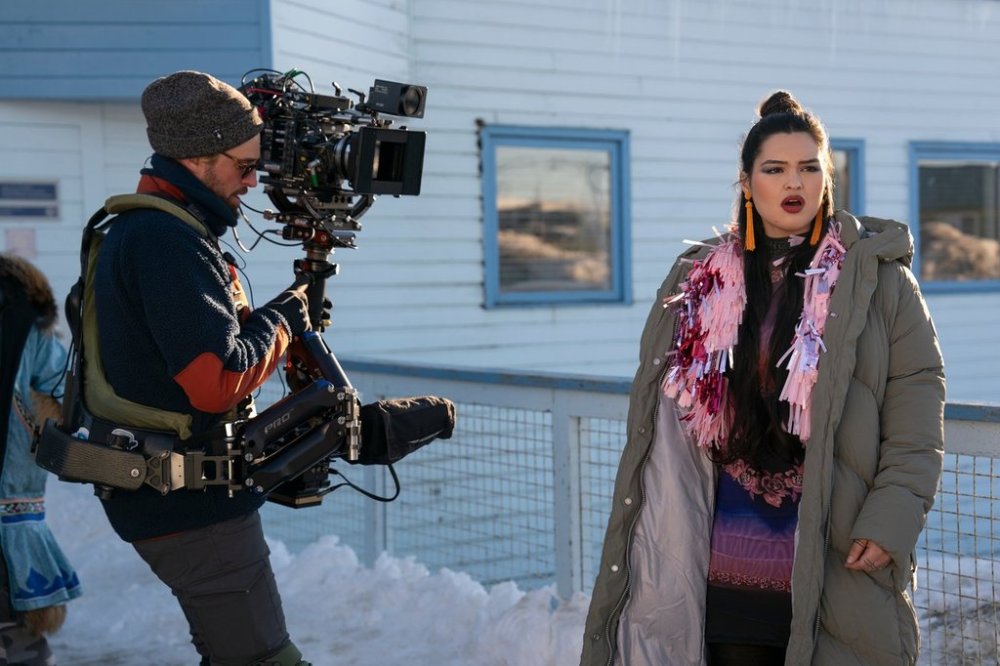
CBC series “North of North,” co-produced with APTN and Netflix, was repeatedly cited as a model of successful collaboration.
CBC said the series, developed over two years before Netflix joined, proves that strong Canadian-led projects can attract global partners without giving up intellectual property rights and key creative roles. The broadcaster’s execs said the show has performed well domestically and abroad.
“Netflix was an important and critical piece of the financing, but we didn’t need to compromise being Canadian-owned in every way, shape and form in order to have them be a partner,” said Lisa Clarkson, CBC’s executive director of business and rights.
CRTC commissioners asked whether looser IP-sharing rules could lead to more collaborations like “North of North.” Williams responded firmly: “The simple answer is no.”
Rather than relaxing IP ownership to lure foreign involvement, she argued, the better path is to support Canadian creators to develop world-class ideas that attract global partners.
Clarkson added that CBC assumes significant risk and cost in early-stage development of programs, long before foreign investors get involved.
She argued foreign partners receive creative benefits including “a fully polished script. They don’t have to take the risk for that.”
Clarkson noted that “North of North” is just one of 38 drama co-productions the public broadcaster has undertaken with foreign financing partners in the past five years, all while maintaining full Canadian ownership.
“To take away ownership from the Canadian producer is… unwise and unnecessary,” Clarkson said, adding that foreign partners already benefit from incentives like tax credits and public funding.
“Instead of paying 100 per cent, they’re often paying 20 to 50 per cent. Those are massive inducements already.”
Last week, a group representing major streaming companies told the CRTC that digital platforms shouldn’t be bound by the same Canadian content obligations as traditional broadcasters.

Speaking at a hearing, the Motion Picture Association-Canada — which represents streamers like Netflix, Disney, Amazon and Paramount — urged the regulator to take a more flexible approach to updating the definition of Canadian content.
Asked by the CRTC to respond to that request, Williams said both the public broadcaster and the regulator must consider their shared responsibility in supporting the domestic creative industry.
“Here in Canada, in this moment in particular, what we are really driven by is the need to support a creative community that can feel it has the opportunity to put its best foot forward and build great content that then they can exploit, that they can own, that they can build a business around,” said Williams on Monday.
“But what we’re reluctant to accept is that somehow we need a foreign entity to help us do that. We’re very, very capable of doing this on our own and making great projects.”
This report by The Canadian Press was first published May 26, 2025.