

Iran summons French diplomat over praise of Palme d’Or-winning film
Advertisement
Read this article for free:
or
Already have an account? Log in here »
To continue reading, please subscribe:
Monthly Digital Subscription
$0 for the first 4 weeks*
- Enjoy unlimited reading on winnipegfreepress.com
- Read the E-Edition, our digital replica newspaper
- Access News Break, our award-winning app
- Play interactive puzzles
*No charge for 4 weeks then price increases to the regular rate of $19.00 plus GST every four weeks. Offer available to new and qualified returning subscribers only. Cancel any time.
Monthly Digital Subscription
$4.75/week*
- Enjoy unlimited reading on winnipegfreepress.com
- Read the E-Edition, our digital replica newspaper
- Access News Break, our award-winning app
- Play interactive puzzles
*Billed as $19 plus GST every four weeks. Cancel any time.
To continue reading, please subscribe:
Add Free Press access to your Brandon Sun subscription for only an additional
$1 for the first 4 weeks*
*Your next subscription payment will increase by $1.00 and you will be charged $16.99 plus GST for four weeks. After four weeks, your payment will increase to $23.99 plus GST every four weeks.
Read unlimited articles for free today:
or
Already have an account? Log in here »
Hey there, time traveller!
This article was published 26/05/2025 (196 days ago), so information in it may no longer be current.
DUBAI, United Arab Emirates (AP) — Iran has summoned France’s representative in protest after the French foreign minister praised a prize-winning Iranian film as “a gesture of resistance against the Iranian regime’s oppression.”
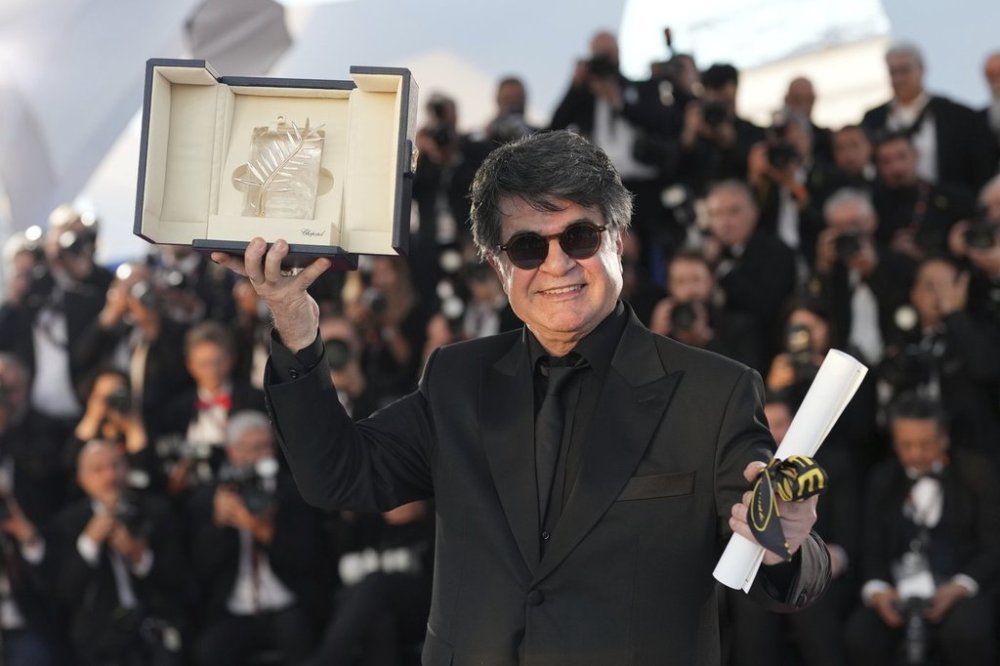
Foreign Minister Jean-Noel Barrot had praised “It Was Just an Accident” after it won the prestigious Palme d’Or award at the Cannes Film Festival. The Iranian film centers on a man who abducts his suspected captor after being tortured in prison.
Iran’s Foreign Ministry said the French charge d’affaires was summoned over the minister’s “interventionist, irresponsible and instigative allegations,” the state-run IRNA news agency reported.
“Spare us Iranians the lectures. You have no moral authority whatsoever,” Iran’s Foreign Minister Abbas Araghchi said on “X,” citing France’s approach to Israel’s ongoing war in Gaza. France last week threatened “concrete action” against Israel if the country didn’t halt the offensive in Gaza and lift restrictions on humanitarian aid, but the statement was mostly dismissed as empty threats.
Immediately following the award’s announcement, the Iranian state news agency had announced a more muted celebration of the award, crediting the country’s film industry for winning a second Palme d’Or after Abbas Kiarostami’s 1997 drama, “Taste of Cherry.”
In Iran, film productions need to receive script approval from the government to shoot in public. Dissident filmmaker Jafar Panahi refuses to do that, knowing they won’t allow him to make the films he wants to, and “It Was Just an Accident” was filmed without cooperation. Iranian state TV called the film a mixture of “lie and smearing” as well as an “underground” film produced without required permits in Iran. State TV also chastised Panahi for not mentioning the plight of the Palestinians in his acceptance speech.
The film follows a man named Vahid, played by Vahid Mobasser, who believes he sees his former captor, who tortured him in prison and ruined his life. He abducts him, takes him to the desert and begins to bury him in the ground.
But to satisfy pangs of doubt, Vahid decides to confirm his suspicion by bringing the man, locked in his van, to other former prisoners for identification. In a strange and emotional journey, they are all forced to grapple with revenge and forgiveness. Panahi drew on the experiences from his own imprisonment as well as the stories of detainees around him.
Other state media were more critical of the win. The Mizan news agency, an arm of the country’s judiciary, reported on the win as part of the “Political Cannes Film Festival,” suggesting that the prize was given to Panahi because of his political leanings.
Pro-reform media outlets and activists praised Panahi. “This victory is no accident — it is the result of a tireless dedication to exploring humanistic values and human rights,” said Nobel Peace Prize laureate Narges Mohammadi, who was also previously imprisoned at Tehran’s notorious Evin Prison. Inmates at the prison include those with Western ties and political prisoners.
Panahi, one of the leading international directors, was banned from traveling out of Iran in 2009 for attending the funeral of a student killed in anti-government protests, a judgment later extended to two decades. But even when placed under house arrest, Panahi kept making movies, many of which are among the most lauded of the century. He made 2011’s “This Is Not a Film” on an iPhone in his living room. “Taxi” (2015) was clandestinely shot almost entirely within a car.

Panahi was arrested in 2022 when he went to the Tehran prosecutor’s office to inquire about the arrests of two other Iranian filmmakers. A judge later ruled that he must serve six years for an earlier sentence on charges of propagandizing against the government from 2011 that had never been enforced. In early 2023, Panahi went on a hunger strike and was released from Evin Prison.
Panahi said he would not seek asylum in another country, despite the risks of additional imprisonment.
“It’s simple. I’m unable to live here,” he said last week from the Cannes festival. “I have no ability to adapt to a new country, a new culture. Some people have this ability, this strength. I don’t.”
On Monday, Panahi landed in Tehran to cheers and applause from fans.
— Associated Press Nasser Karimi in Tehran, Iran, and Jake Coyle in Cannes, France, contributed.