David Attenborough’s ‘Ocean’ is a brutal, beautiful wake-up call from the sea
Advertisement
Read this article for free:
or
Already have an account? Log in here »
To continue reading, please subscribe:

Digital Subscription
One year of digital access for only $205*
- Enjoy unlimited reading on winnipegfreepress.com
- Read the E-Edition, our digital replica newspaper
- Access News Break, our award-winning app
- Play interactive puzzles
*First annual payment billed as $205.00 + GST for one year. This annual subscription will automatically renew at $233.00 + GST every 52 weeks (10% off the regular annual price of $259.35). Offer available to new and qualified returning subscribers only. Cancel any time.
To continue reading, please subscribe:
Add Free Press access to your Brandon Sun subscription for only an additional
$1 for the first 4 weeks*
- Enjoy unlimited reading on winnipegfreepress.com
- Read the E-Edition, our digital replica newspaper
- Access News Break, our award-winning app
- Play interactive puzzles
*Your next Brandon Sun subscription payment will increase by $1.00 and you will be charged $17.95 plus GST for four weeks. After four weeks, your payment will increase to $24.95 plus GST every four weeks.
Read unlimited articles for free today:
or
Already have an account? Log in here »
Hey there, time traveller!
This article was published 07/06/2025 (494 days ago), so information in it may no longer be current.
NICE, France (AP) — An ominous chain unspools through the water. Then comes chaos. A churning cloud of mud erupts as a net plows the seafloor, wrenching rays, fish and a squid from their home in a violent swirl of destruction. This is industrial bottom trawling. It’s not CGI. It’s real. And it’s legal.
“Ocean With David Attenborough” is a brutal reminder of how little we see and how much is at stake. The film is both a sweeping celebration of marine life and a stark exposé of the forces pushing the ocean toward collapse.
The British naturalist and broadcaster, now 99, anchors the film with a deeply personal reflection: “After living for nearly a hundred years on this planet, I now understand that the most important place on Earth is not on land, but at sea.”

The film traces Attenborough’s lifetime — an era of unprecedented ocean discovery — through the lush beauty of coral reefs, kelp forests and deep-sea wanderers, captured in breathtaking, revelatory ways.
But this is not the Attenborough film we grew up with. As the environment unravels, so too has the tone of his storytelling. “Ocean” is more urgent, more unflinching. Never-before-seen footage of mass coral bleaching, dwindling fish stocks and industrial-scale exploitation reveals just how vulnerable the sea has become. The film’s power lies not only in what it shows, but in how rarely such destruction is witnessed.
“I think we’ve got to the point where we’ve changed so much of the natural world that it’s almost remiss if you don’t show it,” co-director Colin Butfield said. “Nobody’s ever professionally filmed bottom trawling before. And yet it’s happening practically everywhere.”
The practice is not only legal, he adds, but often subsidized.
“For too long, everything in the ocean has been invisible,” Butfield said. “Most people picture fishing as small boats heading out from a local harbor. They’re not picturing factories at sea scraping the seabed.”
In one harrowing scene, mounds of unwanted catch are dumped back into the sea already dead. About 10 million tons (9 million metrics tonnes) of marine life are caught and discarded each year as bycatch. In some bottom trawl fisheries, discards make up more than half the haul.
Still, “Ocean” is no eulogy. Its final act offers a stirring glimpse of what recovery can look like: kelp forests rebounding under protection, vast marine reserves teeming with life and the world’s largest albatross colony thriving in Hawaii’s Papahānaumokuākea Marine National Monument. These aren’t fantasies; they’re evidence of what the ocean can become again, if given the chance.
Timed to World Oceans Day and the U.N. Ocean Conference in Nice, the film arrives amid a growing global push to protect 30% of the ocean by 2030 — a goal endorsed by more than 190 countries. But today, just 2.7% of the ocean is effectively protected from harmful industrial activity.
The film’s message is clear: The laws of today are failing the seas. So-called “protected” areas often aren’t. And banning destructive practices like bottom trawling is not just feasible — it’s imperative.
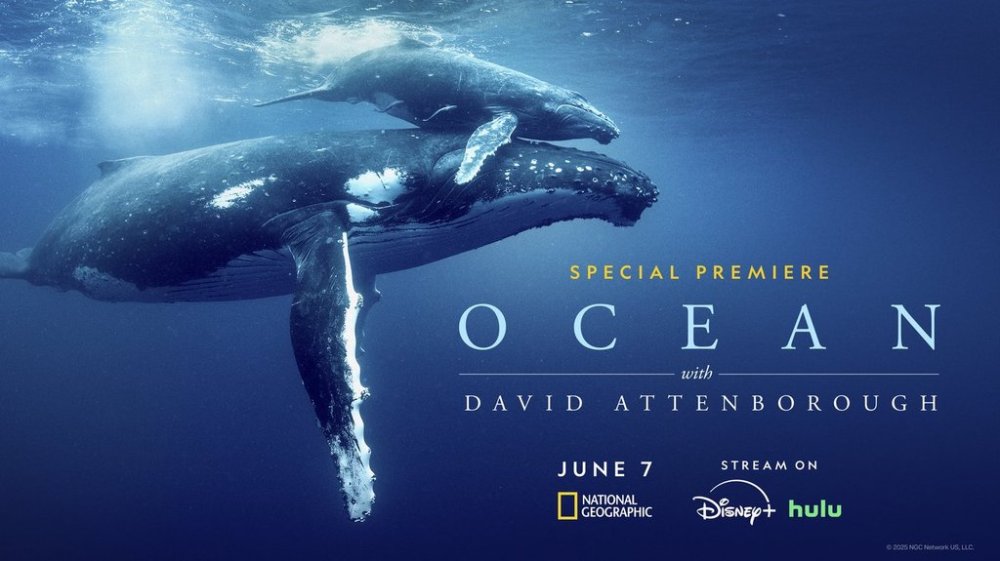
As always, Attenborough is a voice of moral clarity. “This could be the moment of change,” he says. “Ocean” gives us the reason to believe — and the evidence to demand — that it must be.

“Ocean” premieres Saturday on National Geographic in the U.S. and streams globally on Disney+ and Hulu beginning Sunday.
___
Follow Annika Hammerschlag on Instagram @ahammergram.
___
The Associated Press receives support from the Walton Family Foundation for coverage of water and environmental policy. The AP is solely responsible for all content. For all of AP’s environmental coverage, visit https://apnews.com/hub/climate-and-environment