Czech author and anti-communist dissident Ivan Klíma dies at 94
Advertisement
Read this article for free:
or
Already have an account? Log in here »
To continue reading, please subscribe:

Digital Subscription
One year of digital access for only $205*
- Enjoy unlimited reading on winnipegfreepress.com
- Read the E-Edition, our digital replica newspaper
- Access News Break, our award-winning app
- Play interactive puzzles
*First annual payment billed as $205.00 + GST for one year. This annual subscription will automatically renew at $233.00 + GST every 52 weeks (10% off the regular annual price of $259.35). Offer available to new and qualified returning subscribers only. Cancel any time.
To continue reading, please subscribe:
Add Free Press access to your Brandon Sun subscription for only an additional
$1 for the first 4 weeks*
- Enjoy unlimited reading on winnipegfreepress.com
- Read the E-Edition, our digital replica newspaper
- Access News Break, our award-winning app
- Play interactive puzzles
*Your next Brandon Sun subscription payment will increase by $1.00 and you will be charged $17.95 plus GST for four weeks. After four weeks, your payment will increase to $24.95 plus GST every four weeks.
Read unlimited articles for free today:
or
Already have an account? Log in here »
Hey there, time traveller!
This article was published 04/10/2025 (370 days ago), so information in it may no longer be current.
PRAGUE (AP) — Ivan Klíma, a Czech author and anti-communist dissident whose work and life were shaped by Europe’s 20th-century totalitarian regimes, has died.
His son Michal told the Czech ČTK news agency that Klíma died on Saturday morning at home after battling a long illness. He was 94.
A prolific author, Klima published novels, plays, short story collections and essays as well as children’s books, becoming an internationally known writer whose works were translated into more than 30 languages.
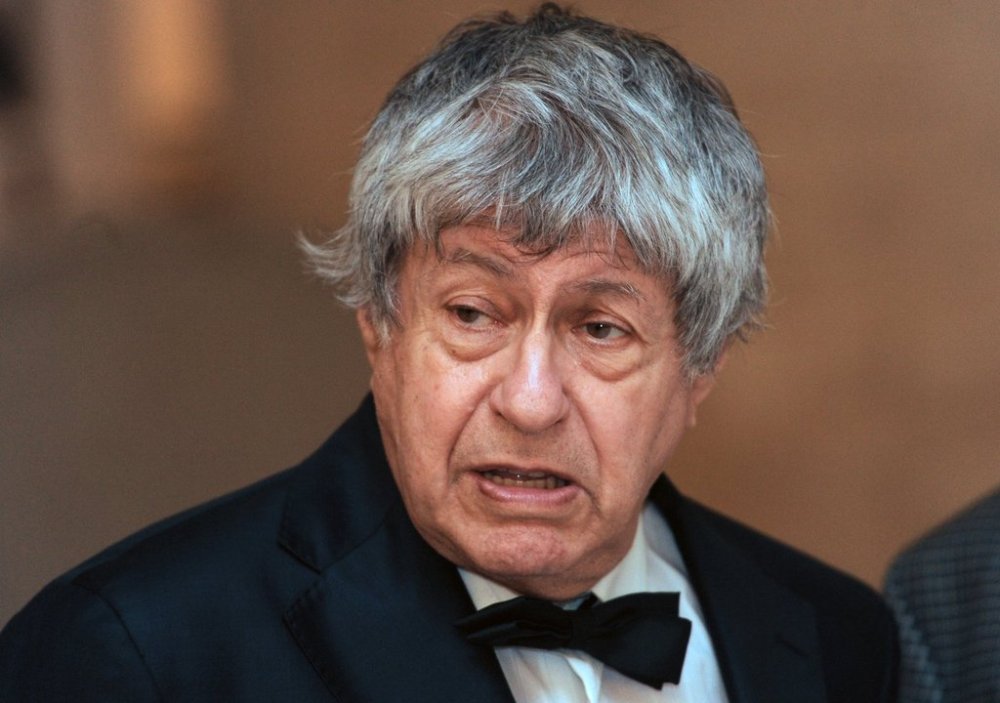
Born Ivan Kauders on Sept 14, 1931, in Prague, Klima faced his first repressive regime during World War II when his Jewish family was transported to the Nazis’ Theresienstadt concentration camp. Against the odds, they all survived.
The new Communist regime that took power in Czechoslovakia in 1948 looked promising at first for Klima and many others who had been persecuted.
Klima belonged to a group of talented writers — including Milan Kundera, Pavel Kohout and Ludvik Vaculík — who turned to communism with high hopes after the war only to be bitterly disappointed by its totalitarian nature and its ruthless liquidation of opponents.
Klíma joined the Communist Party in 1953, the same year his father was imprisoned for political reasons. He was expelled from the party in 1967 after criticizing the Communist regime in a speech at a writers’ meeting.
A year later, his writings were banned after a Soviet-led military invasion in 1968 crushed the liberal reforms of Alexander Dubček’s government and ended a more liberal era known as the “Prague Spring.”
“The craziness of the 20th century that I write about has to do with the totalitarian ideologies which were responsible for unbelievable crimes,” Klíma told Czech public radio in 2010 about his two-volume memoirs “My Crazy Century.”
“And that happened despite the fact that those countries belonged to our civilization, they were the countries with a rich cultural tradition,” he said.
After studying Czech language and literary theory at Charles University in Prague in the 1950s, Klíma worked as an editor for several literary journals and began writing for magazines. His multi-layered stories and novels, including his highly acclaimed “Judge on Trial,” captured the situation of individuals facing the machinery of the totalitarian state.
“The main character is dealing with a key topic for him,” Klíma said about his masterpiece, which was first published in German in Switzerland in 1979. “Has the society a right to take anyone’s life? And what has a judge who opposes capital punishment to do in the society that demands it?”
After returning from a teaching stint at the University of Michigan in 1969-1970, Klíma joined the Czech dissident movement. His books at the time were released at home only in underground publications.
Still, unlike many other opponents of communism, Klíma mostly did not have to do menial jobs just to make ends meet because of the support he received from author Philip Roth. The American writer visited Czechoslovakia repeatedly in the 1970s to help Klíma, Kundera and other banned authors, and oversaw the publication of their works in the United States.
After the 1989 Velvet Revolution led by the late Václav Havel ousted communist rule in his homeland, Klima focused full-time on writing. In addition to “Judge on Trial,” his other well-known works include “Love and Garbage,” “My Golden Trades” and “The Spirit of Prague and Other Essays.”
Unlike his complicated, Kafkaesque adult fiction, Klíma’s books for children were more playful. They included a screenplay for several episodes featuring the famed Czech cartoon hero the Little Mole.
In 2002, Havel — by then the country’s president — awarded Klima the Medal for Outstanding Service to the Czech Republic. That same year, Klíma also won the prestigious Franz Kafka Prize.
Of all the turbulent times he saw, Klíma said the moment he left the Nazi concentration camp free and alive was his most vivid experience.
“There’s only life or death,” he said. “Nothing else matters.”