From climate change to Inuit culture — five things shared by Greenland and Canada
Advertisement
Read this article for free:
or
Already have an account? Log in here »
To continue reading, please subscribe:

Digital Subscription
One year of digital access for only $205*
- Enjoy unlimited reading on winnipegfreepress.com
- Read the E-Edition, our digital replica newspaper
- Access News Break, our award-winning app
- Play interactive puzzles
*First annual payment billed as $205.00 + GST for one year. This annual subscription will automatically renew at $233.00 + GST every 52 weeks (10% off the regular annual price of $259.35). Offer available to new and qualified returning subscribers only. Cancel any time.
To continue reading, please subscribe:
Add Free Press access to your Brandon Sun subscription for only an additional
$1 for the first 4 weeks*
- Enjoy unlimited reading on winnipegfreepress.com
- Read the E-Edition, our digital replica newspaper
- Access News Break, our award-winning app
- Play interactive puzzles
*Your next Brandon Sun subscription payment will increase by $1.00 and you will be charged $17.95 plus GST for four weeks. After four weeks, your payment will increase to $24.95 plus GST every four weeks.
Read unlimited articles for free today:
or
Already have an account? Log in here »
Hey there, time traveller!
This article was published 06/02/2026 (245 days ago), so information in it may no longer be current.
NUUK – Canada is set to formally open its newest diplomatic mission Friday in Nuuk, the capital of Greenland, to build on deep ties that precede the recent geopolitical crisis.
U.S. President Donald Trump has demanded U.S. control of Greenland and only recently backed down after the White House refused to rule out securing the island through military force. His demands echoed his repeated calls for Canada to become an American state.
In February 2024, before Trump returned to the White House, the Danish territory launched an Arctic strategy which promised a representation office for Greenland in Ottawa.
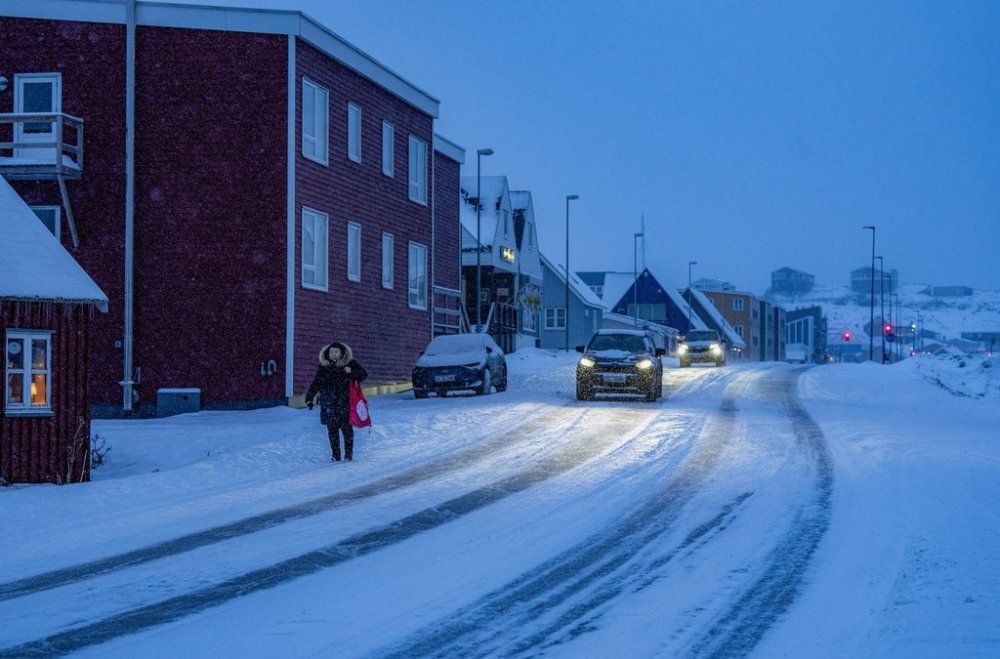
That December, Canada promised to open a consulate in Nuuk. The building is now operational after a formal launch nearly three months ago was cancelled due to bad weather.
Since then, Trump’s aspirations for the territory have drawn global media to Nuuk.
Here are five things Canada and Greenland share:
A land border
In 2022, Canada and Denmark struck a deal to resolve an amicable dispute over Hans Island involving 1.3 square kilometres that both countries had claimed for five decades.
The uninhabited rock sits between Ellesmere Island in Nunavut and Greenland. It was divided along a natural ridge, giving about 40 per cent of the territory to Canada and the rest to Greenland.
That meant that Canada for the first time shared a land border with Denmark.
During the long dispute — in what was dubbed the Whisky Wars — soldiers from both nations left bottles of spirits on the island with little notes for one another while removing each other’s flags.
The negotiations took 17 years and resolved a disagreement between the two countries over maritime boundaries on the continental shelf. As a way of affirming support for international law, both countries had agreed to refer the dispute to the International Court of Justice if they couldn’t reach a deal.
The agreement followed consultation with Inuit from both Nunavut and Greenland, who maintained hunting rights and freedom of movement on the island.
Inuit population
When the Hans Island dispute was resolved in 2022, Ottawa said the process had prompted further negotiations on freedom of movement for Inuit living in Nunavut and Greenland to make it easier for them to visit friends and family.
The territories share many cultural and family ties.
The 2021 census reported 70,545 Inuit in Canada, mostly in their ancestral territories in the three territories, Labrador and northern Quebec.
Greenland’s population stood at 57,000 and most estimates suggest 90 per cent of the territory is Inuit.
Inuit also have worked together across colonial borders to advocate for their rights and the preservation of their cultures through the Inuit Circumpolar Council, which includes representatives from Canada, Greenland, Alaska and Siberia.
Greenland suffers from some of the same problems seen across Canada’s North, such as poor health outcomes and a high rate of suicide. But the territory is also part of a Nordic social model that emphasizes medical and educational access.
Both Nunavut and Greenland have a measure of autonomy and self-government, but not full sovereignty.
Climate change and defence
A warming planet has caused disproportionate changes in the Far North, affecting the seasons and access to traditional food sources.
Canada and Greenland say they want to collaborate more on the fight against climate change through their new diplomatic missions. There’s talk of more research collaboration and integration of scientific and traditional knowledge.
The changing climate also increases shipping access around Greenland and Nunavut — and brings with it heightened fears about adversary nations sending military and research vessels.
The Danish armed forces’ leaders in Greenland have talked about improving co-ordination with Canada on northern defence. That effort might be aided by the new defence industry pact Ottawa signed with the European Union last year.
Foreign Affairs Minister Anita Anand has said that after decades of Canadian troops supporting security in Western Europe, it’s time for the NATO military alliance to focus on the North.
Mineral wealth
Greenland has a wealth of critical minerals that can help fuel the global clean energy transition through the manufacture of solar panels and batteries for electric vehicles.
Realizing that global critical mineral supply chains dominated by China present a strategic vulnerability, western countries have focused on boosting their access to the materials in recent years.
Experts have said that extracting minerals from Greenland is particularly complex and expensive due to its location and terrain.
An expansion of mining in Greenland might in theory influence Canadian supply chains, which were affected by Canadian sanctions on Russia following its 2022 full-scale invasion of Ukraine.
Some mining equipment had travelled between Canada and Russia before those sanctions took effect.
Elbows Up
Greenland has seen some very large citizen demonstrations pushing back against talk of annexation by the U.S.
Local shops have been selling garments marked “Greenland is not for sale,” similar to the ball caps worn by Ontario Premier Doug Ford that declared “Canada is not for sale.”

Online forums and local media show that Greenlanders paid close attention to Trump when he spoke of making Canada a U.S. state.
Last August, reports that officials in the Trump administration were actively seeking to promote Greenland’s secession from Denmark — and had even drafted lists of those who support making the territory part of the U.S. — prompted Denmark to summon the U.S. ambassador in Copenhagen.
Still, the Trump administration has touched on a widespread desire for independence in the territory, where the political opposition has called for talks with the Americans on a possible sovereignty pact that could be partly bankrolled by American-developed mines.
In January, dozens marched in Iqaluit in solidarity with Greenland in response to Trump’s renewed threats to take control of the island.
This report by The Canadian Press was first published Feb. 5, 2026.
Advertisement Advertise With Us
Advertisement Advertise With Us