Sorcery, poisons and Dracula costumes: Unique courses found at Ontario universities
Advertisement
Read this article for free:
or
Already have an account? Log in here »
To continue reading, please subscribe:

Digital Subscription
One year of digital access for only $205*
- Enjoy unlimited reading on winnipegfreepress.com
- Read the E-Edition, our digital replica newspaper
- Access News Break, our award-winning app
- Play interactive puzzles
*First annual payment billed as $205.00 + GST for one year. This annual subscription will automatically renew at $233.00 + GST every 52 weeks (10% off the regular annual price of $259.35). Offer available to new and qualified returning subscribers only. Cancel any time.
To continue reading, please subscribe:
Add Free Press access to your Brandon Sun subscription for only an additional
$1 for the first 4 weeks*
- Enjoy unlimited reading on winnipegfreepress.com
- Read the E-Edition, our digital replica newspaper
- Access News Break, our award-winning app
- Play interactive puzzles
*Your next Brandon Sun subscription payment will increase by $1.00 and you will be charged $17.95 plus GST for four weeks. After four weeks, your payment will increase to $24.95 plus GST every four weeks.
Read unlimited articles for free today:
or
Already have an account? Log in here »
Hey there, time traveller!
This article was published 10/02/2026 (243 days ago), so information in it may no longer be current.
At post-secondary schools across Ontario students can be found taking unique courses, some of which have them learning about the history of witchcraft, studying Japanese comics or occasionally wearing a Dracula costume.
Instructors say these courses aren’t just for amusement – they’re also about teaching students critical thinking skills that are important now more than ever.
Here are some interesting and niche course offerings at Ontario universities that instructors say engage students’ learning skills – and their fun sides.
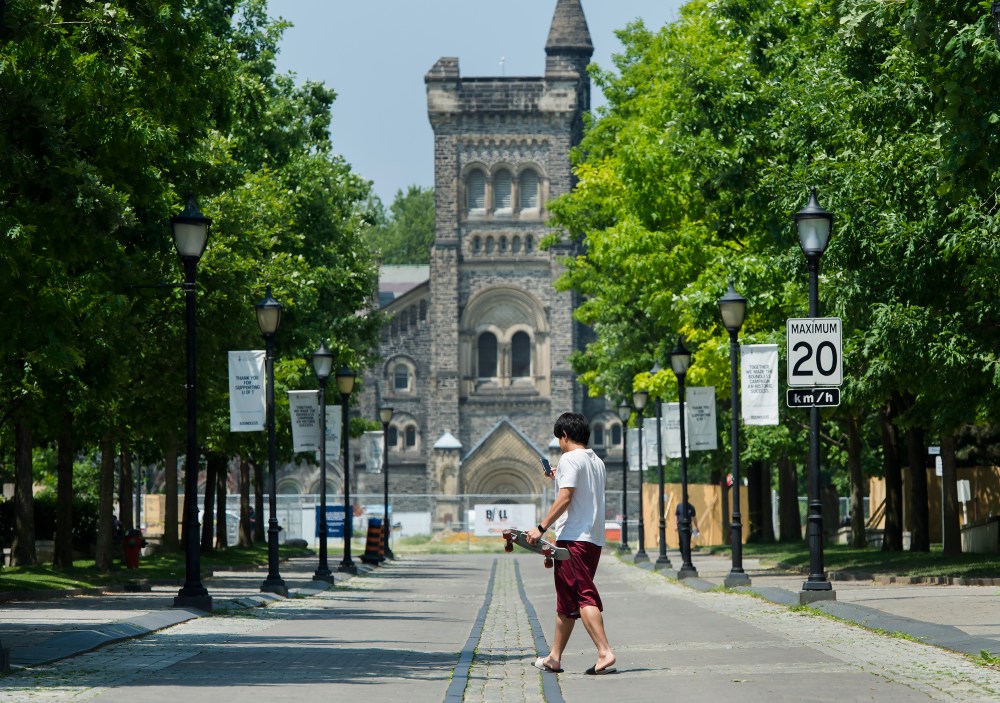
BLOODTHIRSTY ACADEMIA
In Erol Boran’s classroom at the University of Toronto, students are urged to look in the mirror and examine the fanged, cape-wearing creature staring back at them.
Figuratively, at least. The associate professor’s course, “Our Vampires, Ourselves,” has students look at the historical contexts, social issues and cultural fears linked to the famed bloodthirsty monsters.
“When you look at the vampires, you see yourself, a reflection of you and the reflection of the society that gave birth to the vampire,” Boran says. “Everything we see when we look at a vampire is aspects of ourselves: fears, anxieties, passions.”
His students read Bram Stoker’s “Dracula” and watch movies such as “Twilight” or even the recent blockbuster hit “Sinners.” He’s taught the course on and off over the past 15 years, and his department is eager to have him offer it annually, he says, because of students’ positive feedback. For fun, a group of his students even came to class dressed as vampires a couple of Halloweens ago, he says.
It’s only “by accident or coincidence” his course is about vampires, he says. It could’ve been about any other creature, or even something like “The Lord of the Rings.” Ultimately, he wants his students to enjoy the fun aspects of the course but take away real skills.
“What really falls in the cracks as the humanities are down the drain and AI takes over and all that, is that critical thinking part, just when it’s most needed because the internet shoots information at us indifferently,” he says.
“It’s really less about vampires in the end … I think it’s more relevant than ever to find topics that interest young adults to think critically.”
SCHOLARLY SORCERY
Nicholas Must, a sessional lecturer at Wilfrid Laurier University, has a similar aim with his course, “Witches and Demons.”
It’s not just about spells and magic – it’s also about social conditions faced by early modern Europeans and gender roles throughout history, he says.
“What this course shows is how these different factors, beliefs, practices, institutions … all of these things work together in a specific historical context to produce the witch hunts,” says Must. “The witch hunts are this hugely attention grabbing example of this, but that same phenomenon exists in other historical periods in other parts of the world.”
“Studying something that happened 500 years ago is still very, very relevant to the modern world, to current events.”
His students use multimedia tools to examine historical sources and research collaboratively, he adds. The subject covers everything from state violence to religious debate during the period.
“There’s sort of that excitement value of teaching a topic like this. And because of that, I find that it usually generates a whole lot of really interesting questions and a whole a lot of interesting discussions from the students,” he says.
TEACHING TOXINS
Modern applications in humanities courses are especially important for Aditi Sen, an associate professor at Queen’s University who teaches “Poison and Prejudice: Toxins in Global History.”
The class examines alchemy, makeup and even criminal cases tied to toxicology studies. She’ll often bring in experts from the Canadian Museum of Health Care to show students drug artifacts, and they’ll also discuss poison murders in stories by her favourite author, Agatha Christie.
While the history of poison is a big part of the class, so are discussions of everyday issues, says Sen. For example, students will discuss social media debates on the health effects of seed oils or sugar, she says, or even societal hesitance toward vaccines or chemotherapy. That’s why studying toxicology can provide context for modern challenges, she adds.
“In today’s world, there’s so much application of critical thinking about the moment somebody labels something as a poison. It’s very important to push back and argue,” says Sen.
Sen adds that it’s “uncanny” how often history repeats itself, and studying how societies have addressed different issues in the past can help people understand the events of today. Many of her students have gone on to study pharmacology or other health studies, including some who later went to medical school.
Sen says she never could have imagined she’d have the opportunity to teach a fun course like this.
“I feel very lucky and genuinely privileged that I can actually create something like this and teach it.”
HITTING THE (COMIC) BOOKS
Students can learn all about Japanese history, American politics and international media by reading manga, says J. Andrew Deman, an associate professor at St. Jerome’s University, affiliated with the University of Waterloo. His course on Japanese comics is popular at the school – it instantly reaches capacity at 60 students when it’s offered.
“I think everybody has this vision of the academy as like stuffy intellectuals who hate new things. I haven’t really experienced that,” says Deman.
Deman says students read the comics and discuss their cultural and historical significance with their peers. They talk about manga as a major global export of Japan, and how anime adaptations of manga often break box office records. Students have an opportunity to connect with one another and discover new interests, he says.
He describes those classroom discussions as “miraculous,” and something he looks forward to during the school year.
“Greatest part of my job by a mile,” says Deman. “Hearing them talk about the ways that it connects to their lives, the ways that it builds meaning for them, the way that it helps them perceive the world in a particular way – that’s really robust pedagogically.”
Even as post-secondary schools across Canada face mounting budget cuts and a decline in international student enrolment, it’s important to have courses like his because they speak to what’s relevant to people, he says.
“If this is something you’re reading, this is a culture that is formed,” says Deman.
“Even in North America, however you want to isolate it, (manga) is something that is affecting the way people view politics, the way they view religion, the way the view issues of sexuality, gender, race, you name it – it’s informing their lives.”
This report by The Canadian Press was first published Feb. 10, 2026.