Saskatchewan to use massive postcard mail-out to gauge citizens on internet controls
Advertisement
Read this article for free:
or
Already have an account? Log in here »
To continue reading, please subscribe:

Digital Subscription
One year of digital access for only $205*
- Enjoy unlimited reading on winnipegfreepress.com
- Read the E-Edition, our digital replica newspaper
- Access News Break, our award-winning app
- Play interactive puzzles
*First annual payment billed as $205.00 + GST for one year. This annual subscription will automatically renew at $233.00 + GST every 52 weeks (10% off the regular annual price of $259.35). Offer available to new and qualified returning subscribers only. Cancel any time.
To continue reading, please subscribe:
Add Free Press access to your Brandon Sun subscription for only an additional
$1 for the first 4 weeks*
- Enjoy unlimited reading on winnipegfreepress.com
- Read the E-Edition, our digital replica newspaper
- Access News Break, our award-winning app
- Play interactive puzzles
*Your next Brandon Sun subscription payment will increase by $1.00 and you will be charged $17.95 plus GST for four weeks. After four weeks, your payment will increase to $24.95 plus GST every four weeks.
Read unlimited articles for free today:
or
Already have an account? Log in here »
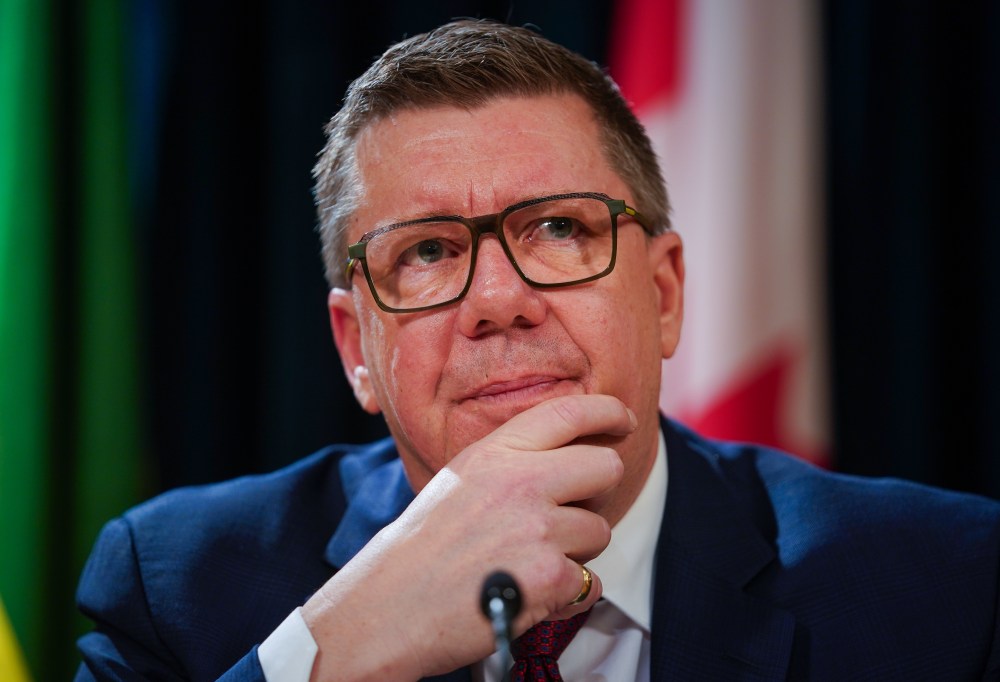
REGINA – The Saskatchewan government is promising a mass mail-out of postcards to gauge citizen opinions on whether to put fences around the internet.
Premier Scott Moe said the survey will hear from residents about a possible social media ban or limits for those under the age of 16.
The postcards ask whether there should be restrictions or some flexibility for parents to provide consent, he said Tuesday.
They also ask whether any social media platforms should be exempt from limits.
Moe said the feedback will help inform whether the government should implement an outright ban for youth or make no changes.
“Your input is important,” he said. “We want to, as a government, listen to Saskatchewan families, listen to Saskatchewan parents.
“We want our kids to be safe.”
The postcards are to be returned by June 30, with results tabulated over the summer. The campaign is expected to cost up to $500,000.
Jill McAlister-Lane, a spokesperson with Moe’s office, said in an email there will be no online option to share feedback.
“We want to engage directly with the people of the province and feel this is the simplest and best way for everyone to have the opportunity to contribute unencumbered,” she said.
Saskatchewan is one of many governments looking at the issue. The federal government and other provinces, including Manitoba and Ontario, are examining tighter restrictions.
Moe said that Ottawa is in the best position to impose social media limits, and Saskatchewan is prepared to work with its federal counterparts.
He added there are some benefits to social media but said it has harmed youth through online bullying and abuse. Platforms have also affected the mental health of some youth, including creating feelings of depression and loneliness, he said.
“(There’s also) exposures to dangerous content online, and so much more,” Moe said.
He said Saskatchewan will follow the wishes of the people but that he personally believes some limits should be in place.
“I’m very much a proponent for us to be outside doing whatever it is we enjoy,” he said.
For example, he said, his wife likes to sometimes play the violin.
“I’m outside with anything with a motor, with the family and my extended family that I am with all the time,” Moe said.
“We have, under my name, some of the most active social media pages likely in this province. I’m not on them a lot, personally.”

Lori Carr, the province’s mental health minister, said her grandchildren are more engaged when they’re not on their electronic devices.
“I truly see the benefits of limiting the amount of time that my grandchildren spend on social media or on a device,” she said.
“The connection that you have with human beings is just irreplaceable.”
Australia became the first country to prevent youth under 16 from setting up accounts on TikTok, Facebook, Instagram, YouTube, Snapchat and Threads.
This report by The Canadian Press was first published May 5, 2026.