Howard Hesseman, star of ‘WKRP in Cincinnati,’ dies at 81

Advertisement

Advertise with us

NEW YORK (AP) — Howard Hesseman, who played the radio disc jockey Dr. Johnny Fever on the sitcom “WKRP in Cincinnati” and the actor-turned-history teacher Charlie Moore on “Head of the Class,” has died. He was 81.

Read this article for free:


or

Already have an account? Log in here »

To continue reading, please subscribe:

Subscribe and receive a limited-edition Free Press branded hat or tote.

Digital Subscription

One year of digital access for only $205*

  • Enjoy unlimited reading on winnipegfreepress.com
  • Read the E-Edition, our digital replica newspaper
  • Access News Break, our award-winning app
  • Play interactive puzzles

*First annual payment billed as $205.00 + GST for one year. This annual subscription will automatically renew at $233.00 + GST every 52 weeks (10% off the regular annual price of $259.35). Offer available to new and qualified returning subscribers only. Cancel any time.

To continue reading, please subscribe:

Add Free Press access to your Brandon Sun subscription for only an additional

$1 for the first 4 weeks*

  • Enjoy unlimited reading on winnipegfreepress.com
  • Read the E-Edition, our digital replica newspaper
  • Access News Break, our award-winning app
  • Play interactive puzzles
Start now

*Your next Brandon Sun subscription payment will increase by $1.00 and you will be charged $17.95 plus GST for four weeks. After four weeks, your payment will increase to $24.95 plus GST every four weeks.

Hey there, time traveller!
This article was published 30/01/2022 (1708 days ago), so information in it may no longer be current.

NEW YORK (AP) — Howard Hesseman, who played the radio disc jockey Dr. Johnny Fever on the sitcom “WKRP in Cincinnati” and the actor-turned-history teacher Charlie Moore on “Head of the Class,” has died. He was 81.

Hesseman died Saturday in Los Angeles due to complications from colon surgery, his manager Robbie Kass said Sunday.

Hesseman, who had himself been a radio DJ in the ’60s, earned two Emmy nominations for playing Johnny Fever on CBS’ “WKRP in Cincinnati,” which ran for four seasons from 1978-1982. The role made Hesseman a counterculture icon at a time when few hippie characters made it onto network television.
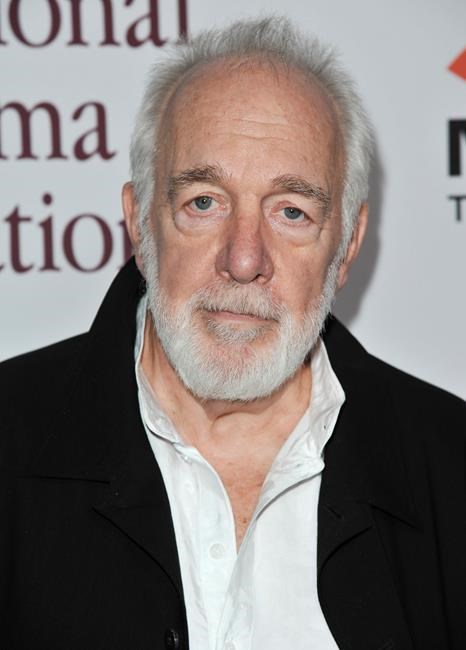
FILE - Howard Hesseman arrives at the International Myeloma Foundation 7th Annual Comedy Celebration at The Wilshire Ebell Theatre on Saturday, Nov. 9, 2013, in Los Angeles. Hesseman, who played the radio disc jockey Johnny Fever on the sitcom “WKRP in Cincinnati
FILE - Howard Hesseman arrives at the International Myeloma Foundation 7th Annual Comedy Celebration at The Wilshire Ebell Theatre on Saturday, Nov. 9, 2013, in Los Angeles. Hesseman, who played the radio disc jockey Johnny Fever on the sitcom “WKRP in Cincinnati" and the actor-turned-history teacher Charlie Moore on “Head of the Class,” has died at age 81. Hesseman died Saturday, Jan. 29, 2022, in Los Angeles due to complications from colon surgery, his manager Robbie Kass said Sunday. (Photo by Richard Shotwell/Invision/AP, File)

In the first episode, Dr. Johnny Fever announces the station’s changeover from elevator music to rock ’n roll with a record scratch and a proclamation.

“All right Cincinnati, it’s time for this town to get down! You got Johnny, Dr. Johnny Fever, and I am burning up in here. We’re all in critical condition, babies, but you can tell me where it hurts because I got the healing prescription here from the big KRP musical medicine cabinet. Now, I am talking about your 50,000-watt intensive care unit, babies!”

As he readied for one of three “Saturday Night Live” hosting gigs, Hesseman told The New York Times in 1979 that the character made network executives nervous. In one episode, Johnny Fever is given an on-air sobriety test after being given alcohol, only his reaction time keeps improving.

“I think maybe Johnny smokes a little marijuana, drinks beer and wine, and maybe a little hard liquor,” Hesseman said. “And on one of those hard mornings at the station, he might take what for many years was referred to as a diet pill. But he is a moderate user of soft drugs, specifically marijuana.”

Hesseman played a hippie in one of his first roles, on “Dragnet,” in 1967, and also in the 1968 Richard Lester film “Petulia.” Born in Lebanon, Oregon, Hesseman wasn’t so disconnected from some of the characters he played. In 1983, he told People magazine that he had conducted “pharmaceutical experiments in recreational chemistry.” In 1963, he was jailed in San Francisco for selling marijuana.

Initially performing under the name Don Sturdy, Hesseman started out as a member of the San Francisco improv group The Committee, which regularly performed at antiwar and civil rights protests.

At the time, he also moonlighted on Saturdays as the disk jockey for the San Francisco rock-and-roll station KMPX. Later on “WKRP in Cincinnati” Hesseman often ad-libbed his on-air banter.

“Impossible to overstate Howard Hesseman’s influence on his and subsequent generations of improvisors,” said the actor and comedian Michael McKean on Twitter. He recalled first seeing Hesseman in 1971 with The Committee. “I saw that he was the real deal.”

Hesseman appeared briefly but memorably with McKean in the 1984 rockumentary “This Is Spinal Tap” as Terry Ladd, manager to the rock superstar Duke Fame. He frankly ends a conversation: “We’d love to stay and chat but we’re going to sit in the lobby and wait for the limo.”

“Howard was eloquent…stylish…and hilarious,” said Loni Anderson, Hesseman’s friend of 40 years and co-star on “WKRP in Cincinnati.” “My favorite Howard sign-off…a quote by Louis Armstrong…’Jazz is what you are.’ And now Howard, forever missed is just what you are.”

In the ABC sitcom “Head of the Class,” which debuted in 1986, Hesseman played a teacher to a diverse group of students in a classroom where the dialogue was often notably progressive in the 1980s of Ronald Reagan. Hesseman was sometimes critical of the show — co-created by political activist and writer Michael Elias — not being as adventurous as he had hoped it would be. He departed it after four seasons and was replaced by Billy Connolly in the fifth and final season.

“Part of me says, ‘Is that all there is? A television series?’ Obviously not. I could go on stage or scratch my way into the movies,” Hesseman said in a 1989 interview. “But how many movies are made that you want to be a part of? And how many want you? There is a certain kind of ‘for-rent’ sign on my forehead. I’m an actor and I like to work.”

A prolific character actor, Hesseman’s credits also included “The Andy Griffith Show,” “One Day at a Time,” “The Rockford Files,” “Laverne and Shirley” and “The Bob Newhart Show.” More recently, he made appearances on “That 70’s Show,” “Fresh Off the Boat,” “House” and “Boston Legal.” Films included “Police Academy 2: Their First Assignment,” “About Schmidt,” “This Is Spinal Tap” and “The Rocker.”

Hesseman is survived by actor and acting teacher Caroline Ducrocq, his wife.
Report Error Submit a Tip

More Stories

Howard Hesseman, star of 'WKRP in Cincinnati,' dies at 81

Jake Coyle, The Associated Press 1 minute read Preview

Howard Hesseman, star of 'WKRP in Cincinnati,' dies at 81

Jake Coyle, The Associated Press 1 minute read Monday, Jan. 31, 2022

NEW YORK (AP) — Howard Hesseman, who played the radio disc jockey Dr. Johnny Fever on the sitcom “WKRP in Cincinnati” and the actor-turned-history teacher Charlie Moore on “Head of the Class,” has died. He was 81.

Hesseman died Saturday in Los Angeles due to complications from colon surgery, his manager Robbie Kass said Sunday.

Hesseman, who had himself been a radio DJ in the '60s, earned two Emmy nominations for playing Johnny Fever on CBS’ “WKRP in Cincinnati,” which ran for four seasons from 1978-1982. The role made Hesseman a counterculture icon at a time when few hippie characters made it onto network television.

In the first episode, Dr. Johnny Fever announces the station’s changeover from elevator music to rock ’n roll with a record scratch and a proclamation.

Read
Monday, Jan. 31, 2022

A 22-year-old man is dead and an 18-year-old is in hospital in critical condition after a two-vehicle crash on Highway 8 on Thursday evening.

A Gimli RCMP officer was driving north on the highway, near Riverton, when he witnessed the collision at about 6:45 p.m.

A vehicle headed north had passed the Mountie at a high speed before colliding with an SUV that was turning west onto Provincial Road 329 from Highway 8.

The driver of the first vehicle, an 18-year-old man from Arborg, was rushed to hospital by a helicopter ambulance with injuries RCMP describe as serious and life-threatening.

Blown lead spoils Jets opener

Mike McIntyre 7 minute read Preview

Blown lead spoils Jets opener

Mike McIntyre 7 minute read Yesterday at 11:09 PM CDT

Younger. Faster. Stronger.

They may still be a long ways from a finished product, but it’s safe to say the new-look Winnipeg Jets made a mostly favourable first impression on Friday night in front of a sold-out crowd at Canada Life Centre.

Sure, a 4-3 overtime loss to a hard-nosed Boston Bruins outfit is going to sting a little, especially since the home team was just 98 seconds away from a regulation victory.

But if the Jets can bottle up this kind of energy and effort, they should enjoy plenty of success over the course of the 84-game campaign.

Read
Yesterday at 11:09 PM CDT

Jets bench boss Arniel talks rebuilding from last season’s struggles

Mike McIntyre and Ken Wiebe 12 minute read Preview

Jets bench boss Arniel talks rebuilding from last season’s struggles

Mike McIntyre and Ken Wiebe 12 minute read Thursday, Oct. 1, 2026

Scott Arniel has a lot on his plate these days.

But the head coach of the Winnipeg Jets took some time Thursday to sit down with Free Press hockey writers Mike McIntyre and Ken Wiebe to discuss a number of topics on the eve of a new hockey season. This interview has been condensed and edited for clarity.

Wiebe: What was the evaluation of last season like? What did you personally do in an attempt to improve after going from first-overall to 26th-overall?

I just went back and looked at things and made sure my communication was where it needed to be with my players. Was my communication where it needed to be with my boss, with my general manager (Kevin Cheveldayoff)? How our coaching staff worked. How we handled highs and lows. Things I felt I could have done better.

Read
Thursday, Oct. 1, 2026

Six high school hockey programs ceased operations following new Hockey Manitoba policy

Joshua Frey-Sam 7 minute read Preview

Six high school hockey programs ceased operations following new Hockey Manitoba policy

Joshua Frey-Sam 7 minute read Updated: Yesterday at 8:19 PM CDT

She lived the best of both worlds.

For the last three years, the 17-year-old wore a sweater for two different hockey programs — her high school team and AAA club in the Manitoba Female Hockey League — and was preparing to flourish in both colours again this winter.

Recently, however, the blue-liner was disappointed to learn she is no longer eligible to play her Grade 12 season with her school owing to a new policy imposed by Hockey Manitoba that bans players from participating in the Manitoba Women’s High School Hockey League if they are rostered on a U18 AAA team.

The rule applies to all athletes who play for both Winnipeg-based and rural AAA teams.

Read
Updated: Yesterday at 8:19 PM CDT

Letters, Oct. 3

7 minute read 2:01 AM CDT

A morning in the life …

My very first lesson does not start when I walk into that lecture hall, oh no — it starts long before. It begins when I walk to my car, check the estimated arrival time to the University of Manitoba and hope that Winnipeg traffic agrees with it.

A drive that appears completely manageable changes almost immediately when I’m greeted by a tsunami of orange pylons and a line of cars that appears to go on forever. Traffic moves by the inch, lanes magically disappear and the detour I took yesterday now has a detour of its own. These factors make me do a calculation that I have become all too familiar with. How late can I arrive and still find parking, run to my class across campus and get to class with enough time left to make it worth it?

I have grown used to people saying, “Why not just leave earlier?” I do. But when I’m already leaving for my 8:30 a.m. class at 7 a.m., there’s only so much I can do. This drive that some would think is relaxing is one that feels like an assignment that I didn’t know I had to complete and is due at 8:30 a.m.