Living canvas
Doc visits the Canadian vistas made famous in paintings by the Group of Seven

Advertisement
Read this article for free:
or
Already have an account? Log in here »
To continue reading, please subscribe:

Digital Subscription
One year of digital access for only $205*
- Enjoy unlimited reading on winnipegfreepress.com
- Read the E-Edition, our digital replica newspaper
- Access News Break, our award-winning app
- Play interactive puzzles
*First annual payment billed as $205.00 + GST for one year. This annual subscription will automatically renew at $233.00 + GST every 52 weeks (10% off the regular annual price of $259.35). Offer available to new and qualified returning subscribers only. Cancel any time.
To continue reading, please subscribe:
Add Free Press access to your Brandon Sun subscription for only an additional
$1 for the first 4 weeks*
- Enjoy unlimited reading on winnipegfreepress.com
- Read the E-Edition, our digital replica newspaper
- Access News Break, our award-winning app
- Play interactive puzzles
*Your next Brandon Sun subscription payment will increase by $1.00 and you will be charged $17.95 plus GST for four weeks. After four weeks, your payment will increase to $24.95 plus GST every four weeks.
Read unlimited articles for free today:
or
Already have an account? Log in here »
Hey there, time traveller!
This article was published 10/03/2016 (3843 days ago), so information in it may no longer be current.
Painted Land: In Search of the Group of Seven from WhitePinePictures on Vimeo.
Everyone knows about the French impressionists hanging out in Montmartre. But do Canadians know enough stories about their own artists? How about Lawren Harris, J.E.H. MacDonald and A.Y. Jackson sitting around a bonfire on the north shore of Lake Superior, arguing about Theosophy and drinking billy can coffee?
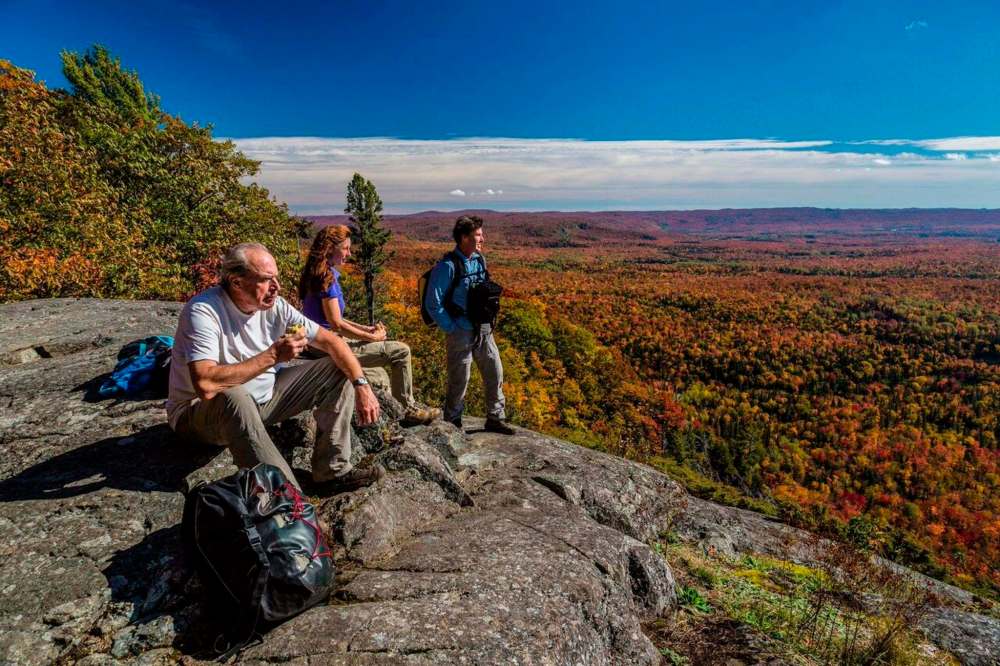
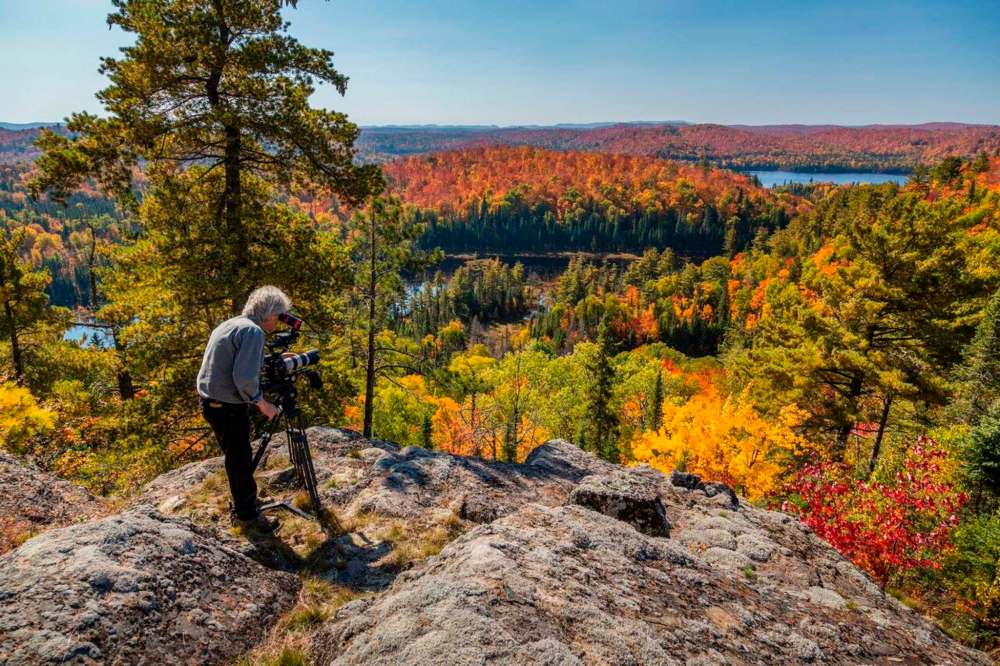
Painted Land: In Search of the Group of Seven follows photographers Joanie McGuffin and Gary McGuffin and art historian Michael Burtch as they walk — literally — in the footsteps of the Group of Seven. Using archival research to trace the Group’s sketching trips into “the north country,” they attempt to locate the specific lakes, waterfalls, rocks and forests these artists transmuted into vivid, vital landscape works.
Directed by Phyllis Ellis, this documentary is crammed with beauty, both the actual panoramas of northern Ontario and the small oil sketches and finished paintings the Group created from 1918 to 1928. Ellis combines footage of the McGuffins backpacking into the backwoods with rare archival footage of Group members and some sparingly used re-enactments. There are voiceovers (from Paul Gross, Colm Feore and Eric Peterson) reading the men’s essays and lively letters.
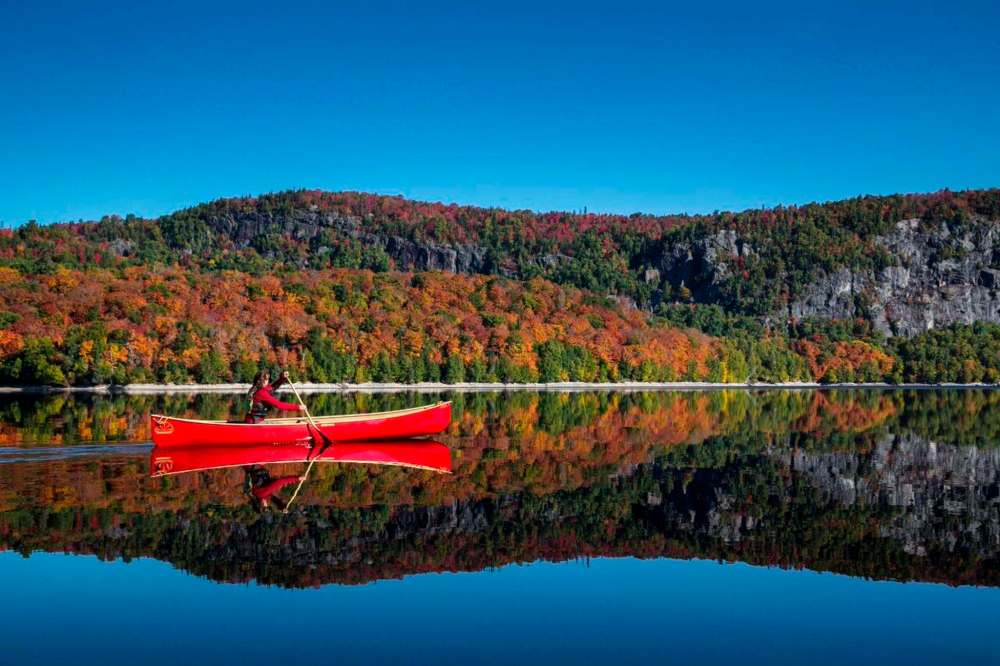
The Group’s prolific output — and shrewd self-promotion — eventually convinced Canadians to embrace homegrown art rather than settle for hand-me-down culture imported from Europe. (“Dutch windmills and Victorian battle scenes,” as Harris put it.) As Canada’s first explicitly nationalist art movement, the Group of Seven helped Canadians see their country anew, creating a powerful mythology around the land and their art.
In fact, the Group was so darn good at mythologizing that now, almost 100 years later, we could actually use a little myth-busting.
Sometimes repetitive and often overly reverential, Painted Land is too easily satisfied with official history. Take Harris’s notion that the Group’s art sprang full-born from the primeval landscape itself. Like any painters, Group of Seven members were also influenced by other artists, sometimes even — yikes! — those over-civilized, non-canoeing Europeans.
Still, there are lovely moments. The hard slogging of the McGuffins and Burtch, both through the archival record and the rugged landscapes of north Ontario, pays off. The resemblance between iconic Group paintings and their overlapping photographs is astonishing. Set side by side, the parallel images demonstrate just how unchanged some of these vistas and views are, and how fortunate Canada is still to hold these vast wilderness areas.
Ellis’s documentary may stay on the surfaces. But as surfaces go, these ones are breathtakingly beautiful.
alison.gillmor@freepress.mb.ca
Studying at the University of Winnipeg and later Toronto’s York University, Alison Gillmor planned to become an art historian. She ended up catching the journalism bug when she started as visual arts reviewer at the Winnipeg Free Press in 1992.
Our newsroom depends on a growing audience of readers to power our journalism. If you are not a paid reader, please consider becoming a subscriber.
Our newsroom depends on its audience of readers to power our journalism. Thank you for your support.
Movie review
Painted Land: In Search of the Group of Seven
● Directed by Phyllis Ellis
● Cinematheque
● G
● 90 minutes
★★★ out of five
Studying at the University of Winnipeg and later Toronto’s York University, Alison Gillmor planned to become an art historian. She ended up catching the journalism bug when she started as visual arts reviewer at the Winnipeg Free Press in 1992.
Our newsroom depends on a growing audience of readers to power our journalism. If you are not a paid reader, please consider becoming a subscriber.
Our newsroom depends on its audience of readers to power our journalism. Thank you for your support.
Advertisement Advertise With Us
Advertisement Advertise With Us
History
Updated on Friday, March 11, 2016 11:03 AM CST: Adds video.