The history, the mystery
Documentary follows coulda-been-a-contender Edmonton rock band on reunion tour

Advertisement
Read this article for free:
or
Already have an account? Log in here »
To continue reading, please subscribe:

Digital Subscription
One year of digital access for only $205*
- Enjoy unlimited reading on winnipegfreepress.com
- Read the E-Edition, our digital replica newspaper
- Access News Break, our award-winning app
- Play interactive puzzles
*First annual payment billed as $205.00 + GST for one year. This annual subscription will automatically renew at $233.00 + GST every 52 weeks (10% off the regular annual price of $259.35). Offer available to new and qualified returning subscribers only. Cancel any time.
To continue reading, please subscribe:
Add Free Press access to your Brandon Sun subscription for only an additional
$1 for the first 4 weeks*
- Enjoy unlimited reading on winnipegfreepress.com
- Read the E-Edition, our digital replica newspaper
- Access News Break, our award-winning app
- Play interactive puzzles
*Your next Brandon Sun subscription payment will increase by $1.00 and you will be charged $17.95 plus GST for four weeks. After four weeks, your payment will increase to $24.95 plus GST every four weeks.
Read unlimited articles for free today:
or
Already have an account? Log in here »
Hey there, time traveller!
This article was published 24/03/2016 (3856 days ago), so information in it may no longer be current.
To understand the story of the Smalls, you must first try to pin down what the seminal Edmonton band actually was.
It’s easier said than done. So that’s how the new feature documentary The Smalls: Forever Is a Long Time opens, with former associates trying to describe the band and tripping over their tongues. The Smalls were like “speed metal meets country,” but with “insane pop capabilities.” Or like Rush, SNFU’s Mark Belke offers, except “they don’t sound like Rush.”
It goes on. Former Smalls business manager Debbie Dilworth says she always called them “Prairie punk,” a description that’s juxtaposed with Edmonton arts figure Fish Griwkowsky giving the opposite account. “It’s not punk,” Griwkowsky says. His version: “A weird, like, Sabbath funky thing that’s in your head… like buttery metal with all these Zappa time changes.”

Is it clear yet? If not, by the end of the 105-minute flick, it will be. The film, which opens at Cinematheque on Thursday, March 24, for a three-night run, is a beautifully shot account of both the Smalls’ mystery and history. It is a story of a how a misfit metal-ish band burned bright for 12 years, released four influential albums, then flamed out in a wash of booze and frustration.
After the band split in 2001, the four members barely saw each other again. They scattered in wildly differing directions: before getting sober, drummer Terry Johnson did time in prison; bassist Corb Lund became a hunky alt-country star. Yet what they did together lingered on, especially in the scenes centred around smeary, rough ’n’ tumble dive bars.
So in 2014, when the Smalls announced a surprise reunion series, that scene caught aflame. Forever Is a Long Time follows the band on that tour, which was met by fervent crowds. Some of those fans wound up in the movie, dishing liberal F-bombs and blue-collar Canadian patter. “They’re like, the best band ever, man,” is one such resounding mantra.
Don’t get it wrong, though. The documentary isn’t a nostalgia trip, and it doesn’t engage in hagiography. Filmmakers John Kerr and Trevor Smith rely relatively little on archival footage. It appears in flashes, but for the most part they keep their lens focused firmly in the here and now. Nor, like other quirky Canadian rock docs, is it steeped in bittersweet irony.
Mostly, it is a frank and dry-eyed story about the four angular personalities that made up the band, which also included guitarist Dug Bevans and enigmatic, phenomenally talented singer Mike Caldwell. Those who know the Smalls rank him as one of the best rock singers of all time. So what does it mean, that almost no one outside Western Canada has ever heard of them?
The documentary gets just close enough to offer some gentle suggestions. For all their wildly inventive musical vision, the Smalls’ upward trajectory was dented by many things, including their thorny artistic dispositions. The music also didn’t always make sense, until it got a few listens: in the film, some fans attest to hating the band the first time they heard it.
Above all, the doc notes how, despite a ferocious Western Canada fanbase, the band struggled to make ripples in the United States — or even east of Thunder Bay. The Prairies always understood the Smalls, whose look and sound fit right into any rugged, beer-soaked town on the plains. In the more mannered venues of the East, they were just an oddity.
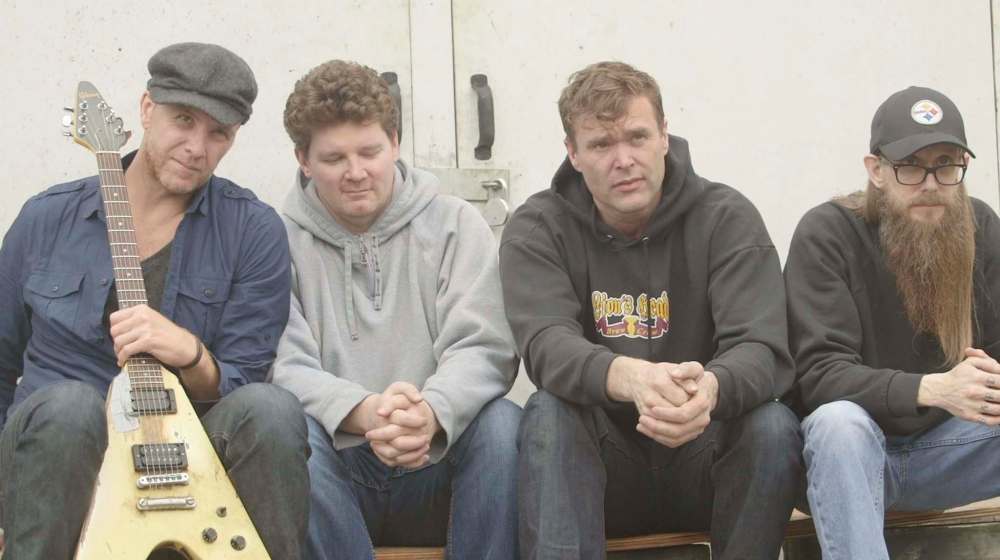
There’s something else. Where Lund and his bandmates are frank and balanced in their view of the band’s life, dissolution and reunion, the folks around them still approach those topics with more awe. So when the last note of Forever Is a Long Time fades, one walks away musing about a legacy rooted in that tension.
In other words, maybe the band always had their answers. Their gift was making everyone else ask the questions.
melissa.martin@freepress.mb.ca
Melissa Martin
Reporter-at-large
Melissa Martin reports and opines for the Winnipeg Free Press.
Every piece of reporting Melissa produces is reviewed by an editing team before it is posted online or published in print — part of the Free Press‘s tradition, since 1872, of producing reliable independent journalism. Read more about Free Press’s history and mandate, and learn how our newsroom operates.
Our newsroom depends on a growing audience of readers to power our journalism. If you are not a paid reader, please consider becoming a subscriber.
Our newsroom depends on its audience of readers to power our journalism. Thank you for your support.
Movie review
The Smalls: Forever Is a Long Time
- Directed by Trevor Smith
- Cinemateque, to March 26
- Not yet rated
- 105 minutes
- Four out of five
Melissa Martin
Reporter-at-large
Melissa Martin reports and opines for the Winnipeg Free Press.
Every piece of reporting Melissa produces is reviewed by an editing team before it is posted online or published in print — part of the Free Press‘s tradition, since 1872, of producing reliable independent journalism. Read more about Free Press’s history and mandate, and learn how our newsroom operates.
Our newsroom depends on a growing audience of readers to power our journalism. If you are not a paid reader, please consider becoming a subscriber.
Our newsroom depends on its audience of readers to power our journalism. Thank you for your support.
Advertisement Advertise With Us
Advertisement Advertise With Us