Independence from Independence Day
Movie world has changed in two decades; too bad filmmakers didn't notice

Advertisement
Read this article for free:
or
Already have an account? Log in here »
To continue reading, please subscribe:

Digital Subscription
One year of digital access for only $205*
- Enjoy unlimited reading on winnipegfreepress.com
- Read the E-Edition, our digital replica newspaper
- Access News Break, our award-winning app
- Play interactive puzzles
*First annual payment billed as $205.00 + GST for one year. This annual subscription will automatically renew at $233.00 + GST every 52 weeks (10% off the regular annual price of $259.35). Offer available to new and qualified returning subscribers only. Cancel any time.
To continue reading, please subscribe:
Add Free Press access to your Brandon Sun subscription for only an additional
$1 for the first 4 weeks*
- Enjoy unlimited reading on winnipegfreepress.com
- Read the E-Edition, our digital replica newspaper
- Access News Break, our award-winning app
- Play interactive puzzles
*Your next Brandon Sun subscription payment will increase by $1.00 and you will be charged $17.95 plus GST for four weeks. After four weeks, your payment will increase to $24.95 plus GST every four weeks.
Read unlimited articles for free today:
or
Already have an account? Log in here »
Hey there, time traveller!
This article was published 02/07/2016 (3718 days ago), so information in it may no longer be current.
Remember Independence Day? In 1996, it was a dopey movie a lot of people really liked.
Now we have Independence Day: Resurgence, a dopey movie almost nobody likes.
What has happened in the 20 years since director Roland Emmerich released his first alien-invasion extravaganza to account for this decline?
The original Independence Day was a massive blockbuster, riding big-scale special effects and White House-destroying spectacle to become the highest-grossing film of 1996. Not exactly a cinematic masterpiece — it scored 61 per cent on the Rotten Tomatoes movie review aggregator website — Independence Day still garnered tons of viewer affection for its escapist fun.
The follow-up opened with a weak US$41-million North American box office and is languishing at 33 per cent on the Tomatometer.
Some of that decline comes down to the movie itself. Will Smith, the breakout star of the original, didn’t re-up for this tonally rocky, incoherent and overlong sequel. But this franchise fall-off also suggests shifts in the way we make, watch and talk about movies.
MONEY MATTERS: The first movie was nicknamed ID4. (This moniker, which crams together references to Independence Day and July 4, was originally used for legal reasons: 20th Century Fox was fighting Warner Bros. for the rights to the name “Independence Day.”) The title suggests a sweeter, simpler cinematic time, before studios assumed movie series would just go on and on and on and you’d actually need the name “ID4” for your fourth alien ass-kicking adventure.
Sure, ID4 had a clichéd screenplay, cardboard characters and cheesy dialogue. It still managed to feel like an enthusiastic standalone project rather than a perfunctory placeholder in some massive, mega-budget, multiplatformed cinematic universe. Independence Day: Resurgence, on the other hand, ends with the explicit promise (threat?) of a third movie.
The original was a celebration of true-blue America patriotism, with only comically perfunctory references to a global military response (cigarette-smoking Russian sailors, stiff-upper-lip Brits, Israeli and Iraqi troops working together).
The sequel brings in actual non-American characters, including Rain (played by Chinese actor-model-singer Angelababy). It would be nice to think Resurgence’s diversity comes from the recognition of a more connected world. But this casting decision feels more like a calculated commercial acknowledgement of the increasing importance of the Chinese market in blockbuster movie production.
APPETITE FOR DESTRUCTION: In 1996, when Emmerich first destroyed the White House, it was a jaw-dropping shock.
Demolition-man Emmerich has gone on to personally take down the Brooklyn Bridge, the Hollywood sign, the Statue of Liberty and the Washington Monument. As a nod to the wide world, he occasionally goes after Big Ben, the Vatican, St. Basil’s Cathedral and the Eiffel Tower.
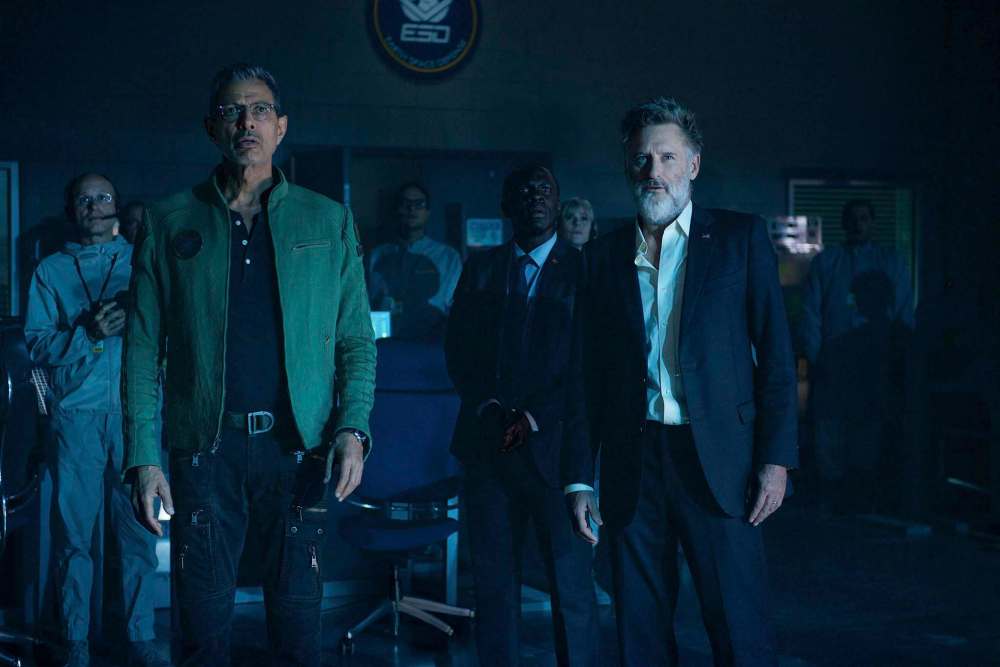
But blowing stuff up has become a cheap, computer-generated movie cliché. “They like to get the landmarks,” as Jeff Goldblum’s character points out, “they” meaning aliens but also film directors.
After 9/11, there’s also a certain real-world weariness in watching iconic landmarks crumble to the ground. Escapism isn’t as easy as it was in 1996.
THE MOVIES OF SUMMER: Independence Day didn’t make a lick of sense, but it really enjoyed its fun-to-be-dumb vibe. Emmerich always brings a weirdly peppy attitude to global devastation. In the 1996 flick, countless millions die in the smoking ruins of Earth’s cities, but cocky flyboys continue to trade quips as if comic banter were part of the U.S. air force training regimen.
In the 20 years since the original Independence Day, the whole idea of the summer movie has changed, especially after Christopher Nolan’s Batman Begins in 2005. Tent-pole movies have become moody and conflicted, or ironic and conflicted, or ultra-violent and conflicted. Forget Oscar season. If you want to watch something battened down with Greek-tragedy levels of suffering, just check out the latest comic book adaptation.
The space jockeys in the sequel, played by Liam Hemsworth and Jessie T. Usher, are still quippy. Judd Hirsch, reprising his role as Goldblum’s kvetchy dad, somehow ends up in New Mexico with a school bus full of children doing his “What, the world has to end so I can see my son?” shtick.

But Emmerich clearly feels the pressure to be “conflicted.” The movie opens with former U.S. president Thomas Whitmore (Bill Pullman), whose rousing, rah-rah speech in the original was voted “cheesiest movie moment of all time” by Empire. Whitmore is now shaking with PTSD and haunted by trauma and self-doubt.
The first title for the sequel, floated in 2013, was ID Forever: Part 1, which is just adorably hokey. It was later changed to Independence Day: Resurgence, which has that turgid, faux-important tone that’s so trendy now. The movie can’t commit to being edgy, but it has lost its sense of cornball fun. This is a tonal tug-of-war no one wins.
IRONY ALERT: It was the success of movies such as the first Independence Day that led to runaway franchise fever, ballooning budgets and the mindless deployment of destructo special effects. And as summer movies became bigger, they also faced pressures to become crushingly “important.”
Twenty years later, the differences between the original Independence Day and its sequel suggest the Hollywood blockbuster’s law of diminishing returns.
alison.gillmor@freepress.mb.ca
Studying at the University of Winnipeg and later Toronto’s York University, Alison Gillmor planned to become an art historian. She ended up catching the journalism bug when she started as visual arts reviewer at the Winnipeg Free Press in 1992.
Our newsroom depends on a growing audience of readers to power our journalism. If you are not a paid reader, please consider becoming a subscriber.
Our newsroom depends on its audience of readers to power our journalism. Thank you for your support.
Studying at the University of Winnipeg and later Toronto’s York University, Alison Gillmor planned to become an art historian. She ended up catching the journalism bug when she started as visual arts reviewer at the Winnipeg Free Press in 1992.
Our newsroom depends on a growing audience of readers to power our journalism. If you are not a paid reader, please consider becoming a subscriber.
Our newsroom depends on its audience of readers to power our journalism. Thank you for your support.
Advertisement Advertise With Us
Advertisement Advertise With Us