From past to future
Festival highlights work by Canadian indigenous filmmakers

Advertisement
Read this article for free:
or
Already have an account? Log in here »
To continue reading, please subscribe:

Digital Subscription
One year of digital access for only $205*
- Enjoy unlimited reading on winnipegfreepress.com
- Read the E-Edition, our digital replica newspaper
- Access News Break, our award-winning app
- Play interactive puzzles
*First annual payment billed as $205.00 + GST for one year. This annual subscription will automatically renew at $233.00 + GST every 52 weeks (10% off the regular annual price of $259.35). Offer available to new and qualified returning subscribers only. Cancel any time.
To continue reading, please subscribe:
Add Free Press access to your Brandon Sun subscription for only an additional
$1 for the first 4 weeks*
- Enjoy unlimited reading on winnipegfreepress.com
- Read the E-Edition, our digital replica newspaper
- Access News Break, our award-winning app
- Play interactive puzzles
*Your next Brandon Sun subscription payment will increase by $1.00 and you will be charged $17.95 plus GST for four weeks. After four weeks, your payment will increase to $24.95 plus GST every four weeks.
Read unlimited articles for free today:
or
Already have an account? Log in here »
Hey there, time traveller!
This article was published 24/11/2016 (3577 days ago), so information in it may no longer be current.
In its 15th year, the Winnipeg Aboriginal Film Festival (WAFF) has not only persevered as a festival, it shows significant progress when it comes to homegrown cinema, according the fest’s founder and artistic director, Coleen Rajotte.
“When we started WAFF 15 years ago, on the one-page program we had, there was maybe a small handful of shorts made by Canadian directors and no features,” Rajotte says.
This year’s festival showcases a virtual explosion of works by Canadian indigenous filmmakers, including two feature-length scripted dramas.
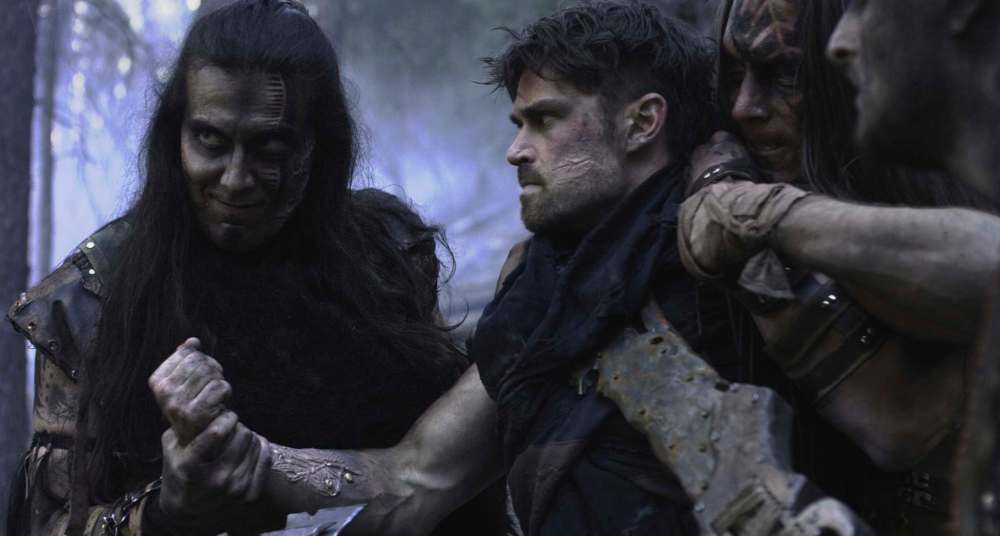
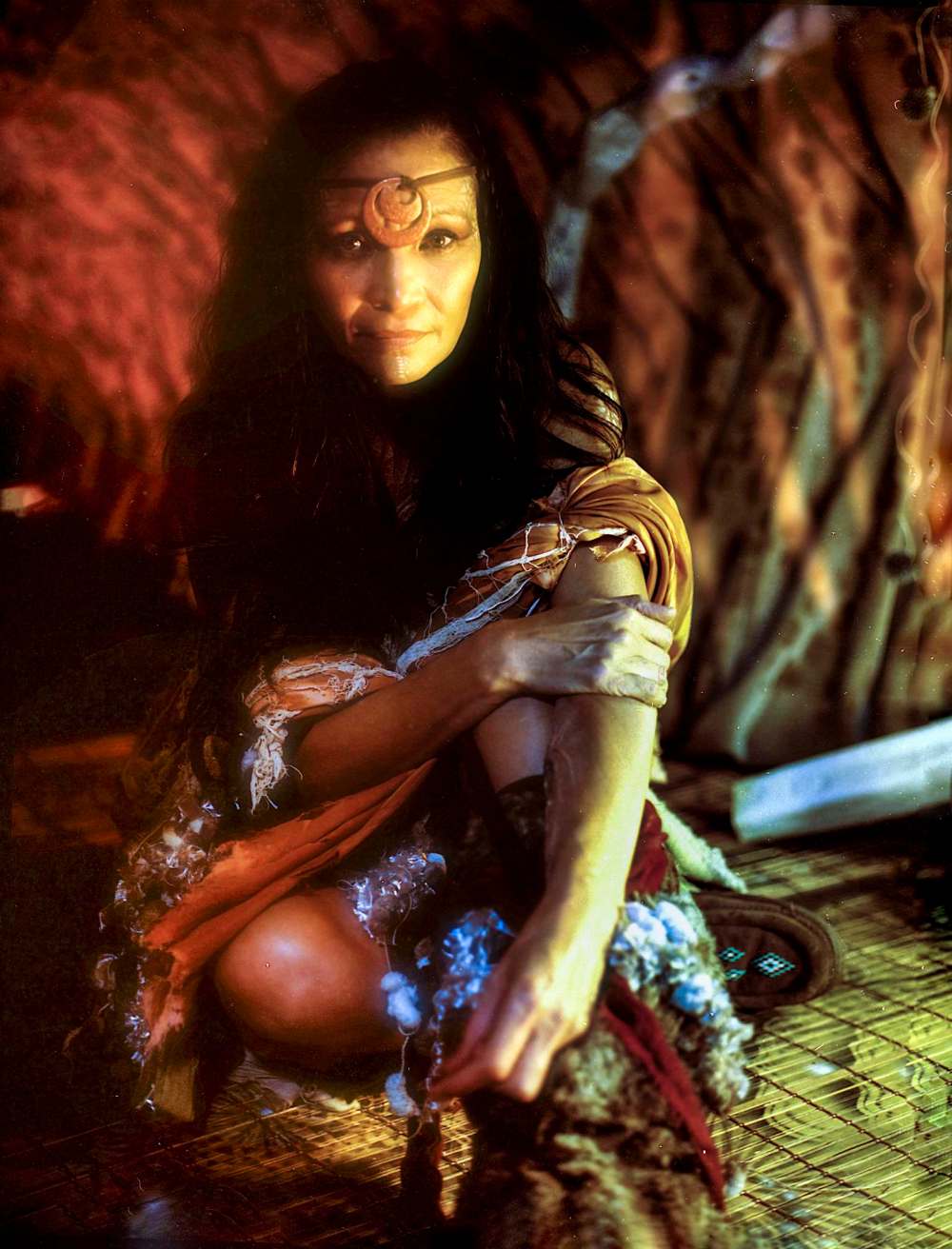
The Land of Rock and Gold (Saturday, Nov. 26 at 7 p.m.) is a drama co-directed by Daniel Redenbach and Janine Windolph, set in a remote northern woodland community, where a young First Nations mother and her seven-year-old son search for her vanished boyfriend. The more thematically adventurous feature is Benjamin Ross Hayden’s The Northlander (Friday, Nov. 25 at 6 p.m.), an indigenous-futurist adventure set in the year 2961, where the remote village of Last Arc is threatened by merciless raiders known as the Heretics. To save her people, tribal matriarch Nova (Michelle Thrush) calls upon the lone hunter Cygnus (Corey Sevier) to find the keys to their survival.
“We have more and more young filmmakers making short scripted drama, but we are really on the verge of seeing more directors make that transition from shorts to features,” says Rajotte, herself a TV and film producer. “So this year at WAFF, we have the most short films ever by Canadian directors. And of course all of those directors will want to make features one day. It’s very encouraging.”
● ● ●
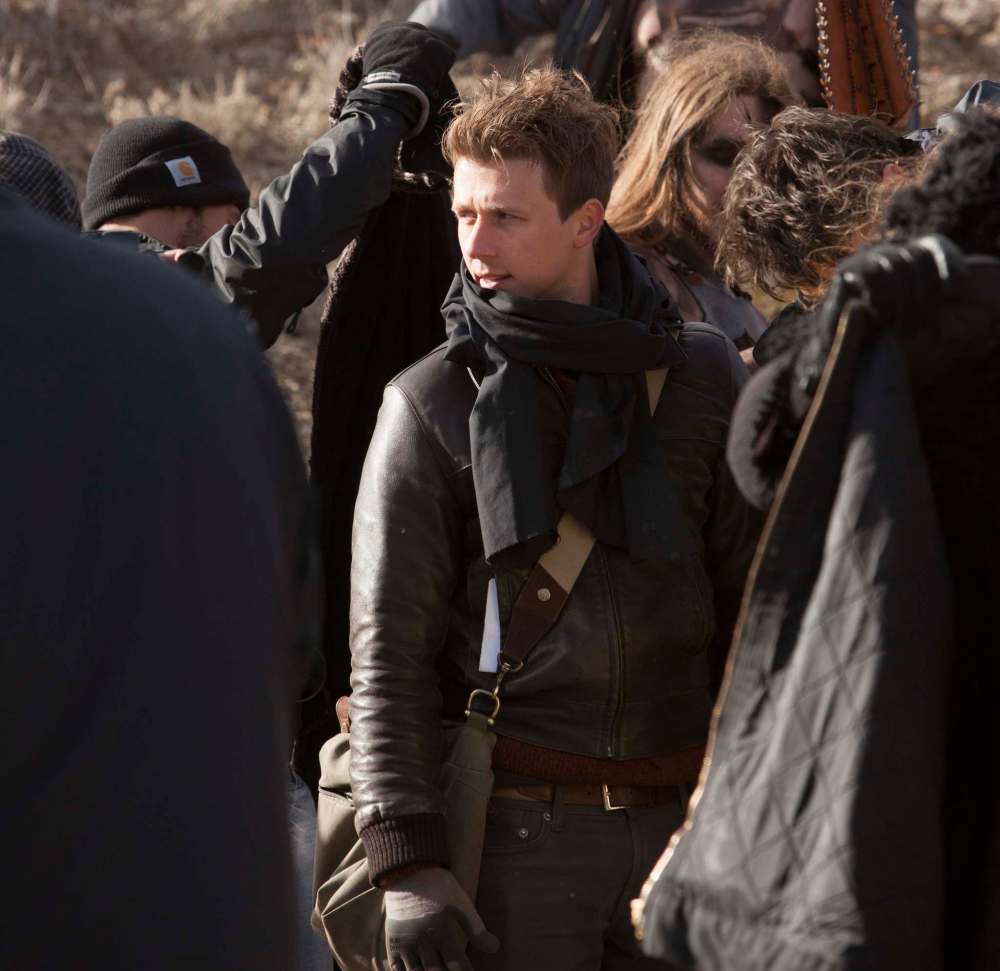
Benjamin Ross Hayden, 27, is a Métis filmmaker from Calgary who acknowledges a Winnipeg debt regarding his microbudget science-fiction film The Northlander. That debt started with Hayden meeting the trio behind Winnipeg’s Adam Beach Film Institute — Beach, Jeremy Torrie and Jim Compton — at a cafe in Cannes, where Hayden was screening his short film Agophobia at the city’s internationally renowed film festival. The trio would become executive producers of Hayden’s first feature film, whose future hero, Hayden says, was inspired by a figure from the past.
“It was Louis Riel, the Métis and the legends of the Red River Settlement who formed the basis of this mythic comparison that Northlander strives to make by taking Canadian history and seeing it through a mythical context,” he says during a phone interview from his Calgary home.
It’s not a coincidence that Hayden has a personal connection to that chapter of Canadian history, specifically the Battle of Batoche, where Riel met defeat during the Northwest Rebellion of 1885.
“My parents moved west from Saskatoon to start a new life,” he says. “As a little girl, my mother would go to the church at Batoche and plug the bullet holes with a cloth rag in the very church where the conflict took place.”
Hayden seeks to create a similar connection to the past through his futurist film.
“I feel we in the present can learn so much by looking at periods before or after,” he says. “Northlander’s indigenous futurism personified the colonial invading force into a band of ‘Heretics’ descending upon a nomadic people in need of someone on the outside, like a Louis Riel figure, a rebel who can do what must be done.”
From conception to completion, the film took a year to make, and Hayden has already enjoyed an important accolade. The film was named by Vice magazine as one of indigenous cinema’s eight most important films, alongside gems such as Powwow Highway, Once Were Warriors and Rhymes for Young Ghouls.
“It’s surreal to think about that,” Hayden says, acknowledging that the shout-out should draw more audiences to his film.
“I hope people find it a warm surprise that Canada’s history is something people can get excited for, to find this mythic entertainment value,” he says, promising the story won’t end with the feature.
“I’m in development with the Canada Media Fund on a television series based on The Northlander,” he says.
Also at WAFF
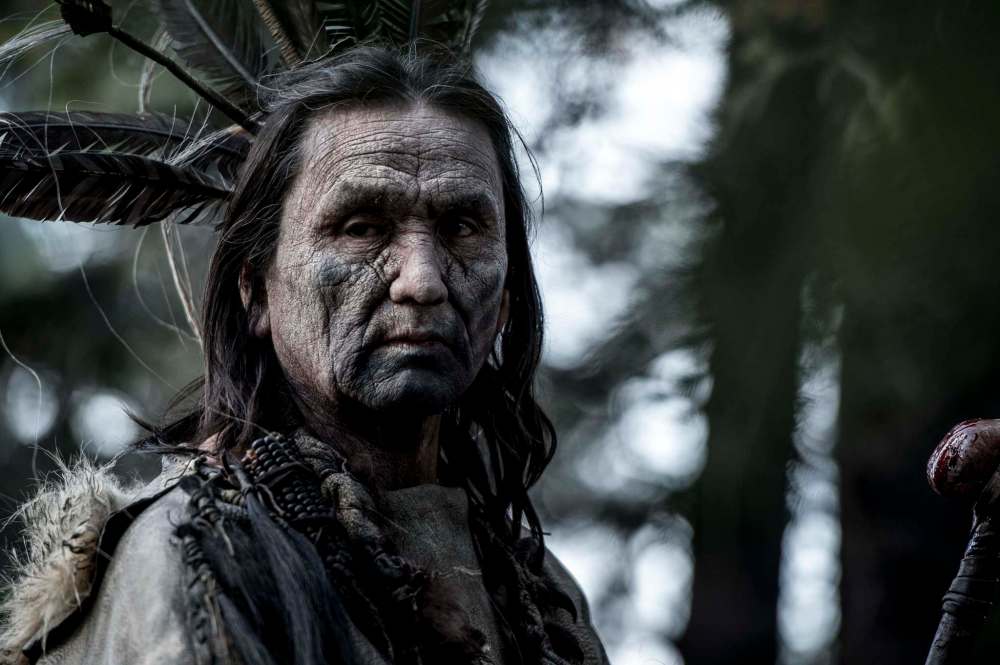
• This year’s keynote speaker is Canadian actor Duane Howard, who played Elk Dog in Alejandro González Iñárritu’s 2015 Oscar-winner The Revenant. Howard’s own story is the stuff of drama: he was born on the west coast of Vancouver Island and found himself on the streets of Vancouver at the age of 14, surviving 13 years of an addictive lifestyle before turning his life around, earning a bachelor’s degree in substance-abuse counselling in 1987 before discovering a latent passion for acting. Howard speaks at 7 p.m., Thursday, Nov. 24, at the Towne Cinema.
• Rajotte says it’s no coincidence many of WAFF’s short films touch on the pertinent theme of missing and murdered aboriginal women, including the films Stolen, 7 Minutes, This River and Sister, Daughter.
“It’s on the minds of so many people, and a lot of filmmakers are directing their creativity towards this issue so that people can understand it better,” Rajotte says. “We can all watch these films, learn and discuss what we can do to help solve this national crisis.”
• Three Wise Cousins (Thursday, Nov. 24, at 7:15 p.m.), WAFF’s opening-night film from New Zealand, directed by one Stallone Vaiaoga-Ioasa, is a comedy about an urbane young Samoan who visits his cousins to learn how to be a “real island guy” to impress a woman. “It was made for $80,000 and has netted more than $2 million at the box office,” says Rajotte. “That’s a kind of story we want to promote, because we are about independent filmmaking and here is a huge success story from New Zealand.”
The complete program for the Winnipeg Aboriginal Film Festival is online at www.waff.ca.
randall.king@freepress.mb.ca
Twitter: @FreepKing
Our newsroom depends on a growing audience of readers to power our journalism. If you are not a paid reader, please consider becoming a subscriber.
Our newsroom depends on its audience of readers to power our journalism. Thank you for your support.
Movie preview
Winnipeg Aboriginal Film Festival
● Thursday, Nov. 24, to Sunday, Nov. 27
● Towne Cinema
● Tickets $5 (daytime screenings) to $10 (evening screenings); All-Access pass $50 at 204-783-7438
● www.waff.ca
Our newsroom depends on a growing audience of readers to power our journalism. If you are not a paid reader, please consider becoming a subscriber.
Our newsroom depends on its audience of readers to power our journalism. Thank you for your support.

Advertisement Advertise With Us
Advertisement Advertise With Us