The sense of a disappointing ending
Mechanics distract from plot and stellar acting in this literary adaptation

Advertisement
Read this article for free:
or
Already have an account? Log in here »
To continue reading, please subscribe:
Digital Subscription
One year of digital access for only $1.44 a week*
- Enjoy unlimited reading on winnipegfreepress.com
- Read the E-Edition, our digital replica newspaper
- Access News Break, our award-winning app
- Play interactive puzzles
*Billed as $5.77 plus GST every four weeks. After 52 weeks, price increases to the regular rate of $19.95 plus GST every four weeks. Offer available to new and qualified returning subscribers only. Cancel any time.
To continue reading, please subscribe:
Add Free Press access to your Brandon Sun subscription for only an additional
$1 for the first 4 weeks*
- Enjoy unlimited reading on winnipegfreepress.com
- Read the E-Edition, our digital replica newspaper
- Access News Break, our award-winning app
- Play interactive puzzles
*Your next Brandon Sun subscription payment will increase by $1.00 and you will be charged $17.95 plus GST for four weeks. After four weeks, your payment will increase to $24.95 plus GST every four weeks.
Read unlimited articles for free today:
or
Already have an account? Log in here »
Hey there, time traveller!
This article was published 24/03/2017 (3497 days ago), so information in it may no longer be current.
Based on Julian Barnes’s Man Booker Prize-winning novel — a slim but potent examination of time and aging, memory and regret — this well-acted drama has its moments. But as with so many highly pedigreed literary adaptations, these flashes of insight and poignant power just make The Sense of an Ending’s ultimate failure even more frustrating.
Tony Webster (Jim Broadbent), a middle-class Londoner in late middle age, finds his settled routine thrown off when he receives a letter about an unexpected legacy. A diary has been left to him by the mother of a girl he once knew, written by a boy from his school days who later died by suicide. Tony’s response to this gift — and the memories it brings back — seems at once obsessive and oddly vague, even evasive.
We begin to suspect — probably before he does — that there’s a mystery in there somewhere that Tony has somehow missed but that has nonetheless determined the passive, emotionally muffled course of his life.
At a superficial level, Barnes’s brief novel is packed with convoluted story. In a deeper sense, it concerns the very nature of stories, particularly those sometimes self-serving or self-deceiving ones we tell ourselves and others about our lives.
The film moves between two periods, juxtaposing the raw emotions of Tony’s 1960s youth, in which he’s played by Billy Howle, with the polite suppressions of the present day. As these twinned timelines head toward some kind of reckoning, we begin to sense that Tony is an unreliable, possibly even treacherous narrator of his own life.
Without Barnes’ elegant and aphoristic prose, the screen adaptation (by relative newcomer Nick Payne) becomes a bit mired in the plot mechanics, really the least interesting aspect of the novel. The twist ending, which in the book is more about theme and meaning, becomes in the film a kind of “gotcha” moment, which will almost certainly disappoint.
The strong cast compensates, starting with the quietly devastating work of Broadbent.
Known better as a hardworking character actor, Broadbent makes a fascinating lead. His portrayal of Tony’s blinding lack of self-awareness is subtle and sly: Tony seems at his most reasonable and genial when he’s doing things that are, actually, sort of awful.
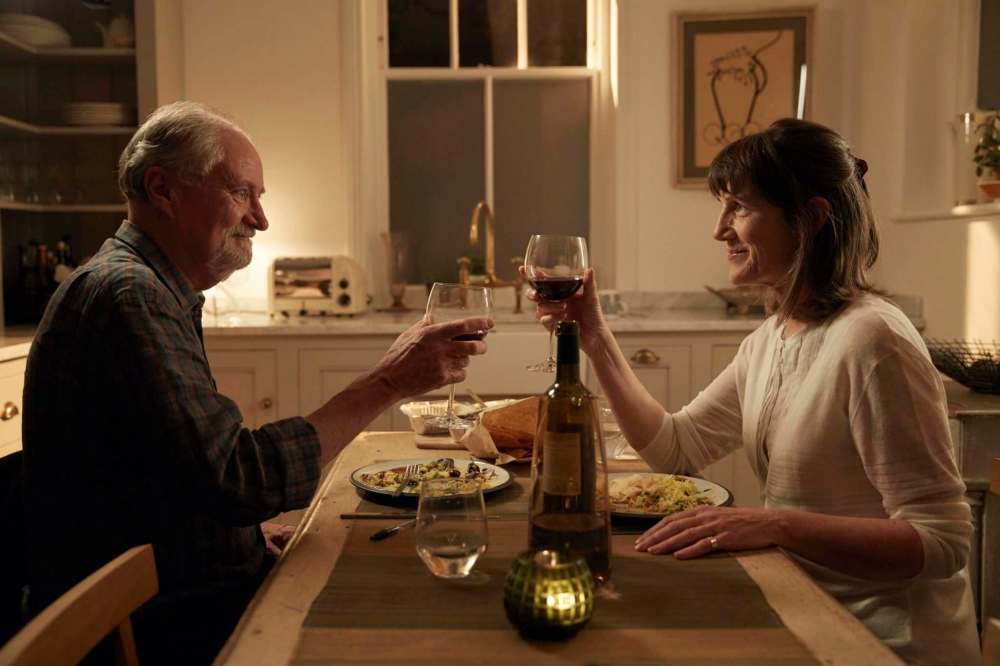
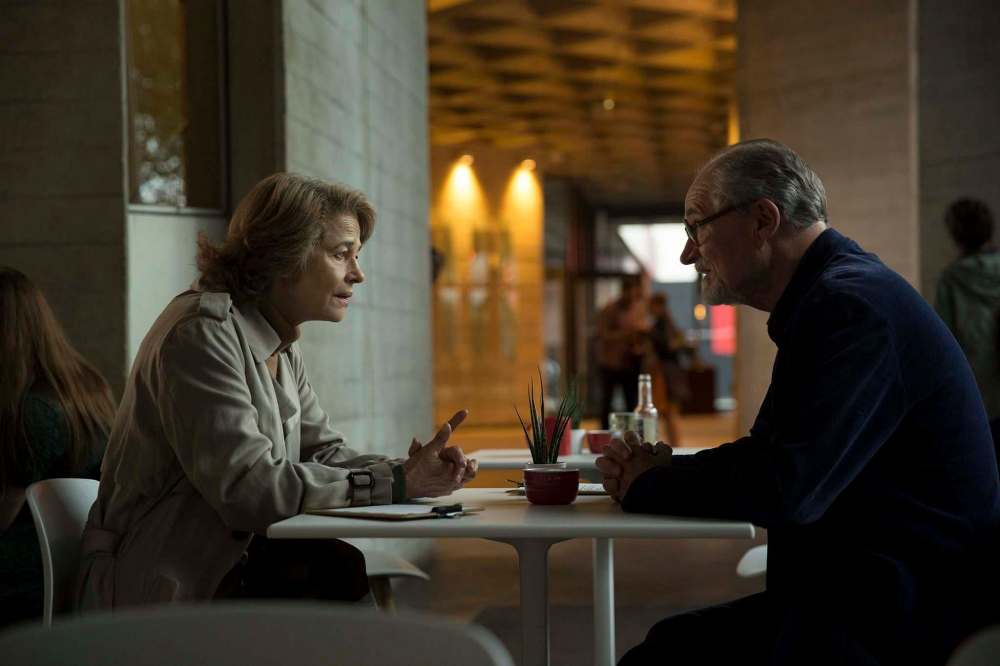
Broadbent is beautifully matched by Harriet Walter, who plays Tony’s sharp but sympathetic ex-wife, Margaret, and by the magnificently hostile Charlotte Rampling, who shows up as Veronica, Tony’s one-time university girlfriend whom he hasn’t seen for almost 50 years. These characters engage in several long, carefully observed conversations that don’t quite save the film, but do serve as master classes in acting.
Even the minor parts in the film get star-quality turns, with Matthew Goode just dropping by to portray a killingly sarcastic schoolmaster and Michelle Dockery of Downton Abbey playing Tony’s hugely pregnant daughter, Susie, who makes a brief starting appearance only to disappear for most of the film.
Despite all these excellent performances and some extraordinary individual scenes, the film as a whole struggles to come together.
One key issue is tone. The approach Barnes takes is essentially restrained and tragic, while director Ritesh Batra, known for the genuinely sweet Indian rom-com The Lunchbox, is really pumping for some upbeat life lessons. This cheeriness keeps cushioning the novel’s acute and angular perceptions, especially as we move to the conclusion, when we see that Batra’s “sense of an ending” is very different from that of Barnes.
alison.gillmor@freepress.mb.ca
Studying at the University of Winnipeg and later Toronto’s York University, Alison Gillmor planned to become an art historian. She ended up catching the journalism bug when she started as visual arts reviewer at the Winnipeg Free Press in 1992.
Our newsroom depends on a growing audience of readers to power our journalism. If you are not a paid reader, please consider becoming a subscriber.
Our newsroom depends on its audience of readers to power our journalism. Thank you for your support.
Movie review

The Sense of an Ending
Starring Jim Broadbent and Harriet Walter
Grant Park
PG
109 minutes
Three stars out of five
Other voices
Director Ritesh Batra adapts the Man Booker Prize-winning novel into a contemplative but compelling tale about regret, remorse and redemption.
— Bruce Demara, Toronto Star
Broadbent, so often a supporting player, is a treat in the lead role, soft and mournful, but with a youthful gleam in his eye.
— Adam Graham, Detroit News
The Sense of an Ending offers the kind of literary pleasures that low-budget, actor-driven movies do so well these days.
— Ken Eisner, Georgia Straight
Broadbent humanizes the mystery and makes us care long past the point where we’ve solved it.
— Roger Moore, Movie Nation
May just be the most British movie ever made.
— Jordan Hoffman, Vanity Fair
Studying at the University of Winnipeg and later Toronto’s York University, Alison Gillmor planned to become an art historian. She ended up catching the journalism bug when she started as visual arts reviewer at the Winnipeg Free Press in 1992.
Our newsroom depends on a growing audience of readers to power our journalism. If you are not a paid reader, please consider becoming a subscriber.
Our newsroom depends on its audience of readers to power our journalism. Thank you for your support.
Related Articles
No, no Power Rangers
Advertisement Advertise With Us
Advertisement Advertise With Us