Sanitized storytelling
Film set in Nazi-occupied Poland lacks real urgency

Advertisement
Read this article for free:
or
Already have an account? Log in here »
To continue reading, please subscribe:

Digital Subscription
One year of digital access for only $205*
- Enjoy unlimited reading on winnipegfreepress.com
- Read the E-Edition, our digital replica newspaper
- Access News Break, our award-winning app
- Play interactive puzzles
*First annual payment billed as $205.00 + GST for one year. This annual subscription will automatically renew at $233.00 + GST every 52 weeks (10% off the regular annual price of $259.35). Offer available to new and qualified returning subscribers only. Cancel any time.
To continue reading, please subscribe:
Add Free Press access to your Brandon Sun subscription for only an additional
$1 for the first 4 weeks*
- Enjoy unlimited reading on winnipegfreepress.com
- Read the E-Edition, our digital replica newspaper
- Access News Break, our award-winning app
- Play interactive puzzles
*Your next Brandon Sun subscription payment will increase by $1.00 and you will be charged $17.95 plus GST for four weeks. After four weeks, your payment will increase to $24.95 plus GST every four weeks.
Read unlimited articles for free today:
or
Already have an account? Log in here »
Hey there, time traveller!
This article was published 01/04/2017 (3447 days ago), so information in it may no longer be current.
Well-intentioned and handsomely produced, this fact-based war film is an important account of human decency, featuring moving performances and some effective scenes. Yet The Zookeeper’s Wife, based on the non-fiction book by naturalist Diane Ackerman, still feels somehow off.
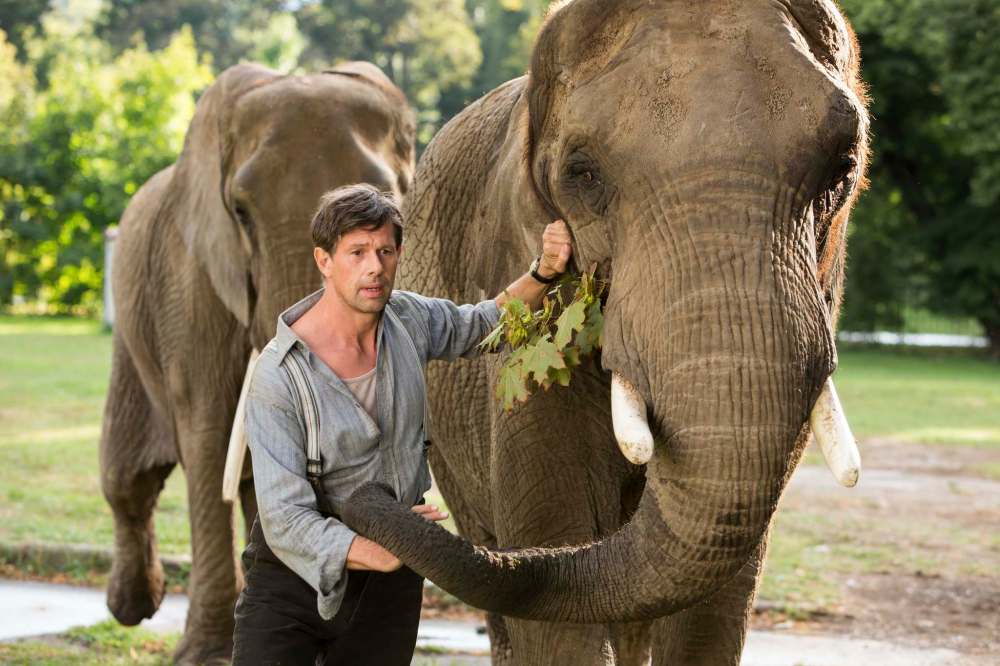
The story is worthy: Antonina and Jan Zabinski were Warsaw zookeepers who managed to save more than 300 Jews during the Nazi occupation of Poland. Some passed through in transit to safe houses. Some stayed on for months, even years.
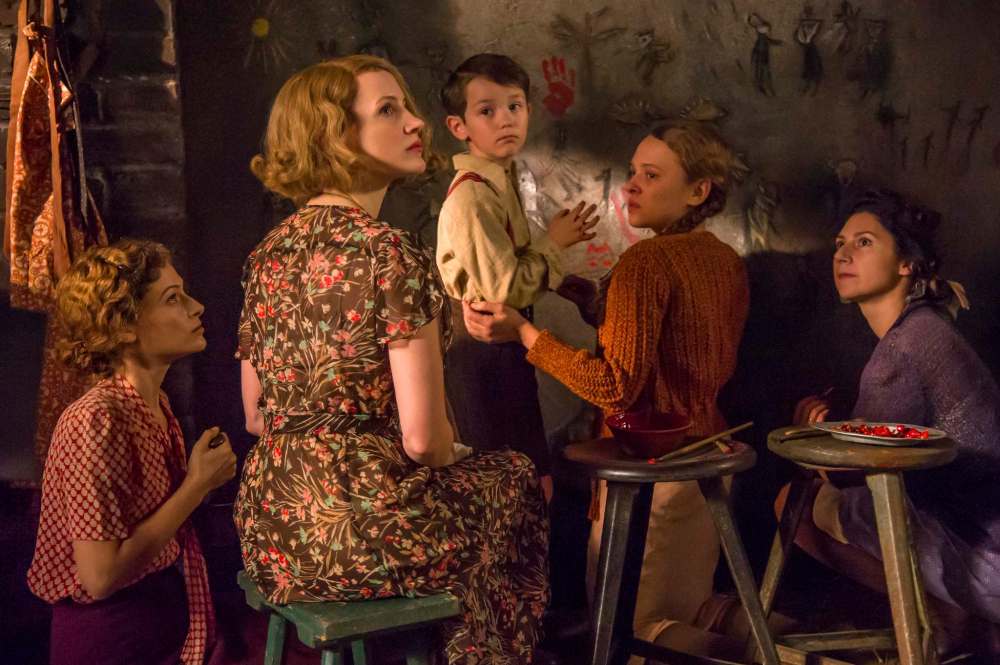
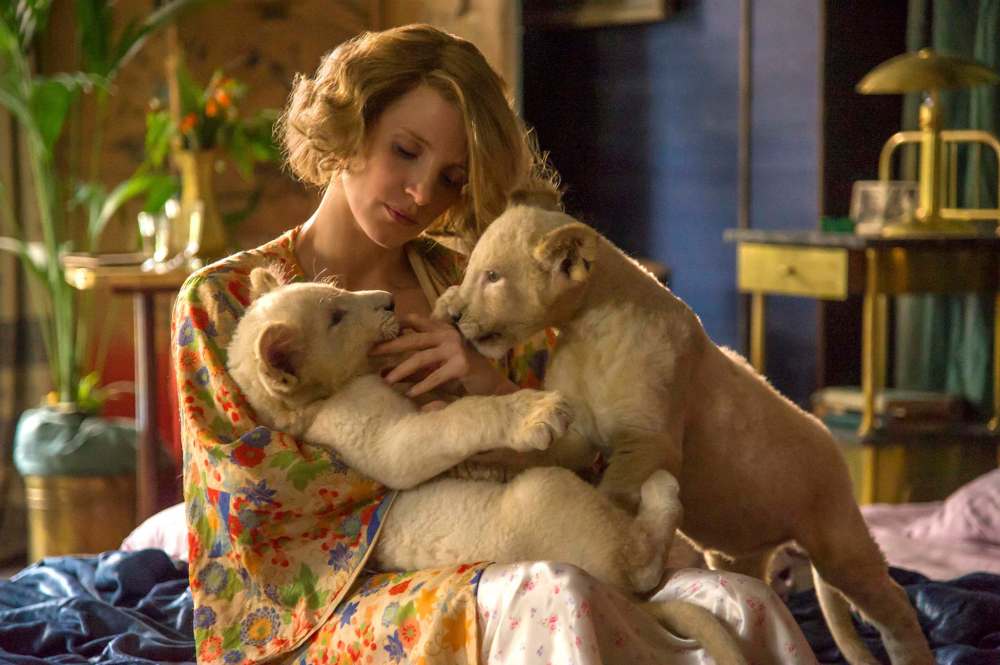
Jan (Belgian actor Johan Heldenbergh) fought with the Polish resistance, which might seem like the obvious heroic plotline. But scripter Angela Workman and New Zealand director Niki Caro (Whale Rider) are more interested in the role of Antonina (Jessica Chastain of Miss Sloane and The Martian), who fights on a fraught home-front, as men, women and children shelter in her basement and the zoo’s now mostly empty outbuildings and tunnels.
Under almost constant surveillance by the German occupiers and under threat of death if found out, Antonina must hold things together, feeding and protecting a shifting community of people and animals, while placating Lutz Heck (Daniel Brühl of Captain America: Civil War and Rush), a former zoologist colleague and now the Nazi officer overseeing the zoo.
So why this one small story when millions are suffering? Sometimes a narrow lens can offer a new way to view larger atrocities.
Seeing the zoo animals screech with fear as the first wave of German bombs hits the city presages the greater horrors to come. Seeing a camel, wolf, wallaby and cheetah, escaped from their ruined enclosures and wandering through city streets, suggests the surreality of a world turned upside down.
The German occupiers’ ruthless approach to the zoo — they “liquidate” most of the animals, while pillaging valuable breeding specimens and sending them back to Berlin — also gives a clear sense of what is going to happen throughout Europe in the next six years.
At other times, however, there is a tonal disconnect between the relative comfort of the zoo’s villa, warmly detailed, lushly shot and centring around the luminous Chastain, with scenes of the Warsaw ghetto. A sequence that cuts between a covert Passover seder at the zoo and the firebombing of the ghetto feels contrived, while a fictional subplot concerning a traumatized girl comes off as manipulative.
There are scenes that touch on known historical figures, such as Janusz Korczak, the renowned children’s book author and pediatrician who refused many chances to escape the ghetto and chose to accompany the children at his orphanage to Treblinka. And Heck is a real-life character, who used pseudo-science and the patronage of Hermann Goering in an attempt to resurrect the auroch, an extinct species of massive wild cattle that was to repopulate the Nazis’ fantasy of the primordial Teutonic forest.
The story of the Zabinskis is inspiring. But by shining a sometimes overly gauzy light on Antonina’s heroism and (mostly) avoiding graphic depictions of what made her heroism necessary, the filmmakers struggle to build up a sense of threat.

The film too often tiptoes around the destruction of the war, with tidied-up, even sanitized versions of what might have happened. There are details that seem overly whimsical: one of zoo’s hidden guests writes Jewish names and Hebrew words on the walls of their shelter, which would have been a terrible risk.
The uneven material is offset somewhat by a uniformly strong global cast, which includes Belgian, German, Irish, Polish, Czech, Israeli and American actors, with everyone speaking slightly accented English. Chastain, in particular, excels at suggesting emotion just below the surface.
In the end, unfortunately, the treatment feels too handsome for the story’s devastating subject. Not all Holocaust films can be Son of Saul, but The Zookeeper’s Wife is hampered by a tasteful, audience-friendly restraint that feels far too tentative.
alison.gillmor@freepress.mb.ca
Studying at the University of Winnipeg and later Toronto’s York University, Alison Gillmor planned to become an art historian. She ended up catching the journalism bug when she started as visual arts reviewer at the Winnipeg Free Press in 1992.
Our newsroom depends on a growing audience of readers to power our journalism. If you are not a paid reader, please consider becoming a subscriber.
Our newsroom depends on its audience of readers to power our journalism. Thank you for your support.
Movie review

The Zookeeper’s Wife
● Starring Jessica Chastain and Daniel Brühl
● Grant Park, McGillivray
● PG ● 127 minutes
★★1/2 out of five
Other voices
Ultimately, the movie gets by on the power of its characters’ goodness; we want to believe that we, faced with a chance to make a difference, would risk our lives the way Antonina and Jan did.
— Moira Macdonald, Seattle Times
The movie is nicely shot and sympathetically acted, but there’s an odd lack of stakes and urgency.
— Leah Greenblatt, Entertainment Weekly
As refreshing as it is to see a woman in an Oskar Schindler-type role get her big-movie due, the trappings of handsome blandness, tinny storytelling and thumbnail-sketch war terror prove too much for this story of a beauty fighting beastliness.
— Robert Abele, TheWrap
The movie’s central figures and their experiences have been cleansed of complexity, embalmed in a sort of hagiographic glaze that makes even the pain look pretty.
— Jon Frosch, Hollywood Reporter
Studying at the University of Winnipeg and later Toronto’s York University, Alison Gillmor planned to become an art historian. She ended up catching the journalism bug when she started as visual arts reviewer at the Winnipeg Free Press in 1992.
Our newsroom depends on a growing audience of readers to power our journalism. If you are not a paid reader, please consider becoming a subscriber.
Our newsroom depends on its audience of readers to power our journalism. Thank you for your support.
Advertisement Advertise With Us
Advertisement Advertise With Us