Engaging in risky business
Filmmaker's credibility tested in portrait of WikiLeaks founder
Advertisement
Read this article for free:
or
Already have an account? Log in here »
To continue reading, please subscribe:

Digital Subscription
One year of digital access for only $205*
- Enjoy unlimited reading on winnipegfreepress.com
- Read the E-Edition, our digital replica newspaper
- Access News Break, our award-winning app
- Play interactive puzzles
*First annual payment billed as $205.00 + GST for one year. This annual subscription will automatically renew at $233.00 + GST every 52 weeks (10% off the regular annual price of $259.35). Offer available to new and qualified returning subscribers only. Cancel any time.
To continue reading, please subscribe:
Add Free Press access to your Brandon Sun subscription for only an additional
$1 for the first 4 weeks*
- Enjoy unlimited reading on winnipegfreepress.com
- Read the E-Edition, our digital replica newspaper
- Access News Break, our award-winning app
- Play interactive puzzles
*Your next Brandon Sun subscription payment will increase by $1.00 and you will be charged $17.95 plus GST for four weeks. After four weeks, your payment will increase to $24.95 plus GST every four weeks.
Read unlimited articles for free today:
or
Already have an account? Log in here »
Hey there, time traveller!
This article was published 18/08/2017 (3330 days ago), so information in it may no longer be current.
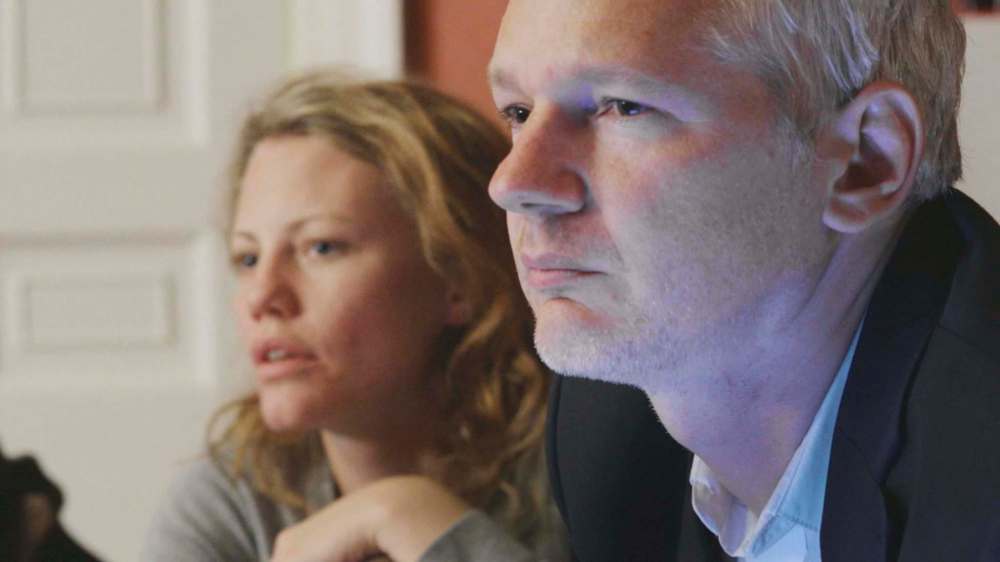
Risk is an infuriating film on many levels. A startlingly intimate portrait of WikiLeaks founder Julian Assange that spans six years — during which he goes from house arrest in rural England to claiming asylum at the Ecuadoran Embassy in London to releasing a damaging cache of hacked emails at a pivotal point during last year’s presidential election — the film is guaranteed to stir up strong feelings among Assange supporters and skeptics alike.
On another, more meta plane, Risk raises some disquieting questions about the process of documentary filmmaking itself, as director Laura Poitras places herself squarely in the middle of ethical issues that throw the entire enterprise into question.
Poitras, who won an Oscar in 2015 for Citizenfour — a riveting portrait of National Security Agency leaker Edward Snowden — takes a similarly up-close-and-personal approach to her subject in Risk, which begins in 2010, when Assange is living in Norfolk, England, trying to avoid extradition to Sweden, where he is wanted for questioning regarding accusations of sexual assault.
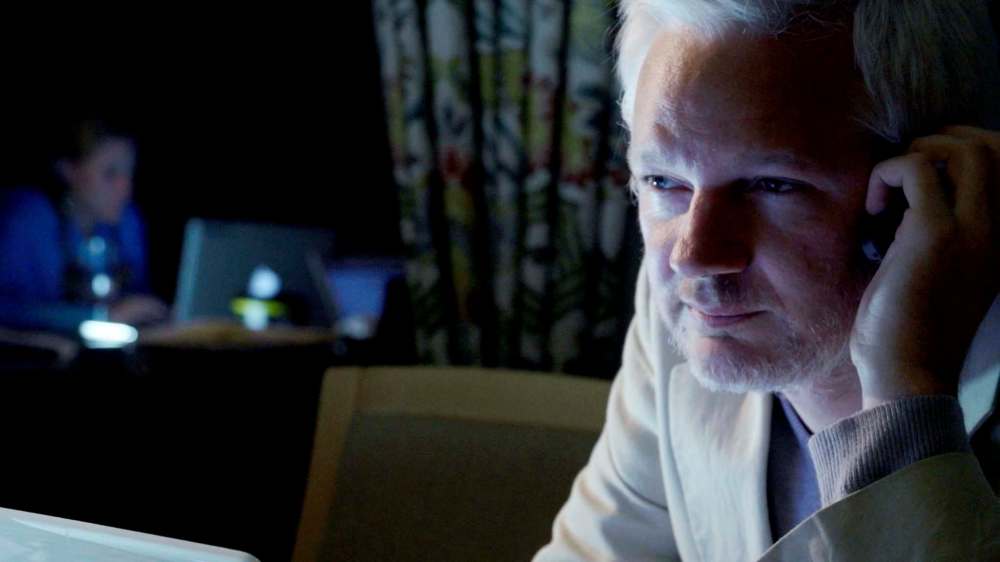
As the movie opens, he and WikiLeaks section editor Sarah Harrison are working the phones, trying to warn the U.S. State Department about the impending release of unredacted diplomatic cables.
With a combination of naiveté and hubris that will become gratingly familiar over the course of the film, Assange and Harrison try to get then-secretary of state Hillary Clinton on the phone, with Assange at one point telling a low-level State Department employee that “I don’t have a problem, you have a problem.”
Of course, they get nowhere.
But the foreshadowing has been put in place in a narrative that marches toward its election-year climax with almost novelistic inevitability.
Like Citizenfour, Risk unfolds in vérité-style encounters, while Assange consults with his mostly female team of lawyers, holds spin meetings with the WikiLeaks staff, plots legal and publicity strategies and, at one point, has his hair cut while watching a K-pop video as his adoring minions look on with awed smiles.
What emerges from these sessions isn’t terribly different from the depiction Alex Gibney provided in his jaundiced 2013 WikiLeaks documentary We Steal Secrets.
As in that film, Assange is shown here to be a self-dramatizing, purposefully enigmatic figure who, regardless of vaunted rhetoric about principles and praxis, often seems compromised by the same moral arrogance and unaccountability he decries in his opponents.
At the film’s most surreal moment — by which time Assange has claimed asylum in London — Lady Gaga pays her respects and films an inane interview, peppered with questions about his favourite food and who’s “after” him.
Assange replies with a long list, mostly comprising U.S. government agencies, as well as Swedish authorities, who will probably allow him to be extradited to America should he return to that country.
Risk devotes a lot of time to that quandary, capturing Assange at his most misogynistic during a strategy session with one of his lawyers.
Poitras, who presented a far more pro-Assange version of the film at Cannes last year, admits at one point that “the lines have become blurred,” adding, “I thought I could ignore the contradictions… I was so wrong. They are becoming the story.”
Risk is heavy on the psychodrama between the filmmaker and her subject — Poitras regularly regales viewers with the dreams she has about Assange — reaching its dramatic climax when Assange decides to release damaging DNC emails last July.
As he weighs which candidate is more deserving of being harmed, it’s as if Charlie Chaplin’s Great Dictator is dandling an inflatable globe on his knee.
On the one hand, he observes, Trump might have some unsavoury business dealings in his past.
On the other, Clinton clearly “has got it in for me.” And here we are.
These scenes offer chilling evidence of Poitras’s change of heart regarding Assange, who might have started out as an admirable warrior for pure transparency but who evolves over the course of the film into a smug, self-righteous megalomaniac.
Even more sobering, though, is Poitras’s disclosure late in the film that she committed a serious boundary violation in the course of filming, an ill-advised relationship that casts serious doubt on her judgment and credibility.
Her admission is too little, too late — and raises far more questions than it answers, suggesting that Poitras is either unwilling or unable to contend with the contradictions she so elegantly invoked moments earlier.

Risk raises deep misgivings about its subject and its maker.
But it’s still queasily, compulsively watchable — and probably necessary, if only as a cautionary example of how ethics, objectivity and agendas come into play in nonfiction filmmaking.
One of the chief goals of documentarians is to invest the audience emotionally with otherwise dry subject matter. There’s no denying that Risk achieves that aim, even if the cardinal feelings viewers walk away with are confusion, betrayal and an unshakable sense of unease.
Here we are, indeed.
— Washington Post