Indian Partition film pleasantly old-fashioned
Director's own ancestry a storytelling highlight
Advertisement
Read this article for free:
or
Already have an account? Log in here »
To continue reading, please subscribe:
Digital Subscription
One year of digital access for only $1.44 a week*
- Enjoy unlimited reading on winnipegfreepress.com
- Read the E-Edition, our digital replica newspaper
- Access News Break, our award-winning app
- Play interactive puzzles
*Billed as $5.77 plus GST every four weeks. After 52 weeks, price increases to the regular rate of $19.95 plus GST every four weeks. Offer available to new and qualified returning subscribers only. Cancel any time.
To continue reading, please subscribe:
Add Free Press access to your Brandon Sun subscription for only an additional
$1 for the first 4 weeks*
- Enjoy unlimited reading on winnipegfreepress.com
- Read the E-Edition, our digital replica newspaper
- Access News Break, our award-winning app
- Play interactive puzzles
*Your next Brandon Sun subscription payment will increase by $1.00 and you will be charged $17.95 plus GST for four weeks. After four weeks, your payment will increase to $24.95 plus GST every four weeks.
Read unlimited articles for free today:
or
Already have an account? Log in here »
Hey there, time traveller!
This article was published 01/09/2017 (3338 days ago), so information in it may no longer be current.
One of the most touching moments of co-writer/director Gurinder Chadha’s Viceroy’s House comes at the end of the film, when she reveals her family’s personal experience during the strife and unrest India experienced upon its independence in 1947, after three centuries of British rule.
When the borders of India were re-drawn to create Pakistan, more than 14 million people were displaced in the largest mass migration in history, as Muslims traveled to Pakistan and Hindus and Sikhs left their ancestral homes to immigrate within the newly drawn borders. Chadha’s acknowledgment of her family’s story is a poignant reminder of how this event continues to influence the political climate between India and Pakistan and touch the lives of the people there in intimate ways.
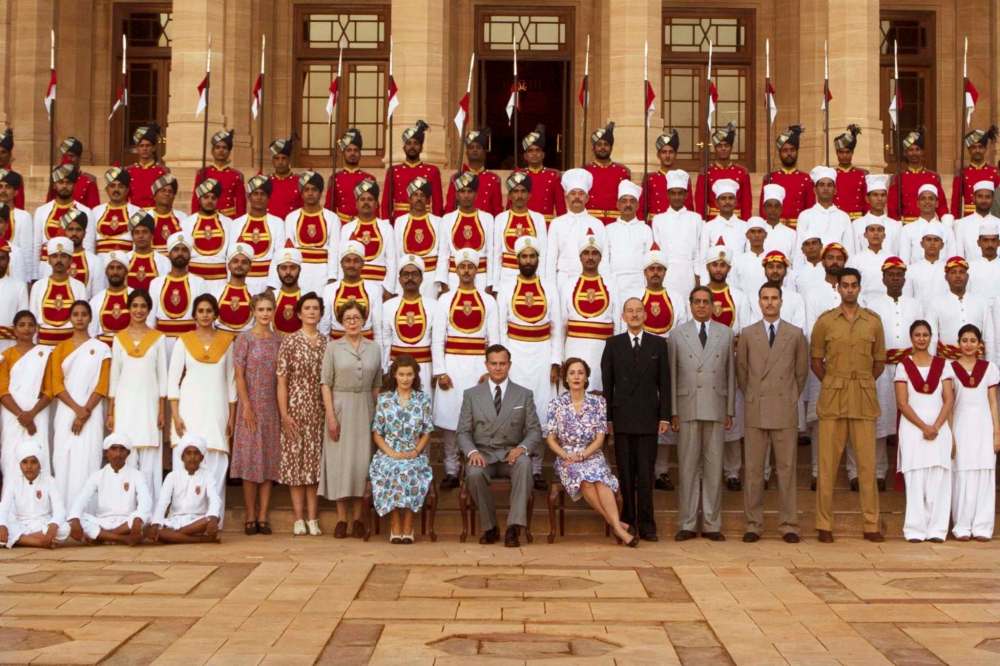
Using the book The Shadow of the Great Game: The Untold Story of India’s Partition by Narendra Singh Sarila as an inspiration, Chadha and co-writers Paul Mayeda Berges and Moira Buffini apply the Upstairs, Downstairs formula to the story of India’s last British viceroy, Lord Louis Mountbatten (Hugh Bonneville).
Taking the viceroy’s house as a microcosm of the cultural climate in India at that time, Chadha explores the political and romantic dramas of the government leaders and the house staff and especially those moments when they bleed into each other in such a close setting.
As Lady Edwina Mountbatten, Gillian Anderson is wonderfully steely, blending empathy with a no-nonsense approach to problem-solving. She is driven primarily by a desire to improve the conditions for the people of India, viewing them as equals, not subjects, and embodies the maxim about the great women behind great men.
Viceroy’s House starts off with a light, airy tone before descending into a romantic melodrama partnered with a dangerous ticking clock of civil upheaval in a time of uncertainty. Manish Dayal links these stories as Jeet, a close aide to Lord Mountbatten and completely smitten with translator Aalia (Huma Qureshi).
The staff is riveted by the comings and goings in the house, with their fate hanging in the balance as Pakistan’s founder Muhammad Ali Jinnah (Denzil Smith), Mahatma Gandhi (Neeraj Kabi) and Jawaharlal Nehru (Tanveer Ghani) work with the Brits to strike an accord for India’s future.
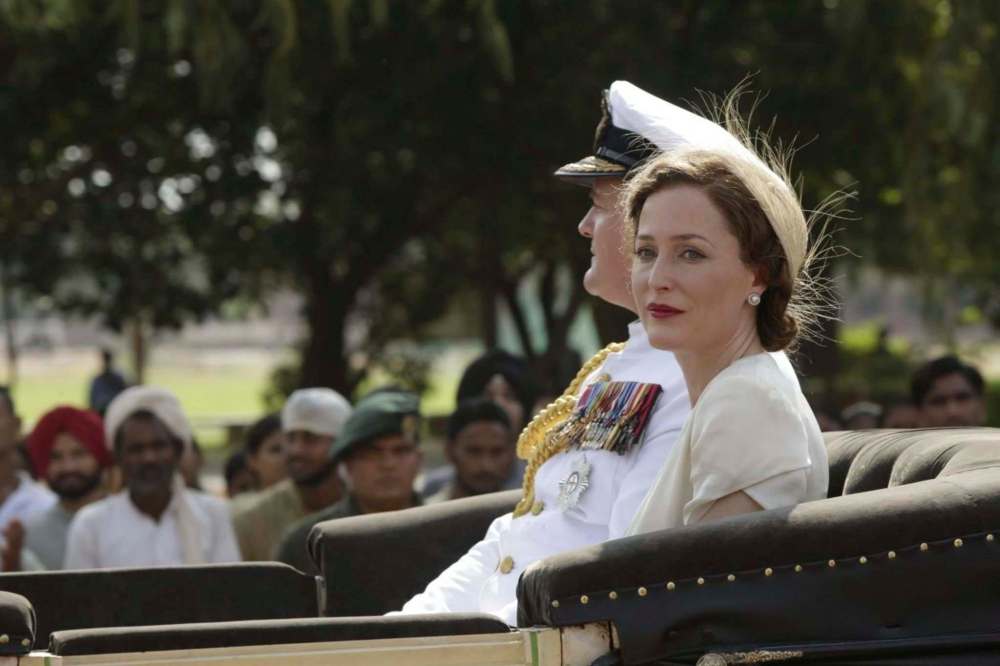

There’s something pleasantly old-fashioned about Viceroy’s House. It feels like a Merchant Ivory period piece posing cultural questions within a safely cushioned environment. Everything is on the surface and the characters state their intentions clearly — there are no guessing games, but also very little subtext.
The Romeo and Juliet-esque love story between Hindu Jeet and Muslim Aalia is an earnestly soapy bit of melodrama that grows increasingly high-stakes as the crisis worsens.
Viceroy’s House opens with the words “history is written by the victors.” Chadha presents this film as an antidote to that, exposing the underbelly and human-scale machinations of this monumental moment. Archival footage spliced with re-created newsreels juxtaposes the presentation of this event with the stark, behind-the-scenes realities. But Chadha also deftly packages this story into something easily swallowed and understood, eliding the messier details.
Viceroy’s House is remarkable as a vital piece of history that Chadha herself has written, as a descendant, Indian woman and storyteller. Through this perspective, she is focused on the legacy of these events on a personal level, which reverberate throughout the India of today.
— Tribune News Service