Retelling of classic tale falls flat

Classic retelling lacks elegance and simplicity

Advertisement

Advertise with us

Beloved children’s book The Story of Ferdinand, by Munro Leaf, with illustrations by Robert Lawson, was published in 1936. But the simple, pacifist story about a bull who would rather smell flowers than fight has resonated across generations.

Read this article for free:


or

Already have an account? Log in here »

To continue reading, please subscribe:

Subscribe and receive a limited-edition Free Press branded hat or tote.

Digital Subscription

One year of digital access for only $205*

  • Enjoy unlimited reading on winnipegfreepress.com
  • Read the E-Edition, our digital replica newspaper
  • Access News Break, our award-winning app
  • Play interactive puzzles

*First annual payment billed as $205.00 + GST for one year. This annual subscription will automatically renew at $233.00 + GST every 52 weeks (10% off the regular annual price of $259.35). Offer available to new and qualified returning subscribers only. Cancel any time.

To continue reading, please subscribe:

Add Free Press access to your Brandon Sun subscription for only an additional

$1 for the first 4 weeks*

  • Enjoy unlimited reading on winnipegfreepress.com
  • Read the E-Edition, our digital replica newspaper
  • Access News Break, our award-winning app
  • Play interactive puzzles
Start now

*Your next Brandon Sun subscription payment will increase by $1.00 and you will be charged $17.95 plus GST for four weeks. After four weeks, your payment will increase to $24.95 plus GST every four weeks.

Hey there, time traveller!
This article was published 15/12/2017 (3200 days ago), so information in it may no longer be current.

Beloved children’s book The Story of Ferdinand, by Munro Leaf, with illustrations by Robert Lawson, was published in 1936. But the simple, pacifist story about a bull who would rather smell flowers than fight has resonated across generations.

It’s a natural progression that this favourite character would find a home on the big screen in an animated feature, Ferdinand, but perhaps the filmmakers behind the raucous Ice Age movies aren’t exactly the right team.

The peaceful spirit of Ferdinand the bull is celebrated in the film, directed by Carlos Saldanha, but the rather sparse story has been filled out with the typical animated feature fare of manic action, a coterie of wise-cracking animals, body humour, dead parents, car chases, dance-offs and pop music.

Elegant and simple, this film is not.

20TH CENTURY FOX PHOTOS
John Cena voices Ferdinand (left) and Kate McKinnon voices Lupe in a modern take on the 1936 children’s book The Story of Ferdinand.
20TH CENTURY FOX PHOTOS John Cena voices Ferdinand (left) and Kate McKinnon voices Lupe in a modern take on the 1936 children’s book The Story of Ferdinand.

To flesh out the story of Ferdinand to feature length, the team of writers has given the protagonist a dramatic upbringing. The young and gentle bull flees his ranch after his father is chosen for a bullfight and never returns.

He ends up at the home of a flower farmer and is taken in by his daughter, Nina (Lily Day), where girl and beast grow up together in perfect harmony.

But Ferdinand (John Cena) becomes too large and unruly for his own good, and after wreaking havoc on a flower festival, he’s shipped back to the ranch, where he’s reunited with his childhood friends. They head-butt and tussle to be chosen by the matador El Primero (Miguel Ángel Silvestre), but Ferdinand is the odds-on favourite because of his hulking size and clumsiness, which masquerades as ferociousness.

When the bulls realize they’re being sent to “the chop shop” if they can’t perform, it inspires an all-out revolt, as they hatch an escape plan with the help of three resourceful hedgehogs and a sassy goat (Kate McKinnon).

Despite the mania, and the influx of increasingly wackier characters (a trio of snobby Lipizzaner horses are truly random), Ferdinand contains some resonant messages about prioritizing gentleness and love over competition and violence, and about not judging a book by its cover.

Much of Ferdinand’s struggle comes from his desire to break free from the system of violent masculinity, where the only way out is to fight.

He’s deemed violent and scary because of the way he looks, and he pushes back on that stereotype, most notably when he plops down in the bullfighting ring, wanting only to stop and smell the roses.

Ferdinand does attempt to express something authentic about Spanish culture, which reveres bulls, and their tenuous relationships with humans — from the bullfights to the running of the bulls. There are a couple of genuinely funny gags that only adults will get (a funny “bull in a china shop” sequence). With a lovely voice performance from Cena, the spirit of Ferdinand does shine through. But the rest of the story filler is mostly forgettable.

— Tribune News Service

Report Error Submit a Tip

More Stories

Desperate Poilievre wants Canadians to believe the sky is falling when it’s just cloudy outside

Tom Brodbeck 5 minute read Preview

Desperate Poilievre wants Canadians to believe the sky is falling when it’s just cloudy outside

Tom Brodbeck 5 minute read Yesterday at 12:47 PM CDT

Pierre Poilievre has a problem.

Canadians just don’t seem to be paying much attention to him anymore.

So, naturally, the Conservative Opposition leader has decided to turn up the volume.

At a recent party caucus retreat in Penticton, B.C., Poilievre delivered the familiar message: Canada is in trouble, Canadians are hurting and the Liberal government is making everything worse.

Read
Yesterday at 12:47 PM CDT

United Way, other charities fight for dollars as donor base shrinks

Scott Billeck 8 minute read Preview

United Way, other charities fight for dollars as donor base shrinks

Scott Billeck 8 minute read Yesterday at 2:00 AM CDT

Winnipeg’s charitable sector is being squeezed from both sides: demand for help is growing while the pool of donors to meet that need is shrinking.

The imbalance is increasingly being carried by a relatively small group of deep-pocketed donors. Last year, 600 people — about three per cent of United Way Winnipeg’s individual donors — accounted for roughly $8 million, or 55 per cent of individual donations.

The fundraising pitch isn’t getting any easier.

Homelessness and public drug use have become increasingly visible, household budgets remain strained and the problems charities are trying to address can seem so entrenched that donors may reasonably wonder what difference another contribution can make.

Read
Yesterday at 2:00 AM CDT

Kinew delivered what most of us wanted; now we’ll have to deal with the consequences

Dan Lett 5 minute read Preview

Kinew delivered what most of us wanted; now we’ll have to deal with the consequences

Dan Lett 5 minute read Updated: Yesterday at 8:43 AM CDT

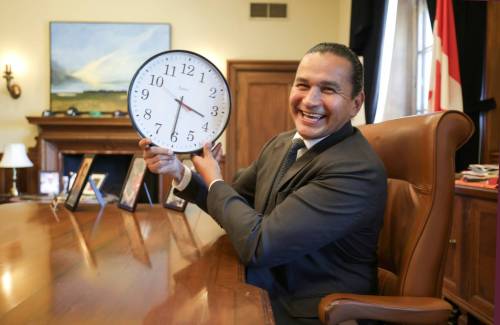
Premier Wab Kinew has decided to adopt permanent daylight savings time, which means a permanent end to the spring forward, fall back tradition of adjusting our clocks. And absolutely no one is surprised.

Read
Updated: Yesterday at 8:43 AM CDT

Family account spiced with magic realism, geopolitical intrigue and a ghost story

Reviewed by Zilla Jones 4 minute read Preview

Family account spiced with magic realism, geopolitical intrigue and a ghost story

Reviewed by Zilla Jones 4 minute read 2:01 AM CDT

Tom Lin’s second novel Babylon, South Dakota moves beyond a historical account of an immigrant family’s struggle, delightfully blending and bending genres.

Lin is a Chinese-born novelist whose family emigrated to the U.S. when he was four years old. His debut novel, The Thousand Crimes of Ming Tsu, won the 2022 Andrew Carnegie Medal for Excellence in Fiction, making him the youngest ever recipient of that award. He earned a PhD in English from the University of California Davis and is currently an assistant professor of English and creative writing at the University of Iowa.

Babylon, South Dakota takes place in an unspecified time period that can be understood to be during the Mao era — likely the 1950s or ’60s. A young Chinese couple, the Hsuis, immigrate to the rural community that gives the book its title. They take the names Saul and Mei and settle on a 160-acre homestead left to them by a distant relative.

Saul’s dream is to breed and sell chrysanthemums from seeds he brought from China, while Mei wants to raise livestock. They speak no English, know nothing of life in the United States, are unprepared for the harshness of winter and the isolation of the farm and bring nothing with them except some gold, which Mei hides around the house for emergencies. Their only link to the outside world is a discarded and marginally functioning TV set, which Saul rescues and rigs up.

Read
2:01 AM CDT

Siloam Mission, WFPS discussing on-site paramedic to reduce staggering number of emergency calls

Scott Billeck 4 minute read Preview

Siloam Mission, WFPS discussing on-site paramedic to reduce staggering number of emergency calls

Scott Billeck 4 minute read Yesterday at 2:00 AM CDT

Winnipeg’s fire-paramedic service and its largest homeless-serving organization are discussing what it would look like to station at least one paramedic at Siloam Mission, as emergency calls to the downtown facility surge.

The ongoing discussions come as Winnipeg Fire Paramedic Service crews were dispatched 1,771 times during the first eight months of the year to the two adjacent Siloam properties at 303 Stanley St. and 300 Princess St.

WFPS said most of the calls were related to overdoses or other consequences of substance use, with the total nearly double the 854 calls recorded over the same period last year. By comparison, there were 831 calls during the same span in 2024, and 591 in 2023.

“The number of emergency calls isn’t sustainable for us as a service, but it’s certainly not sustainable for them as an agency trying to provide services,” WFPS chief Ryan Sneath told the Free Press. “And they recognize that they’re impacting emergency services, not them specifically, but the site in a significant way.”

Read
Yesterday at 2:00 AM CDT

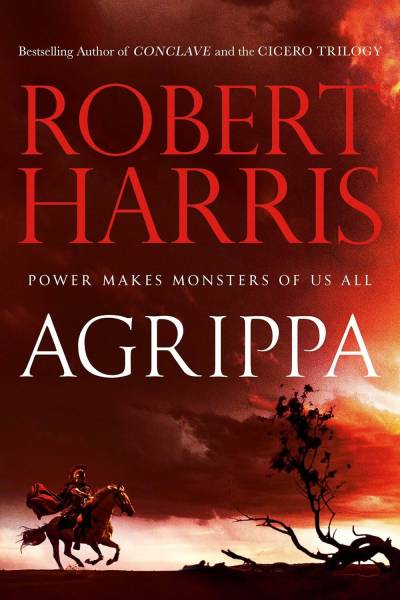
Give-and-take relationship of Roman leaders takes centre stage in Harris’s historical fiction

Reviewed by Kathryne Cardwell 4 minute read Preview

Give-and-take relationship of Roman leaders takes centre stage in Harris’s historical fiction

Reviewed by Kathryne Cardwell 4 minute read 2:01 AM CDT

British novelist Robert Harris’s latest work is a reflection on tyranny, corruption and betrayal among all-powerful political leaders.

You might be forgiven for thinking it’s a contemporary thriller — it’s actually historical fiction set in ancient Rome.

A former BBC journalist, Harris debuted as a novelist in 1992 with Fatherland, an alternative history where Nazi Germany won the Second World War.

Since then, the prolific author has become best-known for his works of historical fiction, especially his ancient Rome trilogy released from 2006-2015 and the novel Conclave, which was published in 2016 and was made into the film of the same name in 2024.

Read
2:01 AM CDT