Urgent COVID doc highlights U.S. bungles

Advertisement
Read this article for free:
or
Already have an account? Log in here »
To continue reading, please subscribe:

Digital Subscription
One year of digital access for only $205*
- Enjoy unlimited reading on winnipegfreepress.com
- Read the E-Edition, our digital replica newspaper
- Access News Break, our award-winning app
- Play interactive puzzles
*First annual payment billed as $205.00 + GST for one year. This annual subscription will automatically renew at $233.00 + GST every 52 weeks (10% off the regular annual price of $259.35). Offer available to new and qualified returning subscribers only. Cancel any time.
To continue reading, please subscribe:
Add Free Press access to your Brandon Sun subscription for only an additional
$1 for the first 4 weeks*
- Enjoy unlimited reading on winnipegfreepress.com
- Read the E-Edition, our digital replica newspaper
- Access News Break, our award-winning app
- Play interactive puzzles
*Your next Brandon Sun subscription payment will increase by $1.00 and you will be charged $17.95 plus GST for four weeks. After four weeks, your payment will increase to $24.95 plus GST every four weeks.
Read unlimited articles for free today:
or
Already have an account? Log in here »
Hey there, time traveller!
This article was published 17/10/2020 (2175 days ago), so information in it may no longer be current.
Totally Under Control (currently available on Apple TV Plus, iTunes, Google Play, YouTube and other digital services) is trying to do a very tricky thing. This carefully sourced, clearly stated pandemic documentary is examining an historical event while it’s still happening.
That challenge — of being right in the middle of things — is conveyed in the actual process of filmmaking. The complicated camera set-up necessary to comply with COVID-19 protocols during interviews is a constant visual reminder of what we are living through right now.
Writer-director Alex Gibney, known for Enron: The Smartest Guys in the Room, Going Clear and The Inventor, teams here with filmmakers Ophelia Harutyunyan and Suzanne Hillinger to track the Trump administration’s response — and more often non-response — to the coronavirus. The film, made in secret over the last five months, feels a bit unfinished. It also feels urgent.
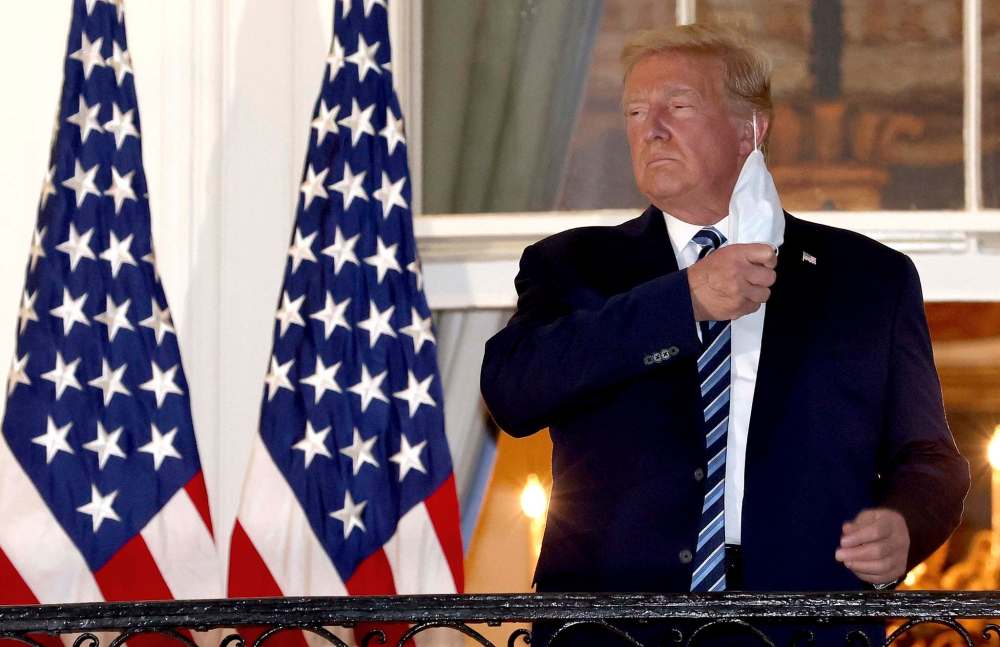
Gibney tends to make quietly advocational docs. He puts forward strong positions but eschews Michael Moore-style showboating, mustering information and presenting it in a cogent and considered way. The 66-year-old filmmaker also tends to avoid purely personal attacks. Donald Trump is here, of course — his declaration that the pandemic is “totally under control” giving the doc its cuttingly ironical title — but he is not the film’s central target.
Instead, the filmmakers go after systemic failures, indicting an administration that doesn’t like government, that distrusts civil servants, that ignores science and disdains experts.
Within this almost clinical collation of information, the film’s personal and emotional power comes from extended interviews with some of these experts. There’s controlled anger when they speak of frontline battles and bureaucratic infighting, but also profound sadness.
Dr. Rick Bright, a public health official effectively driven out after refusing to push the drug hydroxychloroquine (now widely agreed to be ineffective in battling COVID-19), and Dr. Taison Bell, a critical care physician working among predominantly communities of colour in Virginia, sometimes seem to be on the edge of tears, overcome, just for a moment, by the magnitude of suffering and loss.
The film puts forward a clearly marked timeline, starting in January 2020, when epidemiologists started hearing reports out of Wuhan, China, and began raising alarms, only to be met with dithering, denialism and delays.
There’s a testing screw-up at the Centers for Disease Control, with an initial mistake that needed only a simple fix but — inexplicably — wasn’t corrected for weeks.
There’s another breakdown when Health and Human Services decides the free market should be able to deliver a lean, mean and swift response to equipment shortages, when in fact this for-profit model drives up costs and increases inefficiencies, with the states competing with each other as if they were “bidding on eBay.”
And then there’s the massive failure when supposed boy wonder Jared Kushner, put in charge of getting PPE (personal protective equipment) for health-care personnel, brings in a bunch of friends and acquaintances, many just out of college, with no medical background or experience in government procurement. One volunteer describes how many went in thinking their idealism and energy would be used to assist the PPE team, only to discover they were the PPE team — and they didn’t really know what they were doing.
These botched and bungled rollouts become even more infuriating when set against a parallel timeline in South Korea, which had its first diagnosed case on the same day as the United States. The filmmakers demonstrate how the South Korean government immediately instituted a comprehensive program to test, trace and isolate, while taking a science-led, non-politicized approach to public health measures.
Meanwhile, the Trump administration, seeming to settle into a fatalistic belief that the virus would just do what it does, often seemed more concerned with PR spin than practical problem-solving.
South Korea has had its spikes, the film concedes, one related to the mass gatherings of a doomsday cult, but the government has met these spikes by taking action and tamping them down.
In America, unfortunately, a doomsday cult seems to be running things, and its leader is holding rallies.

Totally Under Control doesn’t offer any big reveals, or even a lot of new data. It does present an effective summary of issues that have already receded from immediate view, displaced by the overwhelming avalanche of information — and misinformation — that buries our news sources and social media feeds every day.
The film’s final effect is complicated, as its carefully laid-out arguments gradually become suffused with sorrow. This is not a healing, cathartic sadness — maybe that will come one day — but a weary, heavy apprehension of waste and loss.
Ultimately, the film feels like a hybrid project, simultaneously speaking to this moment while also waiting for an uncertain future, when this information, and these feelings, can be placed into some larger context.
alison.gillmor@freepress.mb.ca
Studying at the University of Winnipeg and later Toronto’s York University, Alison Gillmor planned to become an art historian. She ended up catching the journalism bug when she started as visual arts reviewer at the Winnipeg Free Press in 1992.
Our newsroom depends on a growing audience of readers to power our journalism. If you are not a paid reader, please consider becoming a subscriber.
Our newsroom depends on its audience of readers to power our journalism. Thank you for your support.
Studying at the University of Winnipeg and later Toronto’s York University, Alison Gillmor planned to become an art historian. She ended up catching the journalism bug when she started as visual arts reviewer at the Winnipeg Free Press in 1992.
Our newsroom depends on a growing audience of readers to power our journalism. If you are not a paid reader, please consider becoming a subscriber.
Our newsroom depends on its audience of readers to power our journalism. Thank you for your support.
Advertisement Advertise With Us
Advertisement Advertise With Us