Semi-autobiographical sequel masterfully layers art, life

Advertisement
Read this article for free:
or
Already have an account? Log in here »
To continue reading, please subscribe:

Digital Subscription
One year of digital access for only $205*
- Enjoy unlimited reading on winnipegfreepress.com
- Read the E-Edition, our digital replica newspaper
- Access News Break, our award-winning app
- Play interactive puzzles
*First annual payment billed as $205.00 + GST for one year. This annual subscription will automatically renew at $233.00 + GST every 52 weeks (10% off the regular annual price of $259.35). Offer available to new and qualified returning subscribers only. Cancel any time.
To continue reading, please subscribe:
Add Free Press access to your Brandon Sun subscription for only an additional
$1 for the first 4 weeks*
- Enjoy unlimited reading on winnipegfreepress.com
- Read the E-Edition, our digital replica newspaper
- Access News Break, our award-winning app
- Play interactive puzzles
*Your next Brandon Sun subscription payment will increase by $1.00 and you will be charged $17.95 plus GST for four weeks. After four weeks, your payment will increase to $24.95 plus GST every four weeks.
Read unlimited articles for free today:
or
Already have an account? Log in here »
Hey there, time traveller!
This article was published 26/02/2022 (1673 days ago), so information in it may no longer be current.
You don’t often see sequels in art-house cinema, these second go-rounds usually relegated to the money-hungry world of the commercial blockbuster.
But here we have the followup to British filmmaker Joanna Hogg’s astonishing semi-autobiographical indie drama The Souvenir (2019), which was a creative coming-of-age story, an account of a destructive but transformative first love affair and an examination of the personal, often painful line between life and art.
Part II isn’t a sequel, exactly, but rather an expansion of Hogg’s portrait of the artist as a young woman. Julie (Honor Swinton Byrne, again doing subtle and powerful work) is still living in her posh-punk corner of Thatcher-era London, attempting to finish her film-school project while grieving the death of her enigmatic lover Anthony (played so charismatically by Tom Burke in the first film).
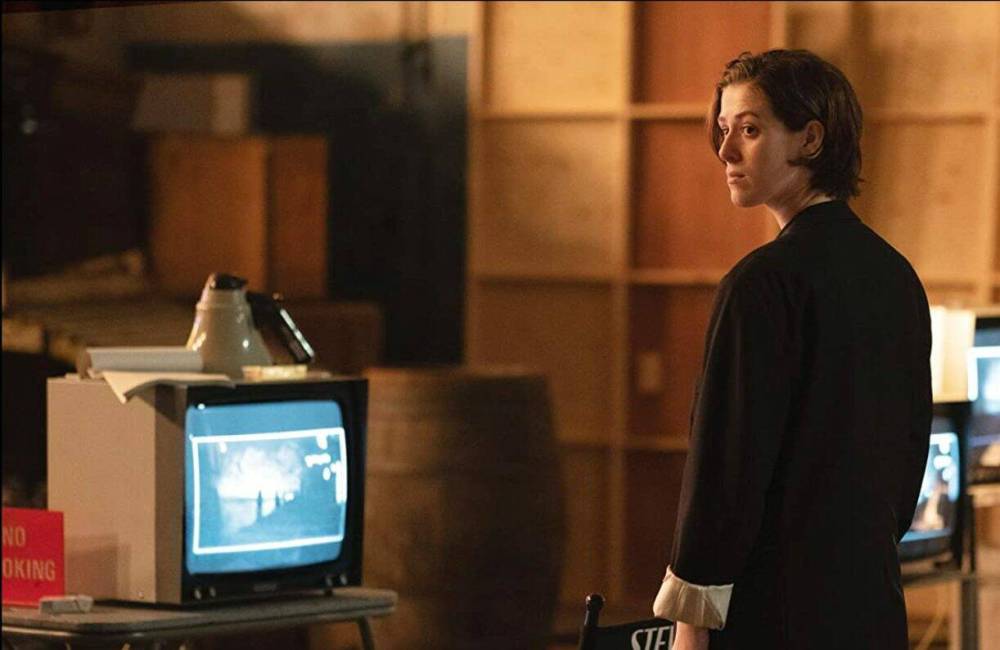
Anthony always claimed to be doing something hush-hush at the Foreign Office, but it turns out his sudden mysterious absences had more to do with heroin addiction.
Julie is now dealing with her loss, partly by turning it into a film. She casts a film-school friend (Ariane Labed) as a version of herself and a young actor (Harris Dickinson) as her dead lover, and then they have long, earnest conversations about the characters’ beliefs and motivations, which are also conversations about her and Anthony’s beliefs and motivations.
Since Julie is still trying to figure out exactly what happened, it’s no surprise, perhaps, that her profs, all middle-aged men, and even her student crew are concerned that the project feels formless and unfinished.
There are also Julie’s sessions with her therapist, a visit with Anthony’s bewildered and devastated parents, and weekends at the country home of her own aristocratic parents, who are well-intentioned but unable to help much. (“Did you know what was going on with this chap?” her father asks.)
Hogg catches the specific look and sound of 1980s England — the sweeping tweed coats and the swooping hair and the Eurythmics on the soundtrack — but she also conveys the feel of what it’s like to be young in any era, with that poignant mix of certainty — about politics and cinema and the politics of cinema — along with so much uncertainty about everything else.
The relationship between art and life is even more layered than it was in the original film, which is saying something. Swinton Byrne is Hogg’s real-life goddaughter, while Rosalind, Julie’s onscreen mother, is played by Tilda Swinton, a friend of Hogg’s from her film-school days, who is also, of course, Swinton Byrne’s actual mother. There’s also a scene is which Julie talks with a Scottish actor friend (Alice McMillan), who is probably a version of the young Tilda.
In the first film, Hogg constructed a replica of her undergrad London flat, and that re-creation features here, but now we also have Julie’s soundstage replica of the replica, which has been constructed for her student film project.
The making of Julie’s thesis film plunges us into the collaborative, sometimes combative nature of the movie-making process, and glimpses of the finished product seem to resemble Hogg’s work.
We also see a kind of dream film, an experimental fantasia filled with artifice and cinematic references.
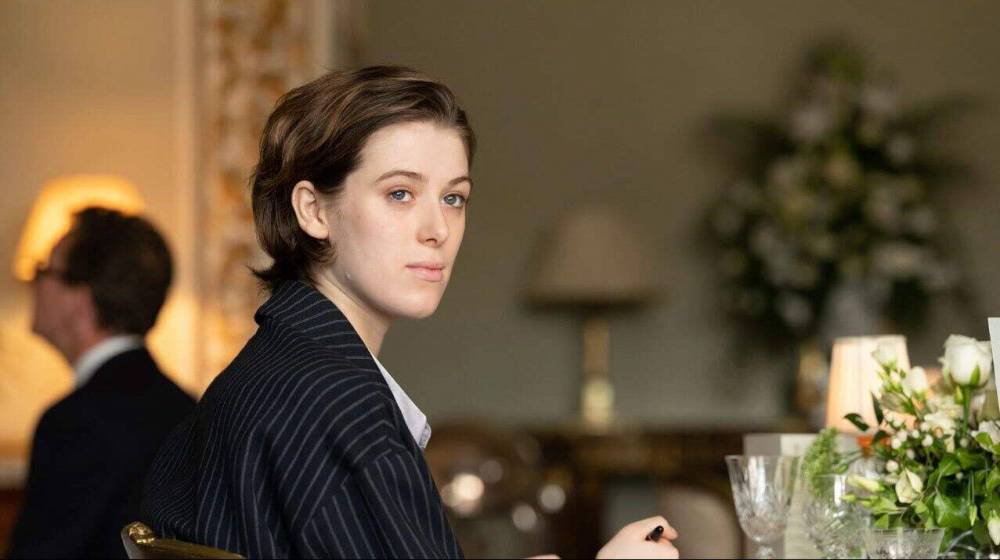
This might all sound super-meta, maybe even obnoxiously, irritatingly self-indulgent. But it never is. Hogg (Unrelated, Archipelago, Exhibition), whose touch is at once so assured and so delicate, never forces the connections. Her scenes are precisely considered but also feel naturalistic, casual, human. The Souvenir: Part II might be even more emotionally affecting than its predecessor.
Several scenes involve Julie visiting the set of a tetchy, temperamental, more established filmmaker friend (Richard Ayoade). (“You’re forcing me to have a tantrum!” he screams at his cast and crew.)
He’s making a stylized musical set against vivid painted backdrops because he’s tired of “every British film ever made” in the grey, unstinting rain.
His project fails, but he’s not without hope for the filmmaking life.
“Avoid the temptation to be obvious,” he tells Julie. “That’s all you can hope for.” With this completely original and unexpected sequel, it’s clear Hogg agrees.
alison.gillmor@winnipegfreepress.com
Studying at the University of Winnipeg and later Toronto’s York University, Alison Gillmor planned to become an art historian. She ended up catching the journalism bug when she started as visual arts reviewer at the Winnipeg Free Press in 1992.
Our newsroom depends on a growing audience of readers to power our journalism. If you are not a paid reader, please consider becoming a subscriber.
Our newsroom depends on its audience of readers to power our journalism. Thank you for your support.
Movie review
The Souvenir: Part II
Starring Honor Swinton Byrne
● Cinematheque until March 3
● 107 minutes
★★★★★ out of five
Other voices
This is a creative coming-of-age story – a portrait of the artist as a young woman discovering her own voice.
— Mark Kermode, Observer
Hogg captures something I’ve felt acutely as a female filmmaker: a desperate need for everyone to like you, which eliminates any possibility of their respect.
— Chandler Levack, Globe and Mail
A delicate, somewhat maddeningly solipsistic portrait of a young artist discovering her voice and learning to fight for it.
— Ann Hornaday, Washington Post
A beguilingly meta portrait of the artist as a young woman learning to find herself not just in the mirror of others, but in her own hand behind the camera.
— Leah Greenblatt, Entertainment Weekly
It’s a specific character study told with the ambition that small, arty projects are rarely afforded — a complex and deeply realized story that not only demanded a second film but actually got one.
— David Sims, The Atlantic
Studying at the University of Winnipeg and later Toronto’s York University, Alison Gillmor planned to become an art historian. She ended up catching the journalism bug when she started as visual arts reviewer at the Winnipeg Free Press in 1992.
Our newsroom depends on a growing audience of readers to power our journalism. If you are not a paid reader, please consider becoming a subscriber.
Our newsroom depends on its audience of readers to power our journalism. Thank you for your support.
Advertisement Advertise With Us
Advertisement Advertise With Us