Three-eyed beast
Differing perspectives reveal multiple sides to story

Advertisement
Read this article for free:
or
Already have an account? Log in here »
To continue reading, please subscribe:

Digital Subscription
One year of digital access for only $205*
- Enjoy unlimited reading on winnipegfreepress.com
- Read the E-Edition, our digital replica newspaper
- Access News Break, our award-winning app
- Play interactive puzzles
*First annual payment billed as $205.00 + GST for one year. This annual subscription will automatically renew at $233.00 + GST every 52 weeks (10% off the regular annual price of $259.35). Offer available to new and qualified returning subscribers only. Cancel any time.
To continue reading, please subscribe:
Add Free Press access to your Brandon Sun subscription for only an additional
$1 for the first 4 weeks*
- Enjoy unlimited reading on winnipegfreepress.com
- Read the E-Edition, our digital replica newspaper
- Access News Break, our award-winning app
- Play interactive puzzles
*Your next Brandon Sun subscription payment will increase by $1.00 and you will be charged $17.95 plus GST for four weeks. After four weeks, your payment will increase to $24.95 plus GST every four weeks.
Read unlimited articles for free today:
or
Already have an account? Log in here »
Hey there, time traveller!
This article was published 05/01/2024 (1001 days ago), so information in it may no longer be current.
This initially vexing, ultimately rewarding drama (in Japanese with English subtitles) starts with a spectacular fire. Flames are shooting up, fire engines are blaring, people are yelling.
It’s attention-getting, but it seems oddly out of place in a Kore-eda Hirokazu work.
In such films as Nobody Knows, Still Walking, Our Little Sister, After the Storm and Shoplifters, the former documentarian has crafted quiet, intimate, humanistic examinations of ordinary lives, especially the day-to-day worlds of the young, the old and the marginalized.
As it turns out, that big, showy opener is a bit of misdirection. The blaze ends up being a minor structural element, a way of marking a repeating timeline as Kore-eda, working from a script by Yuji Sakamoto, tells the same story three times, with each take giving us a different perspective.
What at first seems like an account of bullying at a grade school in a small provincial Japanese city opens up to become a complex, layered larger project.
Monster’s surface narrative — which seems to ask who that titular monster is — forces us to examine the nature of narrative itself, with underlying questions about how we respond to stories, and how we bring in our own assumptions, preconceptions and prejudices.
Minato (Soya Kurokawa) is a schoolboy on the brink of puberty. Mourning the death of his father, he seems troubled and unhappy, maybe even dangerously so.
Saori (Sakura Ando), his young mother, is loving but overwhelmed. When she fears Minato is being bullied by Mr. Hori (Eita Nagayama), an inexperienced new teacher, she demands a meeting with school authorities. There she receives an elaborate formal apology but no explanation.
We naturally identify with this worried parent, feeling her confusion and desperation, but the truth behind Minato’s baffling behaviour slowly comes into sharper focus as we replay some of these scenes.
The second approach gives us Hori’s perspective, laying out the bureaucratic dynamics of the school and its teachers. In the revelatory third pass, we finally gain direct access to the children, in particular the relationship between Minato and Yori (Hinata Hiiragi), a small, dreamy picked-on kid in his class.
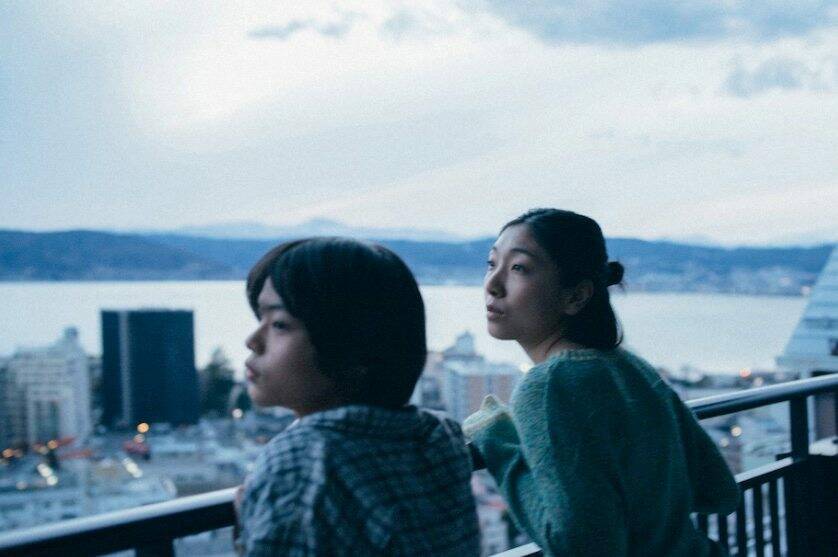
Suenaga Makoto/Well Go USA Entertainment
Soya Kurokawa (left) and Sakura Ando star as a troubled boy and his mother in Monster.
As one tale told three ways, the film could be a stunt. And at times Monster does, in fact, come off as an exasperating cinematic exercise. There are moments that seem abrupt and awkward, especially on the first go-round. Conversations are deliberately truncated. Information is meted out in purposefully parsimonious ways.
There’s an exquisite frustration to the early sections as we’re left wondering why Minato cuts his hair, why Hori’s reactions are so odd and off-putting, why the principal (Yuko Tanaka) is obsessively cleaning the school’s entranceway and why there’s a weird noise coming from the music room.
But if these first and even second iterations can be initially confounding, they become satisfyingly fuller and richer in retrospect as we gradually learn more about the characters and their relationships.
As we head towards the devastating conclusion, we realize that despite its complicated superstructure, the film has been built on familiar Kore-eda soil. Like all his work, Monster is grounded in carefully observed emotional realism and given poignant, nuanced shading by naturalistic performances, especially by the youngsters, who deliver truthful, delicate and scrupulously uncute work.
We also see the thematic throughlines that connect the three sections — the cost of shame and guilt, the corrosiveness of family secrets and the perils of complacent, self-protecting institutional thinking.
Most of all we see Kore-eda’s empathetic exploration of the mysterious inner lives of children, especially those who are set apart by neglect or isolation or simply because they’re different.
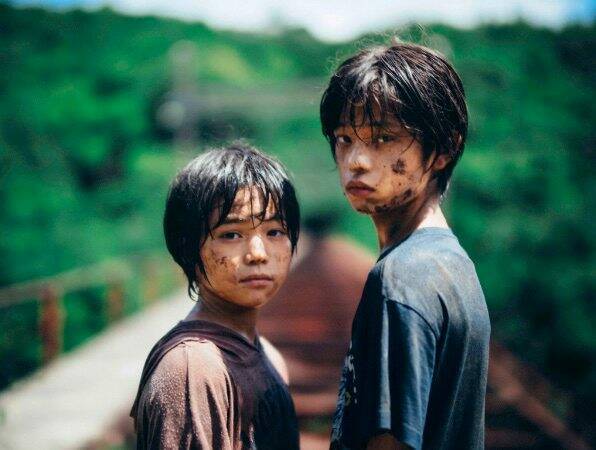
Suenaga Makoto/Well Go USA Entertainment
Hinata Hiiragi (left) and Soya Kurokawa in Monster.
The third act, which focuses on the two boys, is not just the cumulation of the previous two acts but a perfect piece of stand-alone beauty and meaning.
As with Anatomy of a Fall, another 2023 film about the tricky nature of truth, this third section will generate a lot of post-viewing talk in the theatre lobby. And that fourth act, created by the viewers themselves, as they sift through what they’ve seen and experienced, could be the most rewarding.
alison.gillmor@winnipegfreepress.com
Studying at the University of Winnipeg and later Toronto’s York University, Alison Gillmor planned to become an art historian. She ended up catching the journalism bug when she started as visual arts reviewer at the Winnipeg Free Press in 1992.
Our newsroom depends on a growing audience of readers to power our journalism. If you are not a paid reader, please consider becoming a subscriber.
Our newsroom depends on its audience of readers to power our journalism. Thank you for your support.
Movie review
Monster
- Starring Soya Kurokawa, Sakura Ando and Eita Nagayama
- Dave Barber Cinematheque, until Jan. 10
- 125 minutes, PG
Four stars out of five
Other voices
Lovingly detailed and accented by an aching score from Ryuichi Sakamoto, who died in March, Monster is one of the finest films of the year, and its structure — like its circle of characters — carries secrets that can only be unraveled through patience and empathy.
— Natalia Winkelman, New York Times
The performances from Sakura Ando, Eita Nagayami and the boys have a calm frankness and integrity. As for the story itself, it is arguably a little contrived with a thicket of mystery that perhaps didn’t need to be so dense. But this is a film created with a great moral intelligence and humanity.
— Peter Bradshaw, The Guardian
The deliberate pacing and sometimes confusing narrative make Monster less engrossing than some of Kore-eda’s work, and less likely to win prizes, but it is still a marvel: a minutely observed, profoundly compassionate chronicle of untidy contemporary lives. It’s a Hirokazu Kore-eda film, in other words.
— Nicholas Barber, BBC
From cinematography to performances to the score, Monster is as relentless with its pursuit of perfect filmmaking as it is with its desire to keep the viewer at arm’s length from what is really going on.
— Nadir Samara, Screenrant.com
Studying at the University of Winnipeg and later Toronto’s York University, Alison Gillmor planned to become an art historian. She ended up catching the journalism bug when she started as visual arts reviewer at the Winnipeg Free Press in 1992.
Our newsroom depends on a growing audience of readers to power our journalism. If you are not a paid reader, please consider becoming a subscriber.
Our newsroom depends on its audience of readers to power our journalism. Thank you for your support.
Advertisement Advertise With Us
Advertisement Advertise With Us
History
Updated on Friday, January 5, 2024 6:52 AM CST: Adds web headline
Updated on Friday, January 5, 2024 7:25 AM CST: Corrects subheadline, web headline
Updated on Friday, January 5, 2024 7:37 AM CST: Formats fact boxes