Projecting trauma with empathy and compassion

Advertisement
Read this article for free:
or
Already have an account? Log in here »
To continue reading, please subscribe:

Digital Subscription
One year of digital access for only $205*
- Enjoy unlimited reading on winnipegfreepress.com
- Read the E-Edition, our digital replica newspaper
- Access News Break, our award-winning app
- Play interactive puzzles
*First annual payment billed as $205.00 + GST for one year. This annual subscription will automatically renew at $233.00 + GST every 52 weeks (10% off the regular annual price of $259.35). Offer available to new and qualified returning subscribers only. Cancel any time.
To continue reading, please subscribe:
Add Free Press access to your Brandon Sun subscription for only an additional
$1 for the first 4 weeks*
- Enjoy unlimited reading on winnipegfreepress.com
- Read the E-Edition, our digital replica newspaper
- Access News Break, our award-winning app
- Play interactive puzzles
*Your next Brandon Sun subscription payment will increase by $1.00 and you will be charged $17.95 plus GST for four weeks. After four weeks, your payment will increase to $24.95 plus GST every four weeks.
Read unlimited articles for free today:
or
Already have an account? Log in here »
Hey there, time traveller!
This article was published 13/12/2024 (651 days ago), so information in it may no longer be current.
By any metric, the Winnipeg-lensed feature Aberdeen is a tough watch. Set on the city’s mean streets, it depicts the title character Aberdeen (a formidable performance by Métis actress Gail Maurice from Night Raiders), a lost soul from Peguis First Nation, as she struggles to regain control over her life in an effort to reclaim her estranged daughter’s children from the foster care system.
But before she can do anything, she must find her status card, lost in a tussle that resulted in a night in the drunk tank.
In a literal fight for her identity, Aberdeen goes up against bureaucracy, alcohol dependency and her own troubled past.
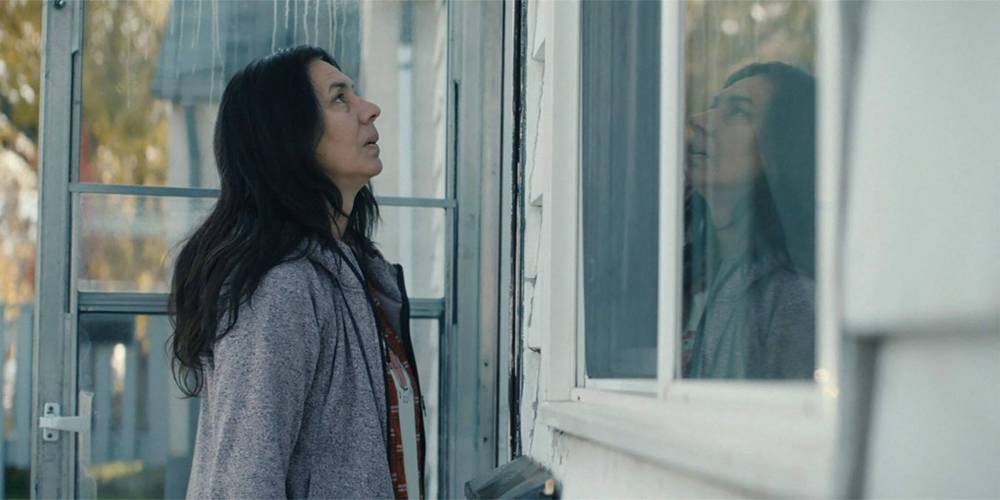
SUPPLIED
Gail Maurice in Aberdeen
For a Winnipeg audience, it literally hits close to home.
So it should come as no surprise that the movie’s gritty provenance comes from Ryan Cooper, also from Peguis, and the city of Winnipeg. Cooper, who identifies as Ojibwa, two-spirit and LGBTTQ+, wrote the original script and co-directed with Eva Thomas, a member of Walpole Island First Nation in southwestern Ontario and a more seasoned director with credits on locally filmed TV shows Acting Good and Don’t Even.
“Eva’s been a great protector in this process and a collaborative partner,” says Cooper.
“I asked Eva to come on because I come from a perspective of the more, the better.”
The script was written about 10 years ago based on Cooper’s personal experience, his family experience and his community. When Cooper discovered Thomas was a script consultant, he sent the first version of the script to her.
“I read it, I loved it and I sent him notes and he thought they were helpful,” she says.
Cooper agreed with her thoughts, then asked if Thomas would direct the feature. She said no, but instead offered to co-direct it.
“The reason that I felt Ryan needed to direct was because it’s such a personal story to him. I felt he needed to maintain creative control of what was on the screen. My job was to help Ryan manifest the kind of movie he wanted to make,” Thomas says
Cooper says the troubled character of Aberdeen is “90 per cent” himself.
“I was young and I was perpetuating a cycle myself. I didn’t realize it was trauma I was perpetuating until someone said: ‘You understand you’re carrying on a cycle that has been passed down to you for generations?’”
Cooper had high ambitions for his modest story.
“I felt like we were giving voice to the voiceless in some way. They don’t understand where this trauma comes from,” he says.

“I feel that people don’t want to talk about these addiction issues that a lot of our community have because they don’t understand why, where this trauma comes from and why they do the things they do. I want to give a voice to that and create an image of what it’s like to break a cycle. That was really important to me because I broke a cycle.”
For Thomas’s part, she felt she contributed to an understanding of the Indigenous population in the city.
“That was my driving force with Aberdeen. How can we create empathy and compassion for a person like Aberdeen so the audience can go on this journey with her?” Thomas says.
“If we as filmmakers could give the audience a sense of understanding how she got there, then we could have done our jobs as filmmakers and so maybe, in a small way, I can feel like I did something for that community in Winnipeg.”
randall.king.arts@gmail.com
Our newsroom depends on a growing audience of readers to power our journalism. If you are not a paid reader, please consider becoming a subscriber.
Our newsroom depends on its audience of readers to power our journalism. Thank you for your support.
MOVIE PREVIEW
Aberdeen
Starring Gail Maurice and Billy Merasty
Cinema City Northgate
83 minutes, 14A
Our newsroom depends on a growing audience of readers to power our journalism. If you are not a paid reader, please consider becoming a subscriber.
Our newsroom depends on its audience of readers to power our journalism. Thank you for your support.
Advertisement Advertise With Us
Advertisement Advertise With Us