Gothic girls
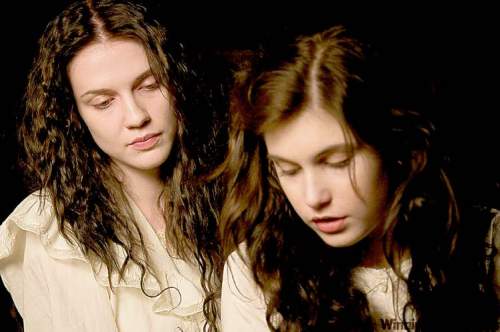
Sara Canning and local director Danishka Esterhazy get in touch with the dark side

Advertisement
Read this article for free:
or
Already have an account? Log in here »
To continue reading, please subscribe:

Digital Subscription
One year of digital access for only $205*
- Enjoy unlimited reading on winnipegfreepress.com
- Read the E-Edition, our digital replica newspaper
- Access News Break, our award-winning app
- Play interactive puzzles
*First annual payment billed as $205.00 + GST for one year. This annual subscription will automatically renew at $233.00 + GST every 52 weeks (10% off the regular annual price of $259.35). Offer available to new and qualified returning subscribers only. Cancel any time.
To continue reading, please subscribe:
Add Free Press access to your Brandon Sun subscription for only an additional
$1 for the first 4 weeks*
- Enjoy unlimited reading on winnipegfreepress.com
- Read the E-Edition, our digital replica newspaper
- Access News Break, our award-winning app
- Play interactive puzzles
*Your next Brandon Sun subscription payment will increase by $1.00 and you will be charged $17.95 plus GST for four weeks. After four weeks, your payment will increase to $24.95 plus GST every four weeks.
Read unlimited articles for free today:
or
Already have an account? Log in here »
Hey there, time traveller!
This article was published 28/05/2010 (5978 days ago), so information in it may no longer be current.
CANADIAN actress Sara Canning was at work last spring on the rustic set of the film Black Field when she got the news that the TV series pilot she had just filmed, Vampire Diaries, would be picked up as a TV series.
"As soon as we wrapped on Black Field, she had to fly to Atlanta and start shooting a TV series," says Winnipeg director Danishka Esterhazy, 40. "We got her at the perfect time. We were so lucky."
The feeling was mutual for the Gander, Nfld.-born Canning, 22, although the combination of the dark romance of Vampire combined with the Brontë-esque trappings of Black Field put Canning at risk of being pigeonholed as a gothic girl.
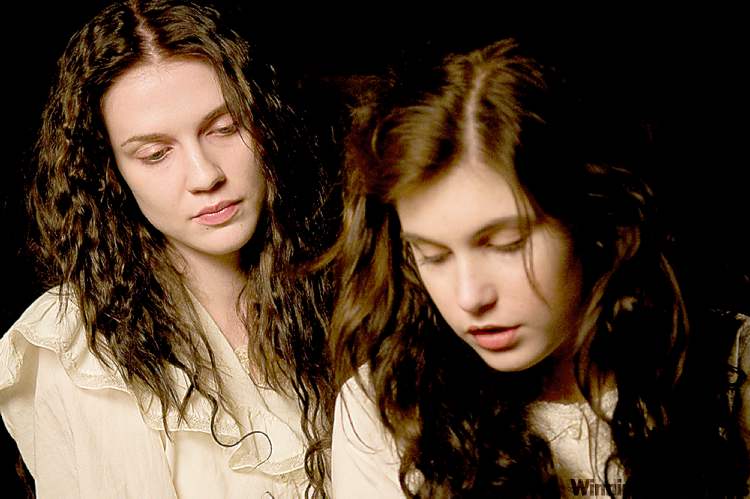
"I don’t feel like Gothic Girl," she says on the phone from Los Angeles. "Although, working on Black Field, Danishka influenced me so much. She’s a huge history buff and I learned so much from her and gothic literature and films and that’s carried with me a little bit now."
In creating the frontier drama, Esterhazy (who has a BA in history from the University of Winnipeg) steeped herself in the writings of Canadian pioneer women such as Susanna Moodie and Catherine Parr-Traill. "I wanted to get a sense of what their voices were like. Women writing in the 19th century presented a good opportunity to study how women wrote and thought in that period."
The resulting lead character required Canning to likewise immerse herself in a world where she was obliged to spend much of her work day in wind, rain and mud on a Manitoba prairie. This would be the second time Canning had to rough it in Manitoba, the first being her work on the TV movie Taken in Broad Daylight, in which she played a kidnap victim.
"In that one, we were out in the middle of the night, filming in a ditch," Canning says with a laugh. "But I really like working that way.
"I really love waking up in the morning, and saying: ‘OK, I’m stepping outside of the hotel right now and stepping into the storybook.’
"It really felt like that every day," she says. "I remember one night shooting the scene around the campfire with Mathieu (Bourguet) and Ferron (Guerreiro) and myself and looking at them and saying, ‘How cool is this? How odd is this to be actually sitting out here in the middle of a field?’
"It really felt like something from another time. Not a lot of imagination is required," she says. "Obviously when you’re an actor, you’re always using your imagination, but just to be surrounded and immersed in that world made things so much easier for us."
Black Field was the first time Canning ever worked with a female director, and she asserts the experience was unique.
"Not to make a large generalization, but she really is one of the most clear directors I’ve worked with," Canning says." I would have moments where she would just walk up to me and whisper a word in my ear and it would set off a light bulb, and I saw the same thing happening with the other actors."
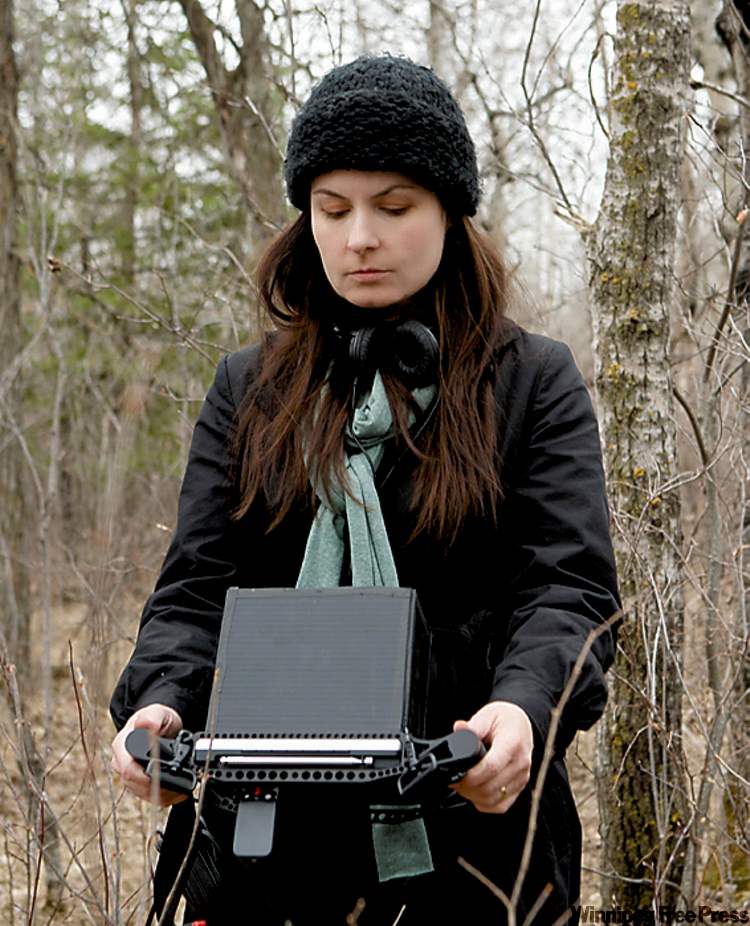

"As soon as I ended up in Winnipeg, she sat down with me and wanted my opinions on the character," Canning says. "She told me so much about the character and yet she gave me so much freedom to play with her. She always wanted too hear my thoughts every day while shooting, before every scene. For her to take that much time was incredible, Canning says. "That’s a rarity in film and in television."
For her part, Esterhazy says she feels an obligation to create more three-dimensional female characters than may be found in Hollywood fare.
"I’ve been inspired by women (directors) like Jane Campion and Catherine Breillat and women writers who create very complex female protagonists (that are) very human and very imperfect.
"I find too often in filmmaking women are either secondary characters or cardboard characters and stereotypes," Esterhazy says. "It’s nice to see people live and breathe and make mistakes."
Our newsroom depends on a growing audience of readers to power our journalism. If you are not a paid reader, please consider becoming a subscriber.
Our newsroom depends on its audience of readers to power our journalism. Thank you for your support.
Our newsroom depends on a growing audience of readers to power our journalism. If you are not a paid reader, please consider becoming a subscriber.
Our newsroom depends on its audience of readers to power our journalism. Thank you for your support.
Related Articles
Local film Black Field to be released on DVD and Blu-ray in July
Advertisement Advertise With Us
Advertisement Advertise With Us