Live action and tigers and bears, oh my!

New version of cartoon classic blends photorealistic animation with a child actor for impressive results

Advertisement

Advertise with us

Blanche DuBois in A Streetcar Named Desire said it first, and best: “I don’t want realism. I want magic!” Maybe it’s the Blanche in me who prefers magic to realism in certain types of fairy tales, but I have a hard time loving any movie dominated by ultra-crisp photorealistic animation designed to look real, not animated. That sort of realism often looks and feel misguided, slightly clinical. And it’s a substantial caveat when it comes to Disney’s new live-(ish) action version of The Jungle Book.

Read this article for free:


or

Already have an account? Log in here »

To continue reading, please subscribe:

Subscribe and receive a limited-edition Free Press branded hat or tote.

Digital Subscription

One year of digital access for only $205*

  • Enjoy unlimited reading on winnipegfreepress.com
  • Read the E-Edition, our digital replica newspaper
  • Access News Break, our award-winning app
  • Play interactive puzzles

*First annual payment billed as $205.00 + GST for one year. This annual subscription will automatically renew at $233.00 + GST every 52 weeks (10% off the regular annual price of $259.35). Offer available to new and qualified returning subscribers only. Cancel any time.

To continue reading, please subscribe:

Add Free Press access to your Brandon Sun subscription for only an additional

$1 for the first 4 weeks*

  • Enjoy unlimited reading on winnipegfreepress.com
  • Read the E-Edition, our digital replica newspaper
  • Access News Break, our award-winning app
  • Play interactive puzzles
Start now

*Your next Brandon Sun subscription payment will increase by $1.00 and you will be charged $17.95 plus GST for four weeks. After four weeks, your payment will increase to $24.95 plus GST every four weeks.

Hey there, time traveller!
This article was published 15/04/2016 (3818 days ago), so information in it may no longer be current.

Blanche DuBois in A Streetcar Named Desire said it first, and best: “I don’t want realism. I want magic!” Maybe it’s the Blanche in me who prefers magic to realism in certain types of fairy tales, but I have a hard time loving any movie dominated by ultra-crisp photorealistic animation designed to look real, not animated. That sort of realism often looks and feel misguided, slightly clinical. And it’s a substantial caveat when it comes to Disney’s new live-(ish) action version of The Jungle Book.

That said: The movie’s pretty good.

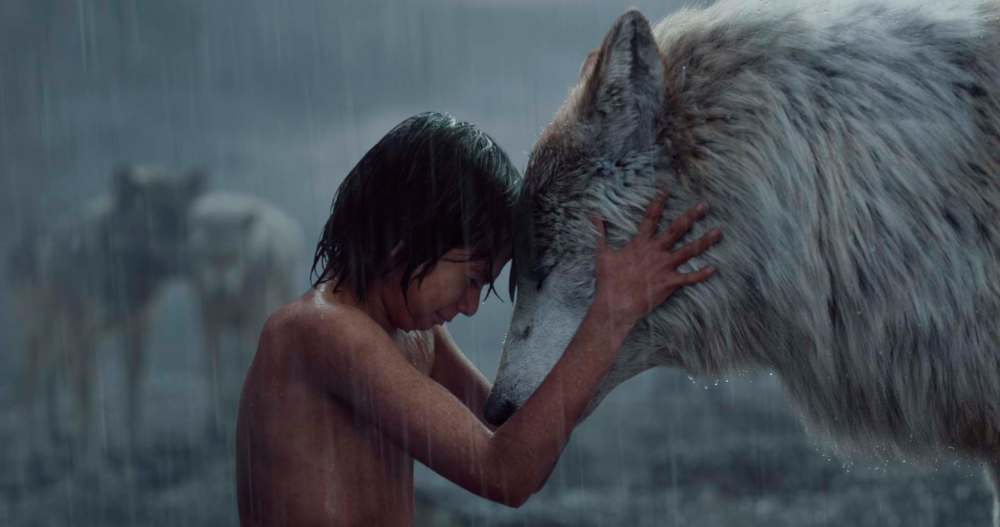
Director Jon Favreau’s voice cast for the animals is tip-top, for starters, from Bill Murray’s sloth bear, Baloo, to Idris Elba’s adversarial tiger, Shere Khan. There’s a real person on screen, too; Neel Sethi plays Mowgli. This week Disney announced plans for a Jungle Book 2, so clearly the studio’s bullish, or going ape, or pick your own animal metaphor, regarding the future of the man-cub and his digitally imagined Indian jungle habitat.

The general contours of this new Jungle Book belong to Disney’s 1967 animated musical. Other obvious inspirations include Rudyard Kipling’s 1890s stories and, no less crucial, Disney’s 1994 smash The Lion King. The latter’s a steady source of various images and ideas here, from a ghoulish boneyard to a suspenseful stampede to a guilt-tripping feline villain messing with the head of the young protagonist.

Screenwriter Justin Marks’ plotting is more elaborate than the ‘67 edition, but the story remains pleasingly episodic. Raised by strong and proud wolf parents, voiced by Lupita Nyong’o and Giancarlo Esposito, Mowgli must contend with Shere Khan’s mission of vengeance (he was scarred for life by the boy’s fire-wielding father, as we learn via flashback) and a jungle full of creatures who do not always have Mowgli’s best interests at heart.

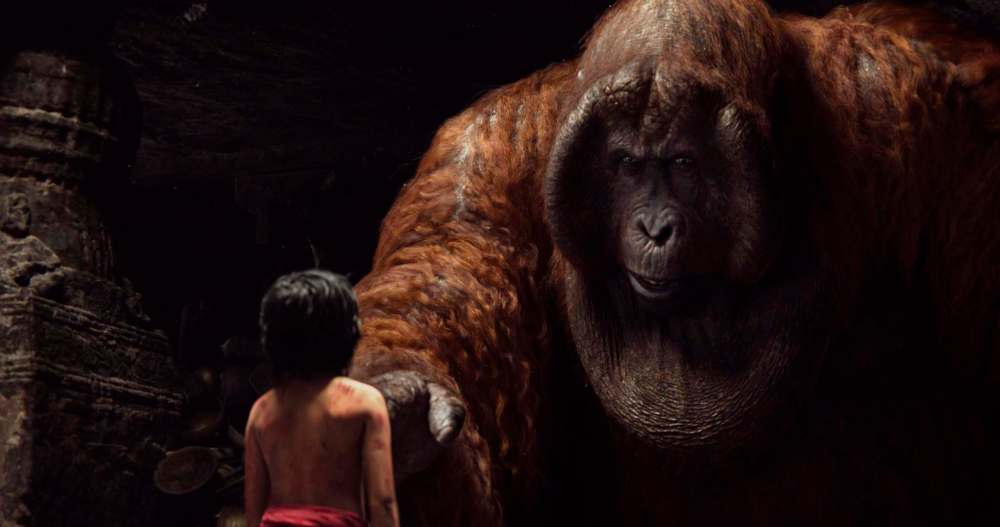
Two songs from the ’67 animated film sneak their way in, enlivening the bland grandeur of composer John Debney’s score. Murray gets to sing The Bare Necessities while Christopher Walken, as the “jungle VIP” orangutan King Louie, lends an air of the weary mobster offering protection for a fee. The staging of his song, I Wanna Be Like You, doesn’t bring out the best in director Favreau’s visual instincts; it’s all chaos and scrambling. But elsewhere Favreau’s fundamental decency and relatively light touch serve him well. He has a knack for straight-ahead pacing and for tightening the screws (the movie is 81 per cent life-and-death peril and 19 per cent comic relief) without being maniacal about it.

Kipling’s poem The Law of the Jungle is quoted twice: “The strength of the pack is the wolf / And the strength of the wolf is the pack.” The photorealistic mudslides and such are impressive in their fashion. Some of Murray’s best moments either were improvised (”The smell… the smell is rough,” he says of King Louie’s lair) or sound improvised. And, bittersweetly, the voice of the late Garry Shandling is heard, briefly, as a brush-tailed porcupine with his own particular coping mechanisms when threatened by drought, or tigers.

— Chicago Tribune
DISNEY
Jungle Book
DISNEY Jungle Book
DISNEY
Mowgli and King Louie
DISNEY Mowgli and King Louie
Report Error Submit a Tip

More Stories

Wab Kinew as ‘communicator in chief’

Paul G. Thomas 6 minute read Preview

Wab Kinew as ‘communicator in chief’

Paul G. Thomas 6 minute read 2:00 AM CDT

Premier Wab Kinew and his party have been riding high in the polls longer than normal for a government one year or less away from its first re-election contest. One reason is his ubiquitous, dominating communications presence as NDP leader and premier.

The argument here is that Kinew has supplemented his prerogatives as premier and party leader (such as appointing cabinet ministers and approving party nominations) with the skilful use of communications to advance his policy agenda, boost his personal popularity and maintain the competitive advantage of his party over the opposition Progressive Conservatives.

Communications has always been a significant part of politics and policy making. However, in the contemporary political and media environments, communications considerations have moved from the background to the foreground of decision-making by political parties, including when they are performing in the role of government. Campaigning and governing now overlap in what has been described as a permanent election campaign.

Political parties use communications strategies for several purposes: to establish an image of the leader which makes a positive emotional connection with voters; to promote a coherent message and to keep party members on message; and to gain favourable media coverage for its policies and other actions on almost a daily basis.

Read
2:00 AM CDT

Uncaring hubby fell flat at first hurdle

Maureen Scurfield 4 minute read 2:00 AM CDT

DEAR MISS LONELYHEARTS: I re-rented my favourite summer cabin this fall because I’m trying to finish my thesis. My husband of just over a year was very annoyed with me for going on my own, but didn’t say much about it because I paid.

I thought we were both OK with this arrangement, until I got the flu up at the lake very badly and couldn’t keep anything down. I felt faint. I phoned him and he said he was at a party with the guys. I could hear music and girls laughing.

He wouldn’t come for me, so at 4 a.m. when I was getting even more sick and scared, I drove back to the city unannounced.

I went straight to my parents’ house and pretty much fell through the door. Mom said to me when she grabbed me: “This is not right. You could have died in the ditch. Where is your husband?”

Live action and tigers and bears, oh my!

By Michael Phillips  3 minute read Preview

Live action and tigers and bears, oh my!

By Michael Phillips  3 minute read Friday, Apr. 15, 2016

Blanche DuBois in A Streetcar Named Desire said it first, and best: “I don’t want realism. I want magic!” Maybe it’s the Blanche in me who prefers magic to realism in certain types of fairy tales, but I have a hard time loving any movie dominated by ultra-crisp photorealistic animation designed to look real, not animated. That sort of realism often looks and feel misguided, slightly clinical. And it’s a substantial caveat when it comes to Disney’s new live-(ish) action version of The Jungle Book.

That said: The movie’s pretty good.

Director Jon Favreau’s voice cast for the animals is tip-top, for starters, from Bill Murray’s sloth bear, Baloo, to Idris Elba’s adversarial tiger, Shere Khan. There’s a real person on screen, too; Neel Sethi plays Mowgli. This week Disney announced plans for a Jungle Book 2, so clearly the studio’s bullish, or going ape, or pick your own animal metaphor, regarding the future of the man-cub and his digitally imagined Indian jungle habitat.

The general contours of this new Jungle Book belong to Disney’s 1967 animated musical. Other obvious inspirations include Rudyard Kipling’s 1890s stories and, no less crucial, Disney’s 1994 smash The Lion King. The latter’s a steady source of various images and ideas here, from a ghoulish boneyard to a suspenseful stampede to a guilt-tripping feline villain messing with the head of the young protagonist.

Read
Friday, Apr. 15, 2016

Signs of local neo-Nazi recruiting efforts spark concern

Conrad Sweatman 7 minute read Preview

Signs of local neo-Nazi recruiting efforts spark concern

Conrad Sweatman 7 minute read Saturday, Sep. 26, 2026

A far-right canvassing push in Manitoba this month is raising concerns among Winnipeg residents.

Stickers promoting Nationalist-13, a men’s-only neo-Nazi group also known as NS-13 based primarily in Hamilton, Ont., have appeared in Winnipeg and parts of southern Manitoba. The stickers bear national socialist branding and messages such as “White Man, Fight Back” and “White Community, Political Action, Training and Fitness.”

Winnipeg writer Jess Woolford recently encountered an NS-13 poster on Pembina Highway.

“It was appalling,” Woolford said. “It has the Nazi death heads covering people’s faces. It was pretty disturbing to come across this … I just didn’t expect to see it so blatantly displayed in my neighbourhood.”

Read
Saturday, Sep. 26, 2026

Puzzles Palace

1 minute read Monday, Jul. 27, 2026

To solve our puzzles, please subscribe with this special offer: |

Museum warehouse holds the history of electrical power in Manitoba

Sheldon Birnie 8 minute read Preview

Museum warehouse holds the history of electrical power in Manitoba

Sheldon Birnie 8 minute read 6:00 AM CDT

The work it takes to bring any endeavour to light is rarely, if ever, seen by those who look upon the final result — be that a creative work such as a feature film or a museum display.

Since 2001, the Manitoba Electrical Museum and Education Centre, located at 680 Harrow St., has provided thousands of visitors with a century’s worth of history on electrical power in Manitoba.

“Everyone who comes in here is amazed at how much we can pack into such a small space,” says executive director Beryth Strong, who took on the role last November.

The museum is open to the public Tuesday to Saturday from 1 to 4 p.m. and hosts large groups of students throughout the school year. While the museum itself boasts numerous displays featuring approximately 220 electrical artifacts, including household appliances, computers, telephones, technical gear and much more, along with a collection of nearly 20,000 photos documenting major electrical construction projects, its warehouse just south of McGillivray Boulevard houses thousands more unique items.

Read
6:00 AM CDT