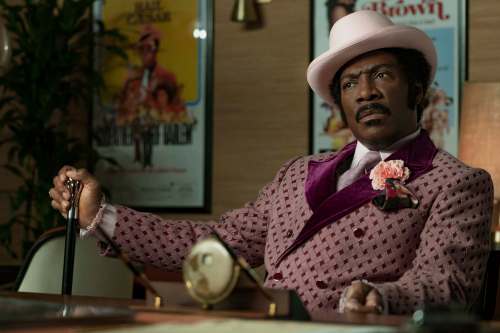
Murphy shines in triumphant comeback
Punchy biopic tells story of blaxploitation film producer

Advertisement
Read this article for free:
or
Already have an account? Log in here »
To continue reading, please subscribe:

Digital Subscription
One year of digital access for only $205*
- Enjoy unlimited reading on winnipegfreepress.com
- Read the E-Edition, our digital replica newspaper
- Access News Break, our award-winning app
- Play interactive puzzles
*First annual payment billed as $205.00 + GST for one year. This annual subscription will automatically renew at $233.00 + GST every 52 weeks (10% off the regular annual price of $259.35). Offer available to new and qualified returning subscribers only. Cancel any time.
To continue reading, please subscribe:
Add Free Press access to your Brandon Sun subscription for only an additional
$1 for the first 4 weeks*
- Enjoy unlimited reading on winnipegfreepress.com
- Read the E-Edition, our digital replica newspaper
- Access News Break, our award-winning app
- Play interactive puzzles
*Your next Brandon Sun subscription payment will increase by $1.00 and you will be charged $17.95 plus GST for four weeks. After four weeks, your payment will increase to $24.95 plus GST every four weeks.
Read unlimited articles for free today:
or
Already have an account? Log in here »
Hey there, time traveller!
This article was published 25/10/2019 (2489 days ago), so information in it may no longer be current.
In a way, director Craig Brewer’s delightful Dolemite Is My Name is a companion piece to Tim Burton’s Ed Wood. It is a biopic, scripted by Scott Alexander and Larry Karaszewski, that celebrates a moviemaker whose insatiable ambition enabled him to get some feature films made against nearly impossible odds.
But there are interesting differences too.
In the case of Ed Wood, you’re talking about a guy whose aspiration superseded his actual talent. His scripts were terrible. His filmmaking was shoddy. Only on occasion — his 1953 sex-change opus Glen or Glenda being the best example — did his exploitation product contain some genuine and brave artistic expression reflecting Wood’s own transvestism.
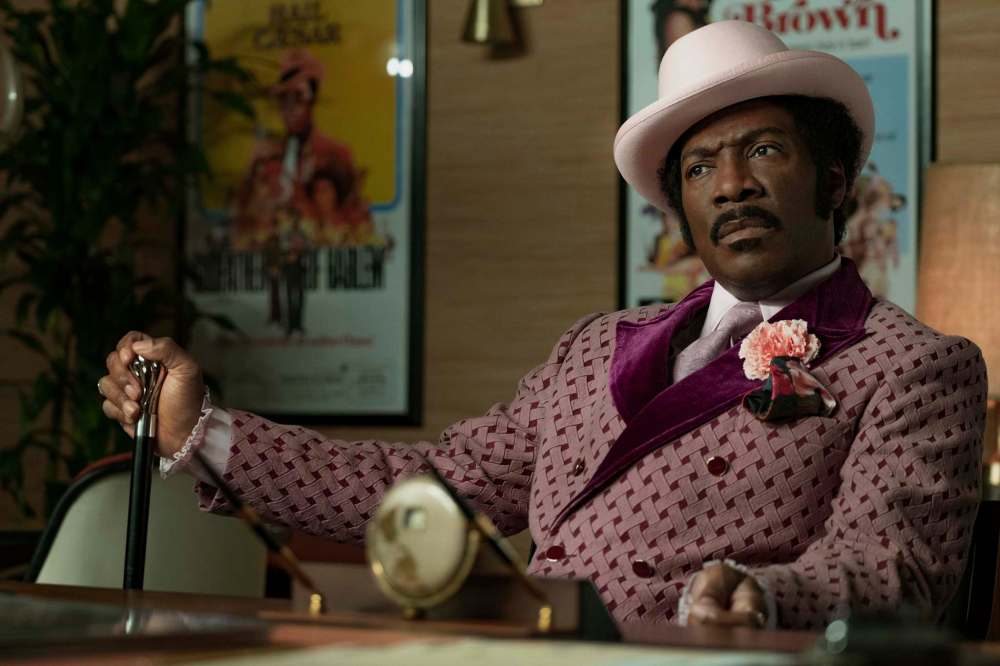
Rudy Ray Moore (played by Eddie Murphy in a truly triumphant comeback) shared Wood’s hunger for show business success. But it turned out he had prodigious smarts about discovering material and tailoring it to an audience that, to the amazement of the (white) entertainment establishment, was hungry for it.
As the film opens in 1970, we find Moore working in Dolphin’s, a Los Angeles record store catering to a black clientele. Moore is trying to get some in-store airplay for his old R&B records, but is having no luck with the in-house DJ. (Significantly, the DJ is played by Snoop Dogg, the rapper who has credited Moore as the progenitor of contemporary rap: “Without Rudy Ray Moore, there would be no Snoop Dogg, and that’s for real.”)
A bum comes into the store with a comedy spiel that leads Moore to investigate a kind of Africa-based comedy based on exaggeration, insult and overall salaciousness. Afterward, instead of reeling off his usual standup shtick, Moore hits the clubs to deliver a form of proto-rap comedy that audiences enthusiastically embrace. Before long, Moore is cutting his own “party records” and hitting the “Chitlin circuit” of black clubs and theatres, to considerable success.
Along the way, he picks up an entourage that would include, crucially, a female entertainer called Lady Reed (Da’Vine Joy Randolph), who sees in Moore a reflection of her own suppressed ambitions.
A turning point for Moore is a night out at the movies with his friends. A viewing of Billy Wilder’s The Front Page delivers an epiphany: Hollywood is not especially interested in making movies for black audiences. He resolves to make his own movies in much the same way he decided to cut his own comedy records, except the challenge is exponentially more difficult.

The centrepiece of the movie is about the making of Dolemite, an action-comedy movie based on the the pimp character Moore adopted as his stage persona, promising “bone-crushing, skull-splitting, brain-blasting action.” To get it made, Moore enlists D’Urville Martin (Wesley Snipes), a relatively obscure black actor seduced by an opportunity to direct. Since Snipes’ career was waylaid by his own stint as an action star, his superb comic performance here comes as a revelation.
Randolph is also terrific, but her presence points to a vacuum in the film; Moore is, for all his raunchy material, a curiously asexual presence. There is an admirable sweetness and respect in Moore’s relationship with Lady Reed, but it leaves the question of his own sexuality as a mystery no one bothers to address, save for a lovely scene in which he shares a poignant anxiety about his “doughy” physique being exposed during an upcoming sex scene.
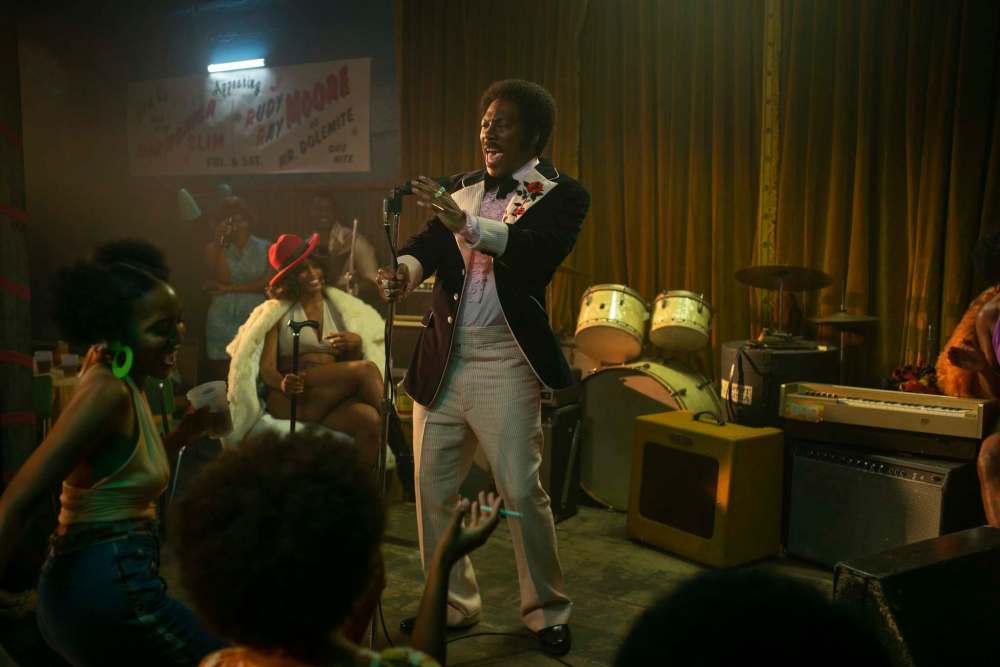
That scene in itself is important for Murphy, who, like Snipes, entered his own career trap playing the confident, street-smart, impervious hero one too many times. With Rudy Ray Moore, of all people, Murphy lands one his most important roles as a pioneer of black culture for whom nothing came easy.
randall.king@freepress.mb.ca
Twitter: @FreepKing
Our newsroom depends on a growing audience of readers to power our journalism. If you are not a paid reader, please consider becoming a subscriber.
Our newsroom depends on its audience of readers to power our journalism. Thank you for your support.
MOVIE REVIEW
Dolemite Is My Name
- Starring Eddie Murphy
- New on Netflix
- 118 minutes
4 stars out of five
Other voices
We laugh every step of the way with Moore and his fellow fringe-showbiz hopefuls. We root for them to somehow break through. We care about them.
— Richard Roeper, Chicago Sun-Times
By playing a real underdog who became a huge influence on countless rappers and comics coming up behind him, Murphy is once again in comfortable, confident performance territory.
— Michael Phillips, Chicago Tribune
(Murphy’s) back, baby, in a performance so big and so generous that it virtually busts through the screen.
— Ann Hornaday, Washington Post
Murphy… brings so much hope and hunger and pure life force to the role that he makes you believe in every punchline, pelvic thrust and egregiously misplaced karate kick.
— Leah Greenblatt, Entertainment Weekly
Dolemite Is My Name gleefully and thankfully tosses the tropes of the tortured-artist biopic out the window.
— Inkoo Kang, Slate
It has a loose, friendly, house-party vibe, and it’s impossible not to have a good time watching the actors have a good time with one another.
— A.O. Scott, New York Times
Our newsroom depends on a growing audience of readers to power our journalism. If you are not a paid reader, please consider becoming a subscriber.
Our newsroom depends on its audience of readers to power our journalism. Thank you for your support.
Advertisement Advertise With Us
Advertisement Advertise With Us