Tributes pour in for award-winning Quebec actress Monique Mercure
Advertisement
Read this article for free:
or
Already have an account? Log in here »
To continue reading, please subscribe:

Digital Subscription
One year of digital access for only $205*
- Enjoy unlimited reading on winnipegfreepress.com
- Read the E-Edition, our digital replica newspaper
- Access News Break, our award-winning app
- Play interactive puzzles
*First annual payment billed as $205.00 + GST for one year. This annual subscription will automatically renew at $233.00 + GST every 52 weeks (10% off the regular annual price of $259.35). Offer available to new and qualified returning subscribers only. Cancel any time.
To continue reading, please subscribe:
Add Free Press access to your Brandon Sun subscription for only an additional
$1 for the first 4 weeks*
- Enjoy unlimited reading on winnipegfreepress.com
- Read the E-Edition, our digital replica newspaper
- Access News Break, our award-winning app
- Play interactive puzzles
*Your next Brandon Sun subscription payment will increase by $1.00 and you will be charged $17.95 plus GST for four weeks. After four weeks, your payment will increase to $24.95 plus GST every four weeks.
Read unlimited articles for free today:
or
Already have an account? Log in here »
Hey there, time traveller!
This article was published 17/05/2020 (2336 days ago), so information in it may no longer be current.
Actress Monique Mercure, whose performances helped elevate Quebec cinema to the international silver screen, has died at 89.
Simon Brault, director and CEO of the Canada Council for the Arts, said on social media that his friend of 30 years died Saturday night after a battle with throat cancer.
A versatile actress, Mercure was known for her work in film, television and theatre, with a repertoire spanning everything from Greek tragedies to contemporary classics.
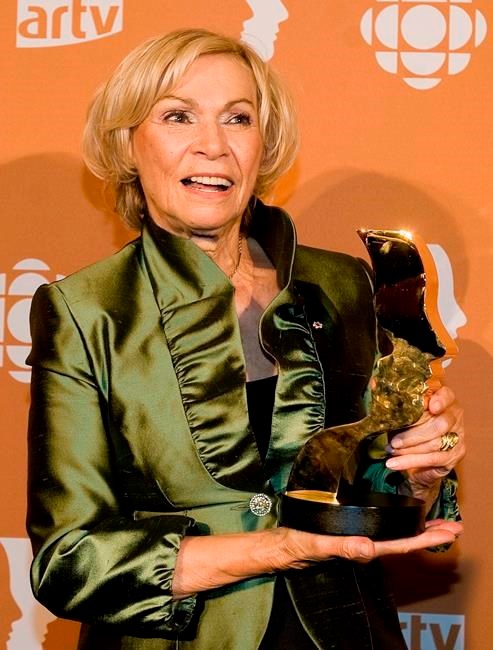
In 1977, her performance in “J.A. Martin Photographer” earned her best actress awards at both the Cannes Film Festival and Canadian Film Awards.
But it was Mercure’s devotion to theatre that set her apart, according to Lorraine Pintal, the artistic director of the Theatre du Nouveau Monde in Montreal.
Fittingly, Mercure spent the night of her best actress award at Cannes on the Montreal stage instead of collecting her trophy in person, Pintal said.
“The place I needed to be tonight is here, before you,” Mercure told the audience, who responded with a massive ovation.
Brault said Mercure left “a distinctive and indelible” mark on every screen and stage she graced.
“Fiery, brave and determined, she had verve and outspokenness that many feared,” wrote Brault, who succeeded her as the head of the National Theatre School of Canada.
“She also had a sense of humour and self-deprecation far too rare in a world that takes itself so seriously.”
Mercure was born Monique Emond in Montreal on November 14, 1930.
She initially studied music and aspired to become a cellist. In 1949, she married composer Pierre Mercure, and they had three children before separating in 1958.
By the 1950s, she turned her attention to acting, taking roles in both film and theatre. She eventually gained widespread attention for her performance in Claude Fournier’s “Deux Femmes en Or.”
A string of successful films followed, including Claude Jutra’s “Mon oncle Antoine,” as well as “Naked Lunch,” “The Red Violin” and “Conquest.”
She continued to log numerous film and TV appearances in more recent years, including the role of Edith Beauchamp in “Providence.”

Her death has prompted an outpouring of tributes, including from Prime Minister Justin Trudeau, who described her as “a great Canadian actress.”
“Monique Mercure has had a profound impact on generations of Canadians,” Trudeau wrote on Twitter.
“She helped promote Quebec cinema beyond our borders and her legacy will live on through her work.”
Quebec Premier Francois Legault also extended his condolences to Mercure’s family on Twitter.
This report by The Canadian Press was first published May 17, 2020