Rock doc
Cameron Crowe tells Pearl Jam's unusual grunge-gone-grassroots success story
Advertisement
Read this article for free:
or
Already have an account? Log in here »
To continue reading, please subscribe:
Digital Subscription
One year of digital access for only $1.44 a week*
- Enjoy unlimited reading on winnipegfreepress.com
- Read the E-Edition, our digital replica newspaper
- Access News Break, our award-winning app
- Play interactive puzzles
*Billed as $5.77 plus GST every four weeks. After 52 weeks, price increases to the regular rate of $19.95 plus GST every four weeks. Offer available to new and qualified returning subscribers only. Cancel any time.
To continue reading, please subscribe:
Add Free Press access to your Brandon Sun subscription for only an additional
$1 for the first 4 weeks*
- Enjoy unlimited reading on winnipegfreepress.com
- Read the E-Edition, our digital replica newspaper
- Access News Break, our award-winning app
- Play interactive puzzles
*Your next Brandon Sun subscription payment will increase by $1.00 and you will be charged $17.95 plus GST for four weeks. After four weeks, your payment will increase to $24.95 plus GST every four weeks.
Read unlimited articles for free today:
or
Already have an account? Log in here »
Hey there, time traveller!
This article was published 20/10/2011 (5374 days ago), so information in it may no longer be current.
THERE is angst, but no tragedy. There is fury, but no self-destruction. There is a beginning and a middle, but so far, no end.
In other words, this is not a typical — or stereotypical — rock ‘n’ roll story.
“(It’s) basically about them surviving and staying true to a certain ethic,” director Cameron Crowe (Say Anything, Almost Famous, Vanilla Sky) says of his new documentary, Pearl Jam Twenty, which has its TV première Friday at 8 p.m. as part of PBS’s American Masters series.
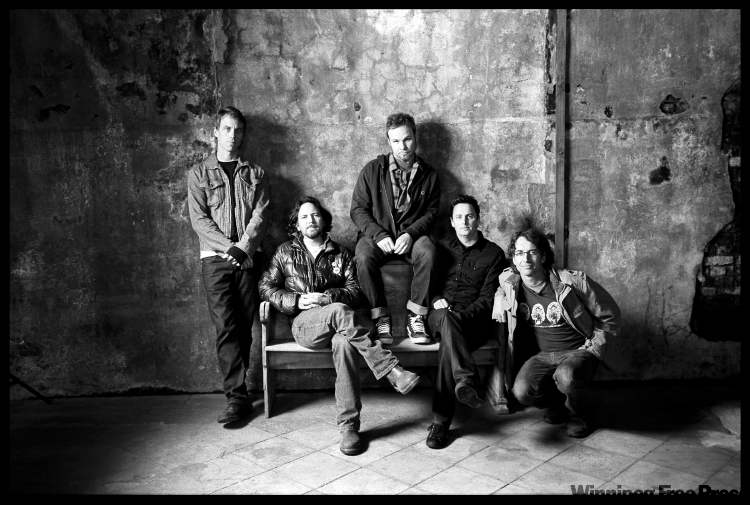
“Nobody dies. Nobody ODs. Nobody goes too far off the path of a basic integrity that they paid attention to. So it’s really about what happens with a band that develops an audience and stays with its fans. And their shows — which we tried to show in the film — kind of become this celebration of ‘We made it.'”
Indeed, after bursting onto the music scene in the early ’90s as part of the Seattle-spawned grunge movement that also included the likes of Nirvana and Soundgarden, Pearl Jam has been a band that played its own music, followed its own path and continually reinvented itself without ever deviating from the core values its members share.
Crowe, whose pre-Hollywood career included several years as a writer and contributing editor for Rolling Stone, has known the members of Pearl Jam — singer-guitarist Eddie Vedder, lead guitarist Mark McCready, rhythm guitarist Stone Gossard, bassist Jeff Ament and drummer Matt Cameron, who joined in 1998 — since the band’s formation, and uses this unique access to its inner circle to full advantage in Pearl Jam Twenty.
“I wanted to be close enough to get interviews that nobody else would particularly get, but still be tough at the same time, to give you the experience of the band,” Crowe said after Pearl Jam Twenty was screened for TV critics last summer during PBS’s portion of the U.S. networks’ semi-annual press tour in Los Angeles.
“They chafed at stuff along the way; we argued for things that we felt needed to be in there, and Eddie and the guys moved with us to tell the story the way we did. That’s pretty much how I operated as a journalist, too — it’s like I want to ask the questions that a fan, given a front-row seat, would ask.”
The film begins with a performance clip of Mother Love Bone, the “almost” Seattle band that featured Gossard and Ament along with lead singer Andy Wood, who died of a drug overdose in 1990. In the aftermath of that tragic loss, Gossard and Ament were left searching for a musical direction.
“I was a big fan of Mother Love Bone,” Crowe said. “Mother Love Bone was the music in the first movie I directed, Say Anything. So I knew these guys and also knew the pain of them losing their singer … and I knew them when they were lost and wondering, ‘What’s next? How am I going to get my next job?’
“They sent out this tape of demos, unsure if they even wanted to continue as a band, and this surfer from San Diego, Eddie Vedder, heard the demos and said, ‘I have pain in my life; I have things I want to write about. These songs touch a nerve in me, and I’m going to write some stuff and send it up to Seattle.’ And this tape arrived in Seattle, and the guys were kind of in shock, suspicious, inspired and tentative about moving forward, and they brought Eddie up from San Diego and this magic started to happen. But I don’t think any of them knew that it would turn into the success that it did, so watching them deal with getting caught up in a whole zeitgeist avalanche was fascinating.”
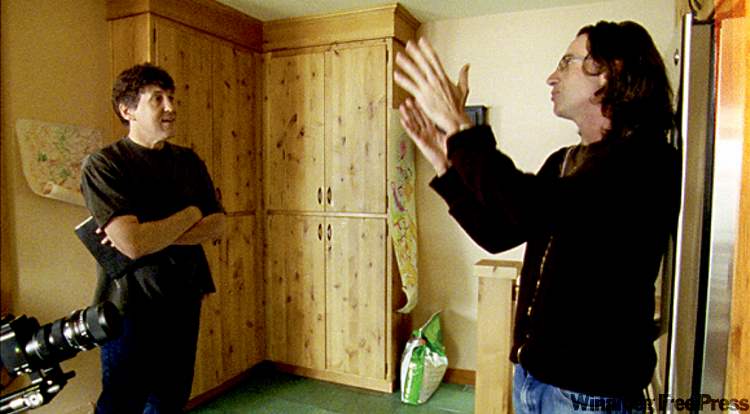
Pearl Jam Twenty combines archival interviews and reams of concert footage with several more recent chats Crowe had with the band members and their contemporaries; interestingly, all the present-day conversations are conducted one on one rather than in a group setting.
Attention is paid, of course, to Pearl Jam’s early-days rivalry/friendship with the members of Nirvana and to the band’s noble but ultimately unsuccessful battle with Ticketmaster, but the real focus is on Pearl Jam’s determination — after the initial tidal wave of success and celebrity — to seize control of their art and to build a career based on an honest relationship with their loyal fan base.
“I think a lot of people knew a lot about Pearl Jam early on,” said Crowe. “And as you can see, they took an odd course. They took on Ticketmaster, and had to play their own concerts in the hinterlands, and some of those concerts were real failures, both logistically and physically. But what happened — and this was towards the end of the ’90s — is that people who went out and saw them in these strange, out-of-the-way places never forgot that Pearl Jam came to their town. And that was the start of a new fan base for them.
“What I would love people to see is that Pearl Jam, in their own grassroots way, kind of redefined what the fan experience was. They were not slaves, really, to that first MTV kind of crashing wave of success; they really went down, cut away all the brush and started all over again. … There was no rule book for what they did, and here they are, still together. And it ends up being a movie not about some tragic failure, but about an odd and unique kind of success.”
brad.oswald@freepress.mb.ca