Unsung bands helped build rock scene
Fond memories remain for those who didn't find lasting fame
Advertisement
Read this article for free:
or
Already have an account? Log in here »
To continue reading, please subscribe:
Digital Subscription
One year of digital access for only $1.44 a week*
- Enjoy unlimited reading on winnipegfreepress.com
- Read the E-Edition, our digital replica newspaper
- Access News Break, our award-winning app
- Play interactive puzzles
*Billed as $5.77 plus GST every four weeks. After 52 weeks, price increases to the regular rate of $19.95 plus GST every four weeks. Offer available to new and qualified returning subscribers only. Cancel any time.
To continue reading, please subscribe:
Add Free Press access to your Brandon Sun subscription for only an additional
$1 for the first 4 weeks*
- Enjoy unlimited reading on winnipegfreepress.com
- Read the E-Edition, our digital replica newspaper
- Access News Break, our award-winning app
- Play interactive puzzles
*Your next Brandon Sun subscription payment will increase by $1.00 and you will be charged $17.95 plus GST for four weeks. After four weeks, your payment will increase to $24.95 plus GST every four weeks.
Read unlimited articles for free today:
or
Already have an account? Log in here »
Hey there, time traveller!
This article was published 24/01/2016 (3921 days ago), so information in it may no longer be current.
Burton Cummings once said that while daydreaming in school one afternoon in 1965, he started a list of all the bands he knew of that were active on the local scene. He got to 200 before stopping.
Colourful names such as the Dawgs, House Grannies, the Many Others, the Cellar Dwellers, Pebblebeaters, Matched Set, Footloose & Fancy Free, the Luvin’ Kynd, Deverons, Misfits, Mourning Missed, Shondels, VIPs, Syndicate, Crescendos, Pallbearers, Feminine Touch and Pink Plumm conjure up fond memories of fun evenings spent boogalooing at your neighbourhood community club.
The Guess Who, Bachman-Turner Overdrive and Neil Young garner the lion’s share of attention whenever the subject of the flourishing local music scene in the 1960s comes up, but there were several hundred bands that made that scene swing and kept teens dancing at community clubs and sock hops. They may not have scaled the dizzying heights of fame and fortune, but they were nonetheless hometown heroes and standard-bearers for Winnipeg rock.
‘It was a time when everybody wanted to dance’
— Colin Palmer, a former member of the Quid
While each band has a story to tell, here are a few local rock stars’ stories from back in the day.
In 1966, the Quid (British slang for a pound note) released one of the local scene’s most electrifying singles. Recorded at the CKRC radio station’s studio, Crazy Things, produced by Harry Taylor for local Eagle Records, was a raw, raucous slice of British-style R&B inspired by the Yardbirds and Van Morrison’s Them. Written by bass player Morley Nickles and sung with wild abandon by Ron Rene, the record captured the live excitement the band generated onstage. Rene was one of the most dynamic performers in the city, even drawing compliments from Cummings, who later name-checked him in the Guess Who’s 1969 psychedelic epic Friends of Mine (“Fade away like Ron Rene”).
The Quid was formed from the remnants of the Vi-counts after that group split in 1965. Guitarists Colin Palmer and Willard (Billy) Pavlik found Nickles, singer Rene and drummer Al Johnson playing in various bands at St. Mary’s Road teen club the Twilight Zone. Johnson was soon replaced by Lenny Fidkalo. (Fidkalo and Johnson later engaged in a legendary outdoor drum battle at the corner of Nairn Avenue and Highway 59 that was broken up by police). Their name was perfect for the British Invasion sounds that dominated the charts at the time.
“It was such a great time to be playing that music and to see people appreciating it,” recalls Palmer. “It was a time when everybody wanted to dance.”
Popular at community clubs and teen clubs such as J’s Discotheque, the Pink Panther, the Den and the Hungry I, the Quid also had an active fan club as well as support from CKRC DJs.
“Ron Legge and Boyd Kozak used to plug our records all the time,” says Nickles, who also penned the band’s followup single, Lover Lover.
The Quid appeared at various Clark’s department store locations across the city, promoting the single and giving away free copies. Lover Lover charted across Western Canada, and the band fielded offers to tour. Palmer and Pavlik had day jobs but considered quitting to become full-time musicians.
The turning point came at a fall 1966 dance at the University of Manitoba. The Quid played to a packed, enthusiastic crowd and were elated, but the exhilaration was short-lived.
“We just bought new suits, and the next day Ron told us he was leaving to join the Fifth,” Nickles says. “If Rene had stayed, I think we could have made it.”
Palmer and Pavlik regrouped the following year with horns and soul singer Bobby Barton as the New Quid but never attained the same level of attention.

Rene’s defection to the Fifth marked a defining moment in that band’s fortunes. One of the most consistently popular local bands despite frequent personnel changes, the Fifth’s roots are in the Winnipeg Beach and Gimli area. Jimmy Grabowski, Richard Gwizdak, Melvin Ksionzek, Ron (Smitty) Smith and Barry Zdbiak came together as the Saints, rehearsing in the old Gimli train station and playing Interlake-region dances. Relocating to Winnipeg in 1965, the quintet was an instant sensation.
“We played West End Memorial Community Club (now the Burton Cummings Community Centre), and all of a sudden, everybody wanted the Fifth everywhere,” says Grabowski.
The band members lived in Gwizdak’s house on Government Avenue in East Kildonan, rehearsing there during the week for an increasingly full booking schedule arranged by manager Peter Stone (Peter Slywka).
“I don’t ever remember a dance that wasn’t full,” says Gwizdak. “People would line up at 5:30 to see us at River Heights Community Club.”
The group toured Western Canada, opening for the Byrds, Sonny & Cher, the Seeds, Paul Revere & the Raiders and Dino, Desi & Billy. In 1967, they released the first of six singles, the Ksionzek-penned Yesterday’s Today. The single peaked at No. 9 on CKRC’s ‘young at heart’ chart. Witnessing the Jimi Hendrix Experience’s mind-blowing performance at the 1967 Monterey Pop Festival, the Fifth returned home and recorded Hendrix’s arrangement of the Troggs’ hit Wild Thing.
After Zdbiak left, a succession of drummers followed, beginning with Craig Hamblin, Ron Savoie, Vance Masters, Danny Colleaux and Al Johnson. Bass player Gwizdak quit (although the band continued to live at his house), guitarist Ksionzek moved to bass and Doug Love joined on guitar. He was followed by future Guess Who guitarist Kurt Winter and later Ralph Watts. Rene left in 1969 to join Minneapolis-based band the Litter and was replaced by George Belanger, whose powerhouse vocals on the band’s 1970’s single Tobacco Road was a stunning debut.
The following year, with Grabowski the only original member remaining, the band changed its name to Next and entered the pub circuit, playing a set of all-original material. Next released an album, Dusty Shoes, before folding in the mid-’70s. Belanger later found success with Harlequin, while Grabowski played for many years in Three Penny Opera.
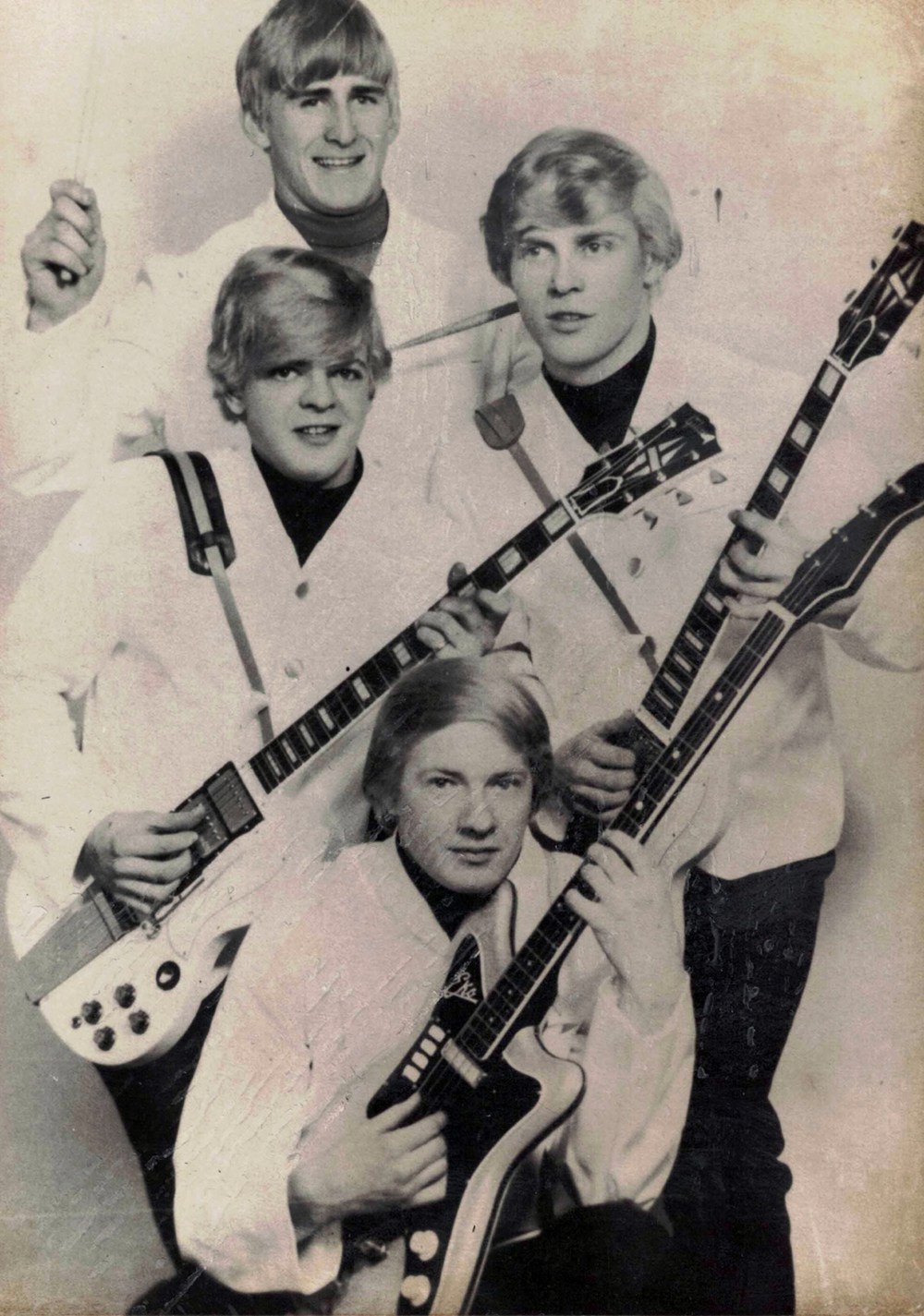
To set themselves apart from the competition, quartet the Orfans made the bold move of dying their hair blond and sporting matching white guitars. The band formed after guitarist Paul (Boots) Loreque from River Heights and Eddie Heppner from Woodlands met in 1964 while working at the Manitoba Sugar refinery off Chevrier Boulevard in Fort Garry (immortalized in the 1972 Guess Who song Smoke Big Factory).
“I went home with him one day after work,” says Heppner, “and he played Lonnie Mack’s Memphis on guitar and knocked my socks off.”
Recruiting friends Danny Holmes on lead guitar and drummer Dave Roberts, the Orfans rehearsed in Woodlands before making their debut in Churchill, of all places. Several out-of-town gigs followed until the band entered the Winnipeg community club circuit.
The Orfans’ vocal abilities became the envy of their contemporaries.
“We’d really worked on our vocals” says Heppner. “We would work up in our hotel rooms on the road with just a guitar practising our harmonies. We wanted to become good musically.”
Roberts bowed out, and ex-Kingbeats drummer Ken (Dutch) Schultz from Crescentwood joined.
“The first gig I played with them was at the Town ‘n’ Country nightclub, and I had to wear Dave Roberts’ suit,” says Schultz. “It was huge on me, and I had to roll up the sleeves to play.”
The band developed a well-earned reputation for covering the intricate vocal numbers by British group the Zombies.
“Nobody in town was doing Zombies songs,” says Schultz.
Besides local dances and regular appearances at the Twilight Zone, Transcona’s Pink Panther and J’s Discotheque, the Orfans played Fort William’s Flamingo Club. In 1966, after performing at Teen Fair at the Red River Ex (where yours truly, decked out in a fur vest made by my mom, had his photo taken with Loreque and Holmes), they tried their luck in the Toronto area, playing clubs in Yorkville.
But the pay was poor, forcing them to travel to gigs with all their gear by streetcar. Loreque quit and was replaced by Ken Holm. Heppner and Schultz agree the magic was gone after Loreque left. Schultz later departed, and Marcus Fisher joined, but by this point, the Orfans had moved into playing pubs to survive. Heppner, Holmes and Fisher recorded a rare single on their own Nafro label before folding in 1968. Loreque later played in the Coach ‘n’ Four and Fellowship (with Heppner), Holmes was in Chopping Block and Heppner played in Granny and B.B. Bullion.
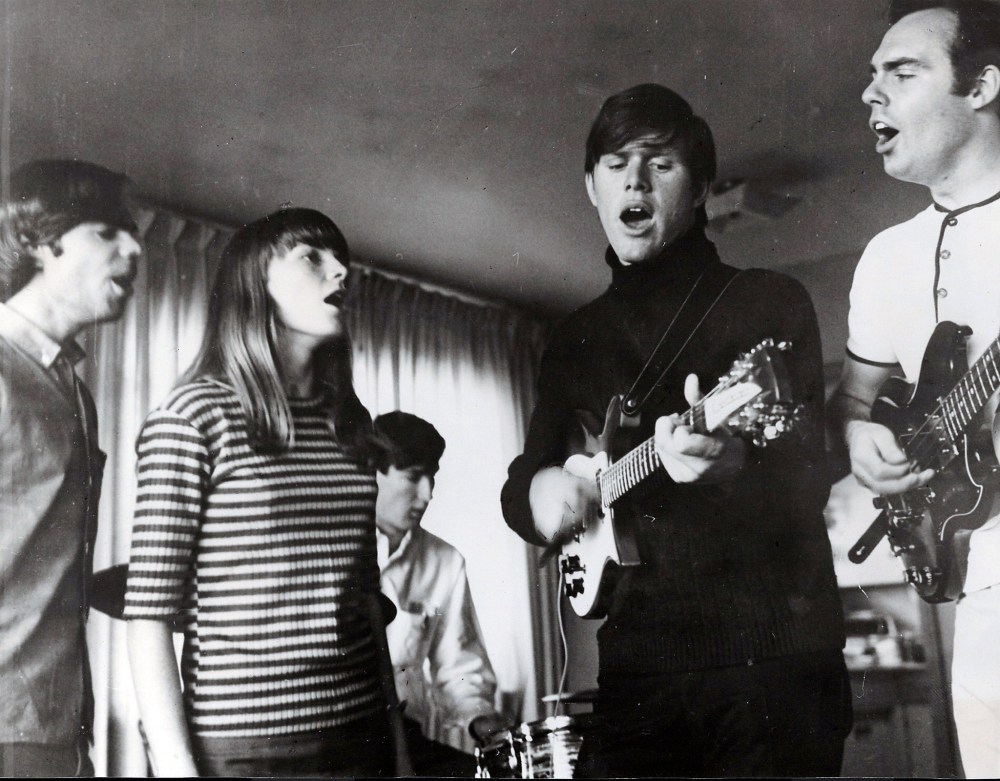
St. James group Mantae specialized in folk rock-style vocals.
“All of us were strong singers,” says lead voice Alana Stephens (née Hammond), “so we could do all those intricate Hollies and Mamas & Papas harmonies.”
Formed in 1966, Mantae (not the Mantae, Stephens stresses) consisted of Stephens, guitarist Gary Squires, Ian Lowe on vocals and autoharp, Danny Payne on bass and Tommy Thompson on drums. Leslie Moore briefly sang with the group. All but Thompson met at Silver Heights Collegiate in the mid-’60s. While other bands opted for the long-haired, scruffy look, Mantae adopted a clean-cut image.
“Even our parents liked us,” laughs Stephens, who recalls the group rehearsing in her parents’ living room.
“The neighbours would sit outside and listen.”
Mantae appeared at the Fourth Dimension and Fireplace coffeehouses and at community club dances.
“We were very popular in St. James,” says Stephens, who says the band played a benefit concert for the newly opened Grace Hospital in St. James.
Mantae were selected from some 2,000 entries to appear at Expo 67 and set about making plans to travel to Montreal that summer. A week before leaving, the band was returning from a gig in Altona when Thompson was killed in a car accident. Finder’s Keepers drummer Bob Watson replaced him, but the band didn’t have the heart to play Expo. Mantae called it quits the following year.
Stephens went on to sing on CBC-TV, while Squires played in a number of pub bands, including Grizzly Bear.
“It was such a special time,” says Stephens.
“There were so many opportunities to perform. We were booked every weekend. Being good friends was wonderful, too. We were like a family.”
In 1963, teens Len Rosolowich and George Spanogiannis met while performing on a CBC amateur talent show. The two decided to create a musical revue called Teletroupe where the finalists from the show would perform for charity functions around the city. It was a popular concept.
“We would end the shows with a hootenanny, with the crowd joining in,” recalls Rosolowich.
“Then the Beatles came along, and George came up with the idea to sing a couple of Beatles songs instead of the Hootenanny. The girls started screaming and it went so over well, George and I determined to form a rock ‘n’ roll band.”
With Rosolowich (who took the stage name Len Ross) on organ, Spanogiannis and Bob Miller on guitars, bass player Bill Vandurme and drummer Graham Reynolds, the band was given the name Finder’s Keepers by Burton Cummings, who had attended St. John’s High School with Rosolowich.
“We were still learning our instruments, but we had a lot of guts competing with all those great local bands,” says Rosolowich.
“What we did have was good singing. That was our strength. The first song we learned was the Beatles’ This Boy, and we nailed the three-part harmony singing. We had no lead singer, so it was a real team effort. Graham sang the Stones songs, Bob covered the Animals, George sang the Beatles songs and I did the Searchers and Dave Clark Five material with George.”
Something else set them apart, says Rosolowich.
“We had showmanship,” he says.
“We had choreography and moved about onstage. We also took being in a band very seriously, dressed and acted professionally in our Stag Shop suits and always showed up on time.”
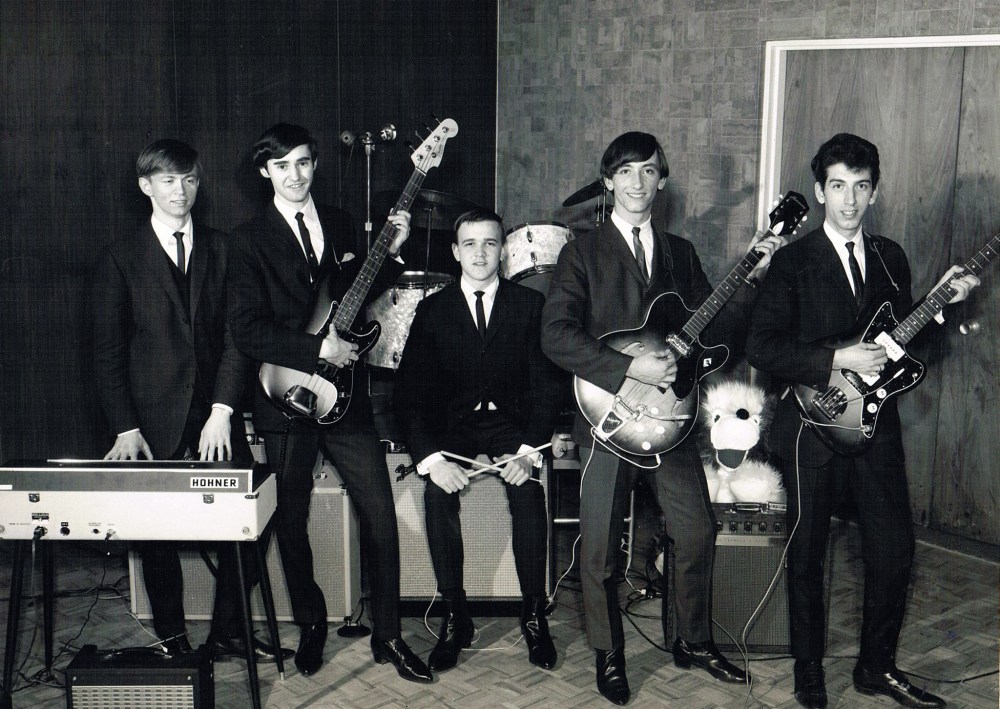
Like their contemporaries, Finder’s Keepers played the community club circuit, drawing strong support in Charleswood and Elmwood. They also played in university circles.
“That became our niche, faculty and fraternity dances,” says Rosolowich.
They also had a mascot, a stuffed dog given to them by Cummings they named Finder, hence the name Finder’s Keepers. The group carried on through several personnel changes, including the addition of vocalist Geoff Marrin (who was later in Sugar & Spice) until 1968, when Rosolowich began his teaching career at his former alma mater, St. John’s.
“Finder’s Keepers was the best time in my life,” says Rosolowich.
Kenora isn’t generally regarded as a hotbed of rock ‘n’ roll, but in 1965, a group of musicians with the unlikely name Satan & the D-Men arrived from the Ontario city and shook up the Winnipeg music scene. Guitarists Terry Stiles and Wayne Faulconer, drummer John Karwacki, Russ Percy on organ and bass player Wayne Cardinal had played dances throughout northwestern Ontario as the Tempests. They appeared on a Winnipeg amateur talent show, which led to an offer to play the Twilight Zone Club for, as Stiles recalls, “enough money for a tank of gas and a pack of cigarettes.”
More offers came in, and the band commuted from Kenora before finally making the decision to quit high school and relocate to Winnipeg, taking up residence in a house at 887 Warsaw Ave., in Fort Rouge. Their manager, colourful local impresario Fred Glazerman, told the landlord a group of Mormons was renting the house. The name change followed.
“John had remarked that we looked like hell and sounded like hell, so we came up with the name,” says Stiles.
One of Glazerman’s bookings was performing on the Monarch Wear Tee*Jays jeans Cavalcade of Stars show at the Winnipeg Auditorium, with more shows in Portage la Prairie and Brandon.
“Monarch Wear gave us colourful outfits to wear,” says Stiles.
“Orange corduroy sports jackets with black turtlenecks. We looked like Halloween pumpkins.”
The Pink Panther club, located in a former bowling alley, became the group’s home base, where they performed often. Satan & the D-Men released a 45 single on Eagle Records, Linda, composed by Stiles and backed by the Cardinal-penned She’ll Lie, recorded at Arbuthnot Studios in St. Boniface. They also added a line about Tee*Kays in their song All Canadian Boy, recorded for Monarch Wear promotions.

The band was elated when Glazerman promised them an opening slot on the Rolling Stones’ July 1966 arena concert but crestfallen once they learned they were bumped. Instead, they were booked to back rockabilly pioneer Buddy Knox of Party Doll fame. The Knox tour was a success, but the band’s van broke down, and the repair costs far exceeded the meagre wages they were paid. Frustrated, Stiles opted to return to school in Kenora.
“I came home to my parents’ house with 25 cents in my pocket,” he says.
The others carried on briefly, including a move to Vancouver. But the story of Satan & the D-Men does not end there. In 1982, they were invited to reunite for Kenora’s centennial celebration, and have performed several times since.
Sign up for John Einarson’s Laurel Canyon: Singers, Songwriters and Cocaine Cowboys course at mcnallyrobinson.com.
Related Articles
Percussionist Len Fidkalo was instrumental in Winnipeg’s nascent rock ’n’ roll scene
Advertisement Advertise With Us
Advertisement Advertise With Us