Blood, sweat and years
Veteran musician reflects on spinning wheel of career
Advertisement
Read this article for free:
or
Already have an account? Log in here »
To continue reading, please subscribe:

Digital Subscription
One year of digital access for only $205*
- Enjoy unlimited reading on winnipegfreepress.com
- Read the E-Edition, our digital replica newspaper
- Access News Break, our award-winning app
- Play interactive puzzles
*First annual payment billed as $205.00 + GST for one year. This annual subscription will automatically renew at $233.00 + GST every 52 weeks (10% off the regular annual price of $259.35). Offer available to new and qualified returning subscribers only. Cancel any time.
To continue reading, please subscribe:
Add Free Press access to your Brandon Sun subscription for only an additional
$1 for the first 4 weeks*
- Enjoy unlimited reading on winnipegfreepress.com
- Read the E-Edition, our digital replica newspaper
- Access News Break, our award-winning app
- Play interactive puzzles
*Your next Brandon Sun subscription payment will increase by $1.00 and you will be charged $17.95 plus GST for four weeks. After four weeks, your payment will increase to $24.95 plus GST every four weeks.
Read unlimited articles for free today:
or
Already have an account? Log in here »
Hey there, time traveller!
This article was published 05/11/2016 (3588 days ago), so information in it may no longer be current.
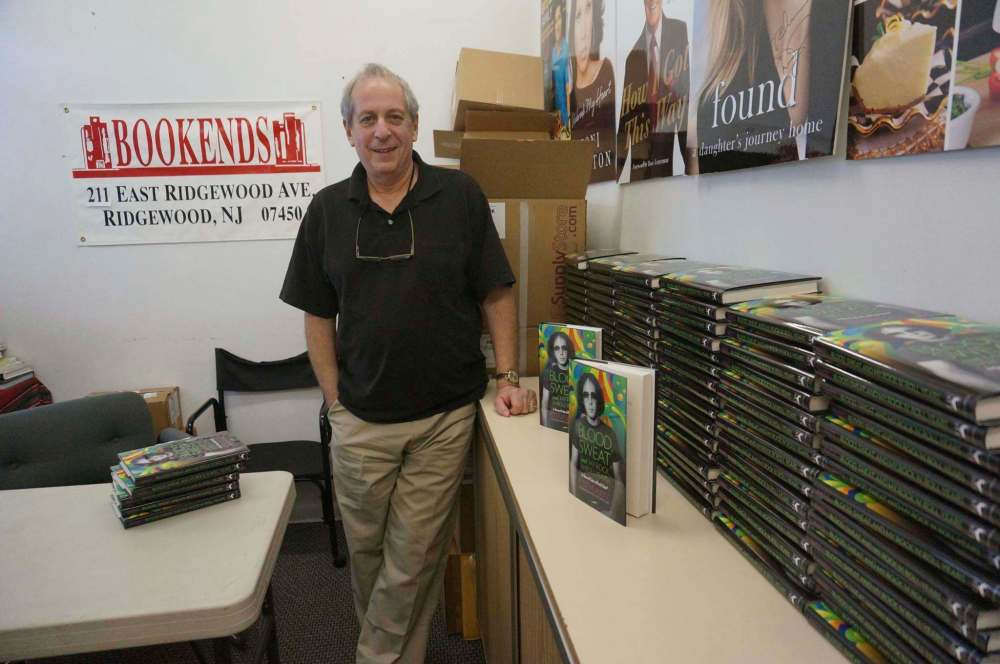
In his recent memoir, Blood, Sweat, and My Rock ‘n’ Roll Years, veteran rock musician Steve Katz poses the question in the subtitle: “Is Steve Katz a rock star?”
While he has never trashed a hotel room nor OD’d on drugs, Katz is unquestionably a rock star who has seen it all in a career spanning some five decades. He’s done it all as well, from musician and songwriter to record producer and record label executive. The unassuming guitarist/singer, founding member of seminal ’60s New York bands the Blues Project and Blood, Sweat & Tears, will be sharing stories from his remarkable resumé on Nov. 15 as part of the Tarbut Festival of Jewish Culture at the Berney Theatre at the Rady JCC.
Hanging around Greenwich Village in his late teens in the mid ’60s, Katz (pronounced like the Broadway musical) took guitar lessons from legendary folk performer Dave Von Ronk and served as road manager for 70-year-old blind bluesman Rev. Gary Davis.
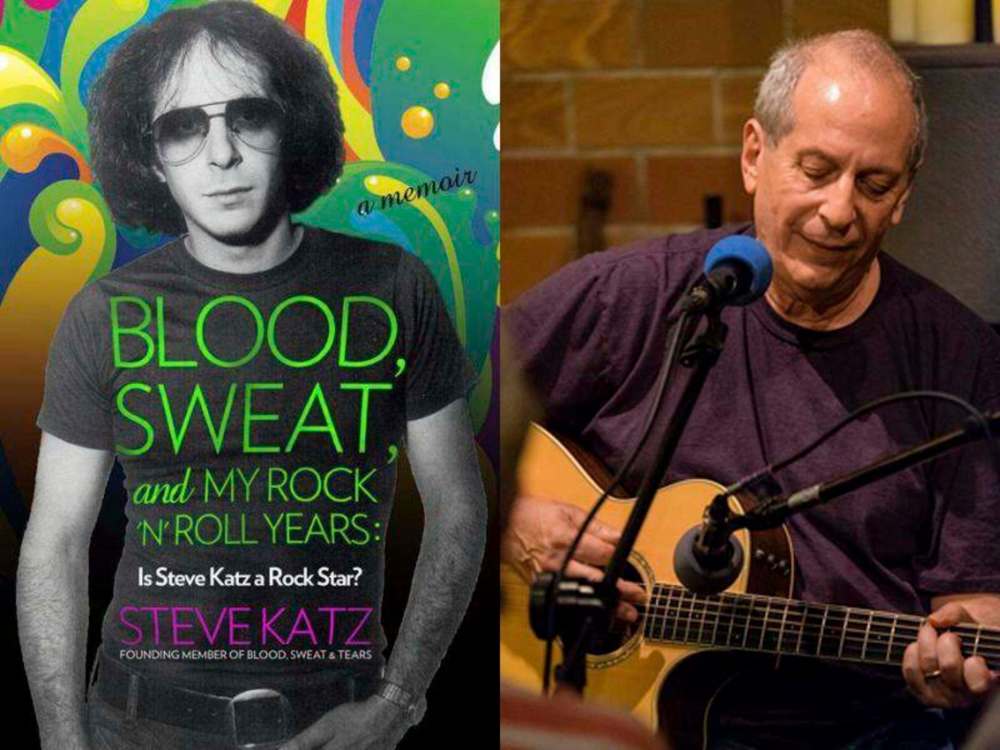
Together with other Village habitués including John Sebastian, David Grisman and Marie Muldaur, Katz joined the Even Dozen Jug Band, which recorded an album in 1964.
“A bunch of us hung around places like the Gerde’s Folk City and the Gaslight and we wanted to play music together, but half of us were into blues and the other half were folkies, so we found that our common denominator was jug-band music,” Katz recalls over the phone from his home in Kent, Conn.
While Sebastian went on to form the Lovin’ Spoonful and Muldaur joined the Jim Kweskin Jug Band, Katz was invited to be rhythm guitarist in the Danny Kalb Quartet.
“After Dylan went electric at Newport in the summer of 1965 everyone began trading in our acoustic guitars for electric ones,” notes Katz. With the further addition of keyboard player Al Kooper, who had been a part of Dylan’s electric epiphany, the band changed their name to the Blues Project and quickly established a reputation as one of the most exciting bands on the club circuit. Their 1966 debut album, Live at the Café Au Go Go, was a turning point in electric blues.
Two further albums followed, but both failed to live up to expectations.
“We were a really good live band but never had the budgets to make a decent recording,” says Katz.
The band folded soon after an appearance at the Monterey Pop Festival in June 1967, their set that day marred by the defection mere weeks earlier of Kooper, whose solo set, featuring many of the Blues Project’s best-known songs, preceded his former band.
Despite that, Kooper and Katz hooked up again in New York and formed nine-piece jazz-rock innovators Blood, Sweat & Tears, with Katz on lead guitar.
Their debut album, Child Is Father to the Man, released in 1967 to critical acclaim, was nonetheless a commercial stiff. While Kooper was at the top of his game as a writer and arranger, his voice as lead singer was limited.
“We went to Al and told him that we needed a stronger lead singer. We weren’t going to get anywhere unless we had a better voice. We wanted him to stay in the band as well as be the principal writer, but instead he quit,” Katz says.
Drummer Bobby Colomby suggested Canadian singer David Clayton Thomas. Their next album, simply titled Blood, Sweat & Tears, sold more than six million copies and spawned three hit singles, You’ve Made Me So Very Happy, Spinning Wheel (written by Clayton-Thomas) and Laura Nyro’s And When I Die.
In 1969 the band was booked to headline an outdoor festival in Woodstock, N.Y., but in the weeks leading up to the mammoth outdoor festival, Jimi Hendrix was elevated to headline status as show closer. Blood, Sweat & Tears appeared before Crosby, Stills, Nash & Young on the final night.
“I loved playing Monterey, but I hated playing Woodstock,” Katz insists, “We played at like two in the morning and drove to LaGuardia airport right after because we had to be in L.A. the next day. It was like just another gig except worse because it rained and the crowd was so huge you couldn’t see anyone or get any feel from an audience that enormous. I barely remember playing it.”
The band’s set was omitted from the movie because their manager had not signed off on filming rights.
In May 1970, Blood, Sweat & Tears became the first American rock band to play behind the Iron Curtain after being coerced by the U.S. Justice Department into doing the tour for the State Department.
“They threatened to send David back to Canada because he had a criminal record unless we did the tour. I didn’t want to go. None of us did. They wanted us to represent American youth. If we didn’t we would have lost David, which, in retrospect wouldn’t have been that bad,” he says.

Clayton-Thomas, who had worn out his welcome with Katz and others, opted for a solo career in early 1972. Personnel changes were frequent with the horn players exerting increasing influence on the sound of the band. Katz left in 1973. “It started getting too jazz-oriented. The horn players wanted to write songs and those songs were too complex. It had become distant from what we initially had. We were on the road so much we lost the creative thing that we started with. We didn’t have that same camaraderie. It had become a corporate entity with guys in it just for the money,” he says.
These days Colomby owns the Blood, Sweat & Tears name and keeps a band on the road playing their old hits. There are no original members.
“Many of us, myself included, think it’s ripping people off,” asserts Katz. “It’s a tribute band and should be called that.”
Katz landed on his feet, producing three albums for former Velvet Underground frontman Lou Reed including his live album Rock ‘n’ Roll Animal. He released two well-received albums as part of folk-rockers American Flyer in the mid-’70s before taking on record-label duties as vice-president of Mercury Records and producing three albums for Irish Celtic rockers Horslips, who had a large following in their home country, including a young U2.
“They were teenagers hanging around the studio because they loved Horslips, but I told their manager they were still too young and not ready yet. I’m the guy who turned down U2,” he admits.
History
Updated on Saturday, November 5, 2016 11:05 AM CDT: Photos added.