Mother Mother’s latest album a child of solitude and abstinence

Advertisement
Read this article for free:
or
Already have an account? Log in here »
To continue reading, please subscribe:

Digital Subscription
One year of digital access for only $205*
- Enjoy unlimited reading on winnipegfreepress.com
- Read the E-Edition, our digital replica newspaper
- Access News Break, our award-winning app
- Play interactive puzzles
*First annual payment billed as $205.00 + GST for one year. This annual subscription will automatically renew at $233.00 + GST every 52 weeks (10% off the regular annual price of $259.35). Offer available to new and qualified returning subscribers only. Cancel any time.
To continue reading, please subscribe:
Add Free Press access to your Brandon Sun subscription for only an additional
$1 for the first 4 weeks*
- Enjoy unlimited reading on winnipegfreepress.com
- Read the E-Edition, our digital replica newspaper
- Access News Break, our award-winning app
- Play interactive puzzles
*Your next Brandon Sun subscription payment will increase by $1.00 and you will be charged $17.95 plus GST for four weeks. After four weeks, your payment will increase to $24.95 plus GST every four weeks.
Read unlimited articles for free today:
or
Already have an account? Log in here »
Hey there, time traveller!
This article was published 14/03/2017 (3502 days ago), so information in it may no longer be current.
In a home studio in the middle of the woods on Quadra Island, B.C., Mother Mother guitarist, singer and lyricist Ryan Guldemond began to write the songs that would become the band’s newest album, No Culture.

At the time, he was in a self-induced state of abstinence after making the choice to no longer use drugs or alcohol. He has said removing those things from his life was a way of opening it up in different ways, the result of which is a more personal, vulnerable collection of music than any of the indie-rock band’s previous five albums.
Guldemond speaks candidly about family dynamics on songs such as Baby Boy and Family (his sister, Molly, is a fellow founding member of the band) and addresses his substance abuse and addiction. Ultimately, though, the record is about identity and how that is affected by outside cultural influences.
Fans have already responded to the more emotionally tuned-in content — the first single, The Drugs, reached No. 1 on the Canadian Alternative Rock Radio Charts last month, making it Mother Mother’s first No. 1 single in their more than 10-year career.
Despite the apparent heaviness, No Culture is far from a downer to listen to — there is an overarching idea of love that is hard to ignore and regular listeners of the Vancouver-based five-piece will feel a cohesion with the rest of their catalogue in the brightness that comes through in their melodic composition and upbeat, powerful pace that drives much the record.
The Free Press connected with Guldemond a few days before No Culture was released to talk about the album and his writing process.
Free Press: So No Culture is out in just a couple days, how are you all feeling about it?
Ryan Guldemond: Good, it’ll be nice to let it go to some extent. It almost feels a bit perverted keeping something under wraps for so long after it has been done so long.
FP: Lyrically, it’s quite an internally facing record, so what was the writing process like for you this time around?
RG: This time it was a little more gruelling, emotionally and creatively. I had some blocks up, I knew that I had to write about those blocks because they were all-consuming but I didn’t really know how to initially, so it took some prying open of myself to find the poetic avenues. I couldn’t lean on certain objective modes of writing I had in the past and my tongue wasn’t in my cheek, it was slobbering all over my sleeve this time around, so I had to make sense of that and write an honest album.
FP: And how did you approach doing that? I’m sure it’s not an easy thing, to get in the mindset of doing that kind of intense writing?
RG: I don’t really know, you just do it. You just keep pushing through and eventually and periodically, the light opens up and you get a little gust and you follow it and half a song is written and that seems like a huge success and — yeah — those little increments of productivity add up to something complete.
It was quick… it was sort of condensed, the writing, which is new to me.
Often you pull from stuff that’s unfinished, stuff that didn’t make the last record, ideas that have been lingering, but this there was a real emotional focal point that began and ended within the course of a few months.
FP: I’ve read a bit about the title of the record, but I was wondering if you could elaborate on what No Culture means? You’ve mentioned in the past that you use the word culture in a pejorative sense, but could you expand on that?
RG: It’s suggesting that culture, or any external influence, is a detractor from our true essence and who we naturally are, and this was born out of a personal assessment that I made wherein lifestyle choices of mine, I was identifying too strongly with them. They were becoming me. And when I stripped them away, my sense of self was so flimsy and hollow and it alluded to the powerful nature of external influence. How it can suppress who you actually are and take over, so it was really eye opening, sort of this theme of no culture, this prescription of shedding the layers and moving inward, returning, rebirth, reinvention.
FP: Yeah, I was going to say that even though it’s kind of an aggressive theme, there’s a lot of hope and love and positivity that comes through. Was that a dichotomy you were hoping to achieve?
RG: All the pain and darkness on this record is for the purpose of resolve and love and freedom, essentially — and it’s less of a dichotomy than it is a symbiotic relationship in the context of this album…
I wanted to write an album about what I was going through and for that to hopefully extend beyond my personal fear and work itself into a greater statement, a greater message about people and society. I find when the theme stays trapped in the artist’s world and doesn’t have metaphorical tendrils, that people can I guess latch onto, that the world can latch onto, it becomes a little narrow or self-indulgent.
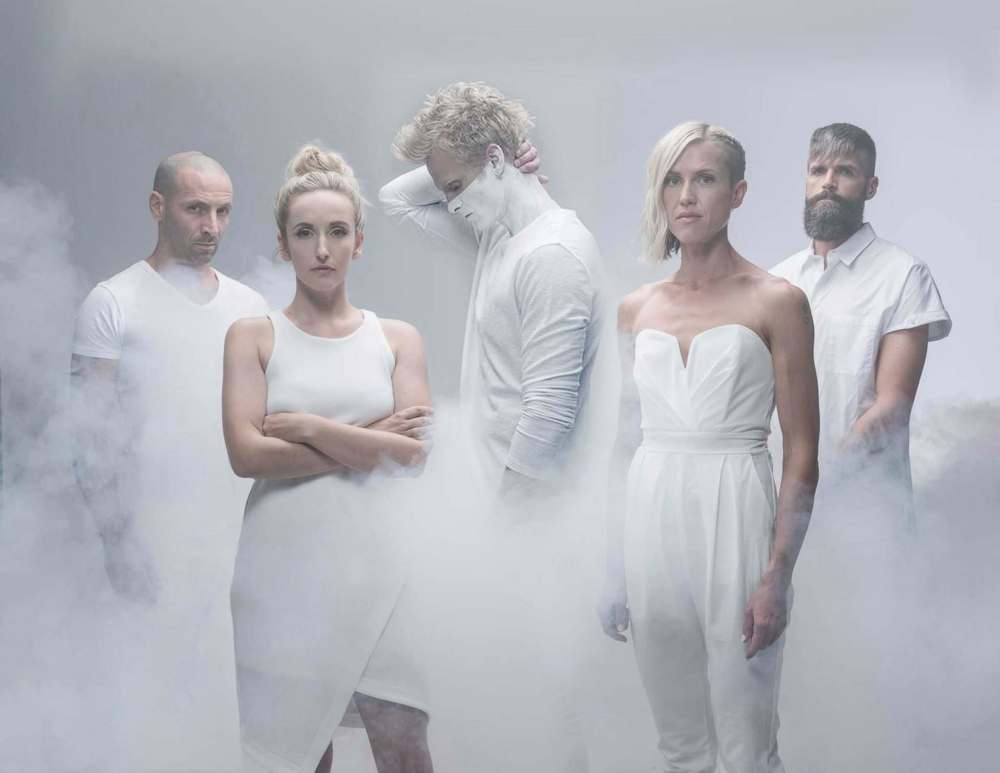
FP: You’ve been producing for a bunch of other artists as well, has that changed or influenced the way you work with your own band?
RG: Oh for sure, it’s like you see yourself in other artists when you produce them and you have this stance to witness their narrowmindedness, for lack of a more neutral term. Again, identity comes up a lot, we get really attached to who we think we are and how our music and every component within it needs to mirror that. But the fact is we don’t know who we are, fully, and the beautiful part of being a human is that we are always in flux, we are always changing and growing and evolving and that should be mirrored in how we approach making music. It’s through production, it’s through helping other artists achieve that expansiveness that I help myself do the same.
FP: Side-stepping just a bit, I wanted to ask you about your jingle-writing — is that something you’re still doing?
RG: I haven’t done a jingle in a while. I wouldn’t not do a jingle; it’s a great way to step outside of your realm and work within parameters and also make a buck.
FP: I’m so fascinated because jingles to me are a lot like headlines, in that you have a very constricted space to convey a lot of information very well and very concisely, and I’m wondering if it has helped you hone in your songwriting skills as well?
RG: Absolutely, yeah. It strengthens brevity and the skill of packing in a lot of truth in a small space, which is something I’d like to just do more in general, from songwriting to speaking to cooking, you know?
It’s like less ingredients, more powerful flavours and sentiments, I just want to do that more in life.
So yeah, I guess jingles kind of help, funnily enough. Something that can be seen as so trite and superficial can maybe help someone become more powerful in their ability to express themselves.
Twitter: @NireRabel
Our newsroom depends on a growing audience of readers to power our journalism. If you are not a paid reader, please consider becoming a subscriber.
Our newsroom depends on its audience of readers to power our journalism. Thank you for your support.
Concert preview
Mother Mother
Tonight, 8 p.m.
Burton Cummings Theatre
Tickets $25-$39.50, available at Ticketmaster
Our newsroom depends on a growing audience of readers to power our journalism. If you are not a paid reader, please consider becoming a subscriber.
Our newsroom depends on its audience of readers to power our journalism. Thank you for your support.
Advertisement Advertise With Us
Advertisement Advertise With Us