Rock till you drop
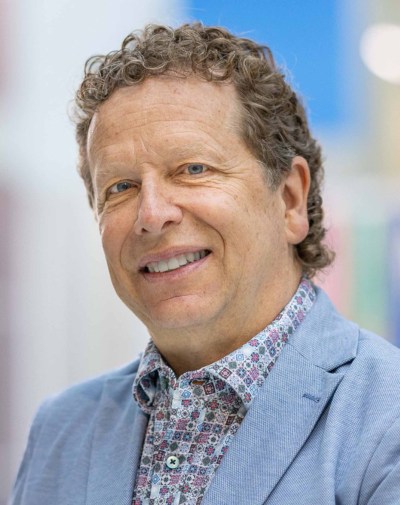
Guitarist Laurie MacKenzie has carved out a career while staying close to his roots
Advertisement
Read this article for free:
or
Already have an account? Log in here »
To continue reading, please subscribe:

Digital Subscription
One year of digital access for only $205*
- Enjoy unlimited reading on winnipegfreepress.com
- Read the E-Edition, our digital replica newspaper
- Access News Break, our award-winning app
- Play interactive puzzles
*First annual payment billed as $205.00 + GST for one year. This annual subscription will automatically renew at $233.00 + GST every 52 weeks (10% off the regular annual price of $259.35). Offer available to new and qualified returning subscribers only. Cancel any time.
To continue reading, please subscribe:
Add Free Press access to your Brandon Sun subscription for only an additional
$1 for the first 4 weeks*
- Enjoy unlimited reading on winnipegfreepress.com
- Read the E-Edition, our digital replica newspaper
- Access News Break, our award-winning app
- Play interactive puzzles
*Your next Brandon Sun subscription payment will increase by $1.00 and you will be charged $17.95 plus GST for four weeks. After four weeks, your payment will increase to $24.95 plus GST every four weeks.
Read unlimited articles for free today:
or
Already have an account? Log in here »
Hey there, time traveller!
This article was published 23/09/2017 (3254 days ago), so information in it may no longer be current.
‘When I get older, losing my hair…”
Seconds after revealing he is 63 “going on, you know,” guitarist Laurie MacKenzie hunches his shoulders, juts out his lower lip as if to suggest he’s sporting a set of ill-fitting dentures and launches into an impromptu version of the Beatles’ When I’m 64.
MacKenzie, dressed in jeans and a black T-shirt bearing the image of Will Lee, who played bass in the Late Show with David Letterman’s CBS Orchestra, laughs and says thanks, when his interviewer observes he might want to save that ditty for another day. Because let’s face it, aside from a few grey strands and an extra pound or two around his midsection, MacKenzie remains instantly recognizable as the person who, in 1982, formed Laurie MacKenzie and the Bandits, a meat-and-potatoes, rock ‘n’ roll troupe that was the toast of Winnipeg’s live music scene. That is, when they weren’t on the road, opening for the likes of George Thorogood, the Powder Blues Band or Otis Rush.
“Physically, I don’t feel much different than when I was younger, but I probably should make a point of working out once in a while, right? The problem these days is I’m usually too busy to even think about it.”
True that: in response to the question, “How busy is busy?” MacKenzie unfolds a piece of foolscap, revealing dozens of notes he’s written to himself — reminders of upcoming gigs and rehearsals with, among others, Oh! Sparkletones!, the Chocolate Bunnies from Hell and Babylon Brothers.
When told, “According to this, it looks like you’re involved with 10 different bands. How do you even remember what songs you’re supposed to play on a given night?” MacKenzie flashes a boyish grin before stating, “Well, when you’ve been doing this for as long as I have…”
* * *
MacKenzie was born and raised in Dauphin. Anybody who has spent time with him knows what drew him to music in the first place, he says.
“I grew up enjoying Little Richard, the Beach Boys and Elvis but the first time I heard the Beatles, it was just a whole other thing,” he says, seated in a coffee shop on St. Mary’s Road.
MacKenzie guesses he was 16 when he and a few high school buddies formed a guitar-heavy band that covered tunes originally done by Cream, Grand Funk Railroad and Savoy Brown. But because you “had to know a few country songs” if your group wanted to get work in the Parkland region, circa 1970, that unit never really took off, he says.

In 1971, MacKenzie heard about a Winnipeg-based arts program called Cultural Horizons, which paid artists and musicians to go to various schools and work with students. At 18, he packed his bags and moved into a friend’s Winnipeg apartment, hoping to catch on with the program. He eventually did — as a bookkeeper.
“At the time, I was an OK guitarist but nowhere good enough for what they had in mind,” he says. “My saving grace was I was a bit of a math wiz, too, so they gave me a part-time job in the accounting department.”
Between 1971 and 1973, MacKenzie moved back and forth from Dauphin to Winnipeg three times. In the summer of 1974, while he was living at his parents’ place yet again, he met Jim Chisholm, “a long-haired, hippie-type, like me,” who had moved to the Dauphin area to participate in Mincome, an experimental, guaranteed annual income program funded by the provincial and federal governments.
“Jim and I became fast friends and one night, he took me to see two musician pals of his who were in town for a week, playing the local bar. One of them was Denis Petrowski. When we sat down and jammed together after one of their shows, Denis mentioned he liked my touch, and encouraged me to move to Winnipeg for good, if music was what I wanted to pursue in life.” (Nowadays, MacKenzie and Petrowski, along with Brad Derksen, appear regularly as the harmonies-rich Chisholm Trio, a Crosby, Stills and Nash-styled outfit named for their late chum who introduced them to one another, 43 years ago.)
After heeding Petrowski’s advice, MacKenzie hooked up with him and a pair of brothers, Kim and Bob Russell, to perform music that was “pretty ambitious… jazz-rock-fusion stuff in the vein of Steely Dan.” To make ends meet, he accepted a position at Revenue Canada, where he remained until 1979, when he decided it was time to “get serious about mastering my instrument.”
One of the first things he did after quitting his job was book time at Roade Studios on Grosvenor Avenue to record a half-dozen jazz-influenced songs he’d penned. His goal was to shop the finished product around to different record companies — a plan that was shelved when he ran out of money midway through the process. But when Danny Casavant, a pal of his and member of Graham Shaw and the Sincere Serenaders, heard bits of what he’d been working on, he asked MacKenzie for a copy, which he subsequently turned over to an acquaintance of his at CBC Radio.
“In those days, CBC had a budget for local acts, for their own programming purposes,” MacKenzie says. “Thanks to Danny, they ended up liking my beds, and invited me down to record five new songs, along with a few of the ones I’d already been working on. They also put together a half-hour show, showcasing my stuff.”
* * *
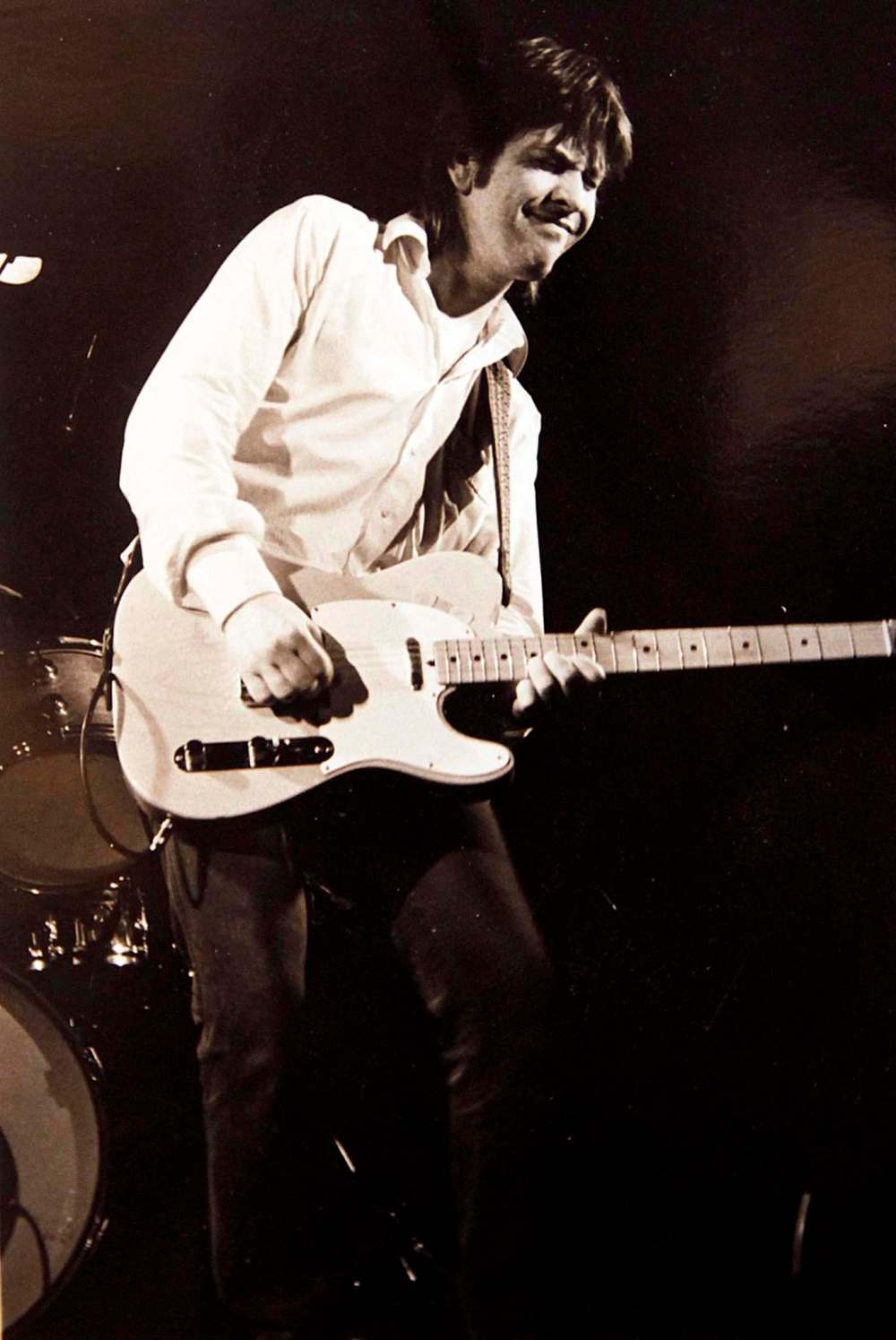
The first time MacKenzie saw Bruce Springsteen live was in 1978, during the Boss’s Darkness on the Edge of Town tour. After catching him on stage again three years later, he began to miss, in his words, “the more simple parts of rock ‘n’ roll.”
“The only way to put it is, when I was watching Springsteen, he made me feel like I was 15 years old all over again. So what I decided to do next was put together the hottest band I could find, with sax and keys and everything, and focus on classic R&B as well as great ‘60s tunes — songs that weren’t masked by more intellectual musical endeavours.”
He vividly recalls the debut performance of what came to be known as Laurie MacKenzie and the Bandits.
“Our first gig was at the Rolls Royce Lounge, which later changed to Ozzy’s (in the Osborne Village Inn). Capacity was about 100 but when we walked out on stage that first Monday night, there were maybe 15 people in the joint.”
Despite the size of the crowd, the Bandits gave it their all. That worked out well, since one of the people in the room was a popular Winnipeg DJ who, bright and early the next morning, implored his listeners, “You absolutely have to see this band.”
“From that point on, we had lineups out the door and down the street,” MacKenzie says.
The Bandits disbanded in 1984. MacKenzie’s next project was the Midnight Thunder Band, an equally-adored outfit that performed original compositions mixed with Rolling Stones classics, Tom Petty tracks and chestnuts such as Walk Away Renee, Mr. Tambourine Man and Brown-Eyed Girl, “before it became so overdone.’”
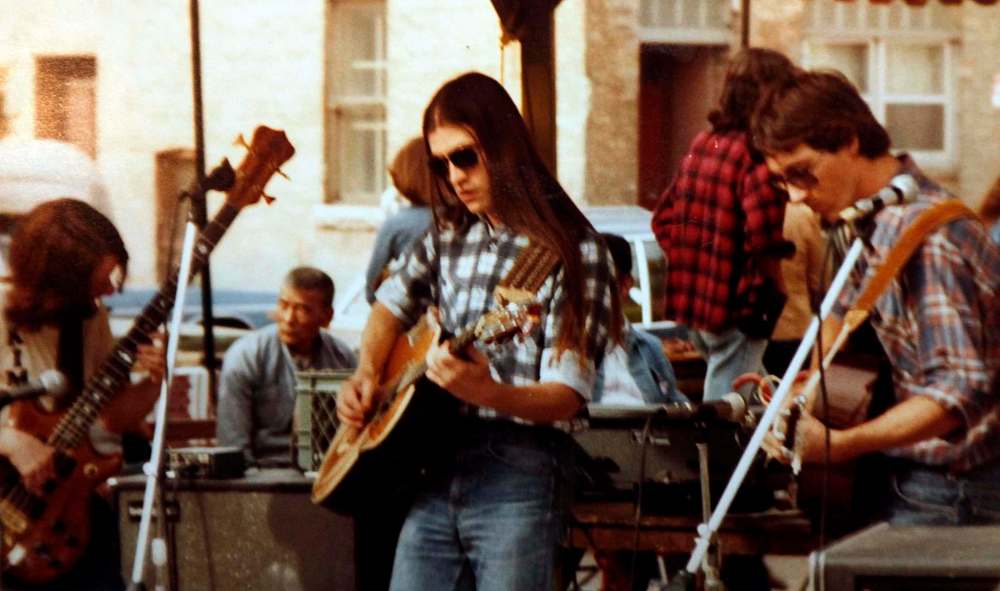
The Midnight Thunder Band remained a popular draw for a few years but by the end of the 1980s, live music venues in Winnipeg had become so scarce that MacKenzie was playing in five separate bands “just to make a living… and I mean just.”
“Sure I could have probably have made more money going the top-40 route, and being in some faceless dance band at the Holiday Inn, but it had always been my goal to play music I liked… that connected to my soul,” he says, listing off Combo Combo and JJ and the Comets as two other acts he performed with, during that period.
In the early 1990s MacKenzie reinvented himself again as one of the most sought-after session players in the city.
Singer-songwriter Heather Bishop met Mackenzie, who has appeared on close to 70 albums, for the first time in 1994, when she was working on her children’s record, A Duck in New York City. Her producer, Dan Donohue, had collaborated with MacKenzie in the past and encouraged Bishop to enlist his services.
“As soon as I heard him play, I was like, ‘Oh my God, who is this guy?’” says Bishop, a member of the Order of Canada.
Bishop, who recently wrapped up a two-week tour of Alberta and British Columbia with MacKenzie, says her heart did “a double back-flip” when she learned the Free Press was putting together a profile of her long-time accomplice, toasting his 40-plus years in the biz.
“There are two things that draw me to a (guitar) player; No. 1, of course, being how good is he? But more importantly, who is he? I tend to choose people based on what their heart is like. I’ve loved Laurie right from the beginning and I’ve often said, ‘Am I ever lucky this man is so good because he’s exactly who I’d want to play with, anyways.’”
In November 2005, MacKenzie received a call from the Guess Who, asking if he was interested in auditioning for the Jim Kale-led version of that band. His first show with the band was in January 2006, in Orange County, Calif., when the group, which featured ex-Coney Hatch singer Carl Dixon on lead vocals, headlined a bill with Detroit rocker Mitch Ryder.
“I spent the next eight years with the Guess Who, literally travelling the world, but always keeping Winnipeg as my home base,” he says.
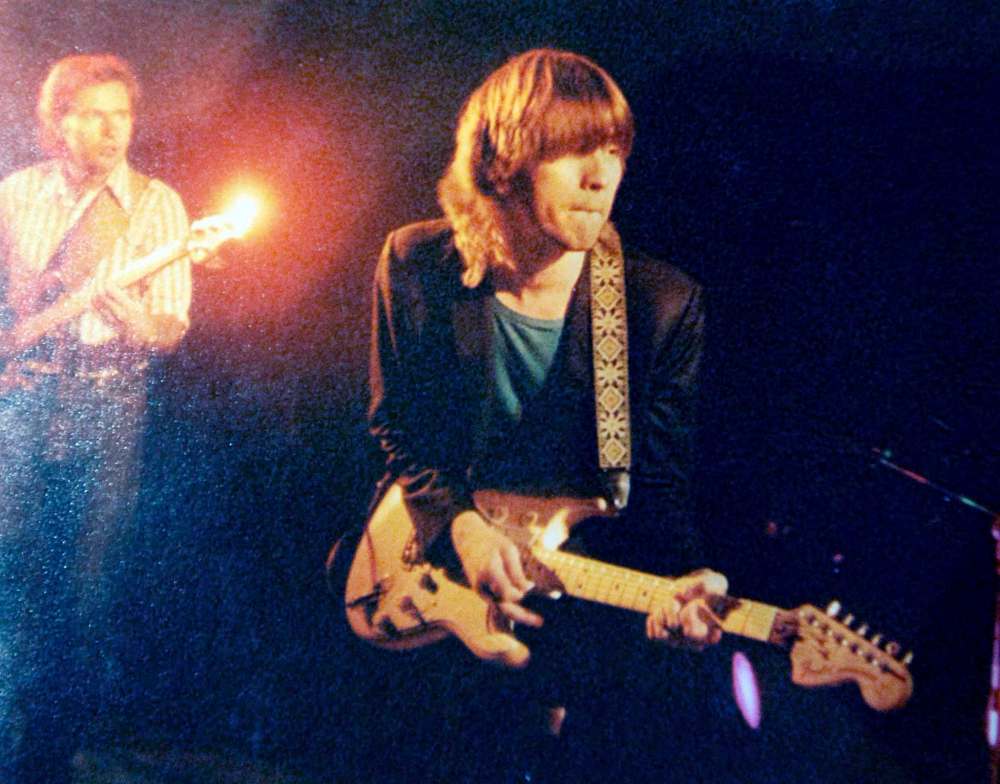
On occasion, MacKenzie still performs songs from the Guess Who catalogue, with Dixon and Bill Wallace, the Guess Who’s bass player from 1972 to 1976, and again from 2000 to 2004.
“If you’re asking me what Laurie’s strong suit is, it’s that he’s very meticulous and always does his homework,” says Wallace, who also plays with MacKenzie in a Beatles cover band dubbed the Shoes. “He learns things really, really well, which is why he’s been able to fit in with virtually any style of band or musician, all these years.”
Wallace says even at age 63, MacKenzie’s drive to be the best he can be hasn’t changed one iota since they first traded riffs in the Midnight Thunder Band, 30 years ago.
“We’ll be working on arrangements for all these really difficult songs and Laurie will turn to me and say something like, ‘There was one note in that last verse that was wrong.’ I’ll tell him ‘Don’t worry about it, nobody’s ever going to notice,’ to which he’ll say, ‘Well, I will.’”
* * *
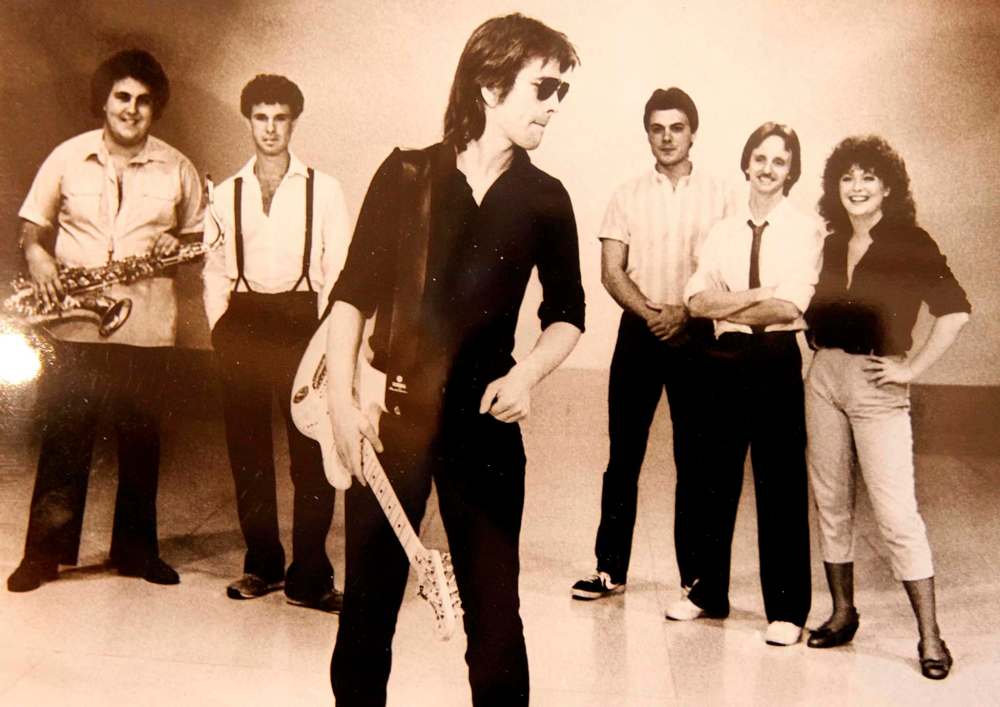
“I’ve always lived cheaply… I’ve never been materialistic,” says MacKenzie, a father of one grown son, when asked whether it’s been tough to carve out a decades-long career as a working musician in Winnipeg. “I had the same spirit for music as lots of players my age but in order to secure my future, I also asked a lot of questions about the business side of things: How do you collect royalties? How do you become a member of the (American Federation of Musicians) union? That sort of thing.
“These days it’s a juggle to get by — most weeks I’m working seven days — but I’m not complaining,” he goes on, noting he has two recording projects on the go, one with the Chisholm Trio and another with the Fuse. “I’ve said this before but it’s true; through the years, I’ve been blessed with an embarrassment of riches when it comes to friends — serious, long-term, deeply-connected friendships. Of all the places I’ve visited and records I’ve played on and people I’ve met, that’s what I’ll cherish most of all, if I ever hang it up for good.”
david.sanderson@freepress.mb.ca
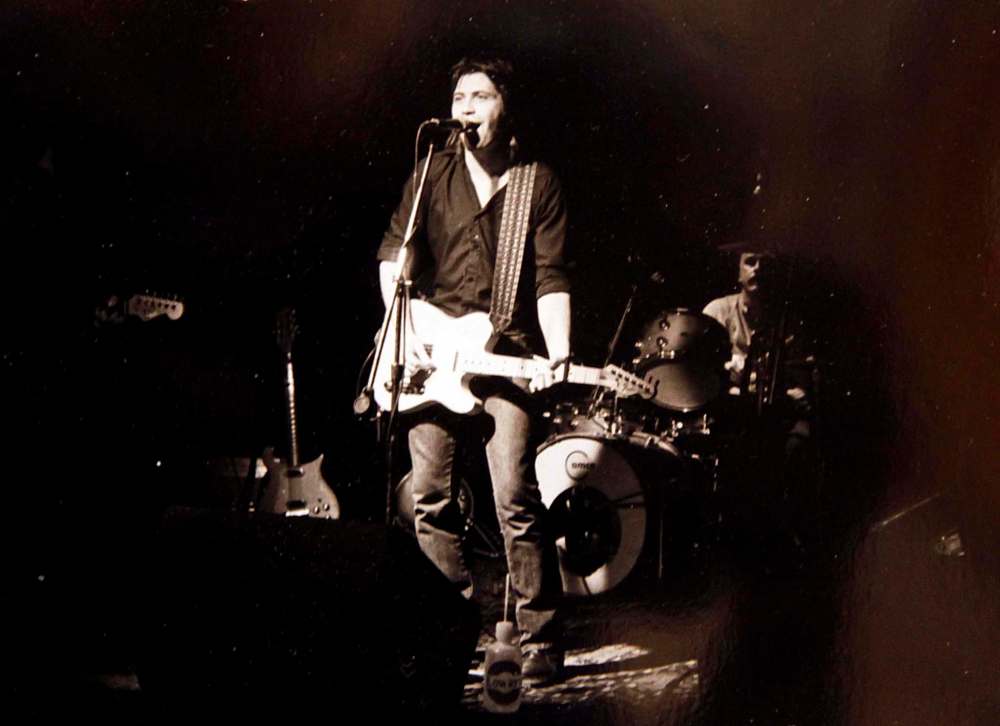
Dave Sanderson was born in Regina but please, don’t hold that against him.
Our newsroom depends on a growing audience of readers to power our journalism. If you are not a paid reader, please consider becoming a subscriber.
Our newsroom depends on its audience of readers to power our journalism. Thank you for your support.