The gospel of Lizzo
Artist reflects on rise to the top of the music industry after years of work
Advertisement
Read this article for free:
or
Already have an account? Log in here »
To continue reading, please subscribe:

Digital Subscription
One year of digital access for only $205*
- Enjoy unlimited reading on winnipegfreepress.com
- Read the E-Edition, our digital replica newspaper
- Access News Break, our award-winning app
- Play interactive puzzles
*First annual payment billed as $205.00 + GST for one year. This annual subscription will automatically renew at $233.00 + GST every 52 weeks (10% off the regular annual price of $259.35). Offer available to new and qualified returning subscribers only. Cancel any time.
To continue reading, please subscribe:
Add Free Press access to your Brandon Sun subscription for only an additional
$1 for the first 4 weeks*
- Enjoy unlimited reading on winnipegfreepress.com
- Read the E-Edition, our digital replica newspaper
- Access News Break, our award-winning app
- Play interactive puzzles
*Your next Brandon Sun subscription payment will increase by $1.00 and you will be charged $17.95 plus GST for four weeks. After four weeks, your payment will increase to $24.95 plus GST every four weeks.
Read unlimited articles for free today:
or
Already have an account? Log in here »
Hey there, time traveller!
This article was published 14/12/2019 (2492 days ago), so information in it may no longer be current.
LOS ANGELES — Lizzo’s dressing room at the Forum felt as if it would collapse at any moment from the piercing screams of fans.
In the arena, 17,000 tweens and teens were greeting, at delirious volume, K-pop phenomenon BTS, co-headliners this early December evening, alongside Lizzo, Billie Eilish and Katy Perry, of KIIS-FM’s Jingle Ball, the annual processional of the year’s most au courant hitmakers.
Backstage, the 31-year-old singer-rapper-flutist was curled up on a leather couch in leopard-print pants and a nude blouse. “This is almost surreal,” she said, leaning closer to the wall to feel the commotion.
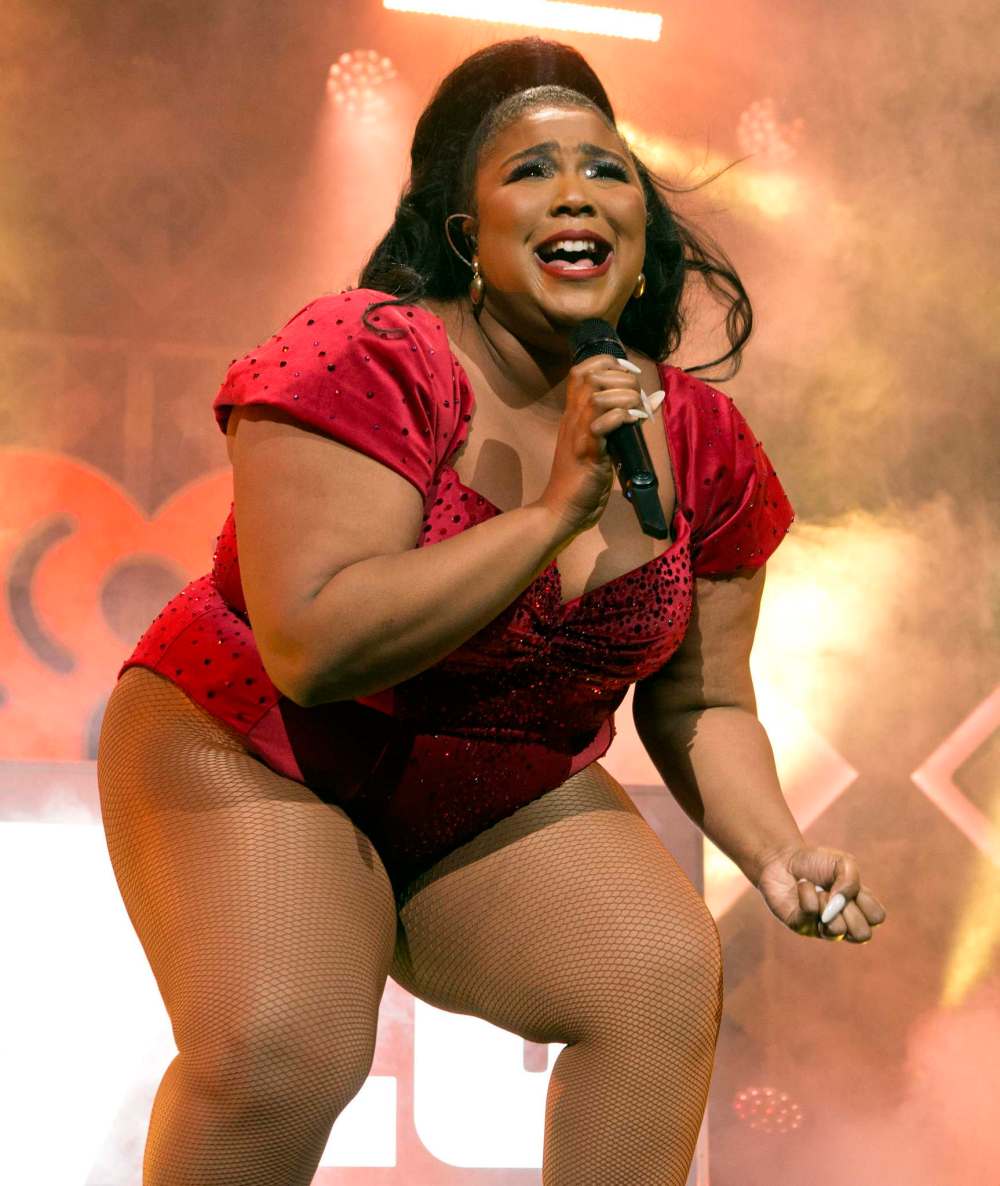
In an hour or so, Lizzo would take the stage to a similarly joyful noise, a remarkable turn of events for an artist who has defied most of the modern rules of pop stardom in her unexpected ascent to the top of the charts.
Six years after releasing her first album, she broke into the top 10 with her delightfully peppy major-label debut, Cuz I Love You, featuring the inescapable No. 1 Hot 100 empowerment jam Truth Hurts.
Pop stars like Lizzo aren’t the norm. She’s 31, typically an age in which singers are more likely to be plotting their inaugural Vegas residency or a Broadway musical, not their first Grammy outfit. She sings effervescent, genre-blurring music steeped in positivity, and she’s doing so as a proud “beautiful and fat” (as she stridently puts it) black woman in an industry that has historically favoured the blond and the thin. Lizzo’s messages of loving yourself and living your best life — which she’s been doling out from stages for years — have taken off and made her pop music’s patron saint of self-care and self-love.
“When you’re in the room with her, she makes you feel good. She radiates,” says songwriter-producer Ricky Reed, who signed Lizzo to his Atlantic Records imprint, Nice Life, in 2015. “The reason she has connected is that her music is so infused with her message. It’s a real-time blow-by-blow of her life.”
A showgirl at heart, Lizzo was the highlight of this year’s Coachella and stole the spotlight everywhere from the MTV Video Music Awards to the Met Gala red carpet. She made her film debut alongside Jennifer Lopez in the hit stripper crime drama Hustlers and is slated to perform on Saturday Night Live later this month. Hillary Clinton, Barack Obama and Beyoncé are among her fans.
And that’s on top of logging over one billion streams and earning eight Grammy nominations — the most of any artist this year — including a sweep of the top four categories: record, album, song and best new artist.
Ask Lizzo about her phenomenal ride, though, and the question barely elicits a shrug. It’s not from a place of indifference, but the Lizzo of today is the same Lizzo that’s been grinding for years. The truth is, she can’t help but wonder what took the world so long to come around.
“I’m doing the same things — hard work, dedication, touring constantly — but now everybody is looking,” she says. “Everyone’s just now paying attention.”
Two years ago, Lizzo released Truth Hurts, a sassy, self-affirming anthem built around a sparkly piano loop that she believed was the best thing she’d ever recorded. But she was disheartened by her progress in the music industry and considered quitting altogether.
“It was just a week of my life,” she recalls. “I was really depressed. I was so proud of Truth Hurts and I just felt like the world didn’t care. The song didn’t make a splash and that depressed me. Then I said, ‘You have a loyal fan base. You sell out tours, you play festivals, you are happy, you support your family, you support yourself and you are living good in L.A., which is expensive — you’re going to be fine.’ And from that day on, I didn’t expect anything greater than that.”
Melissa Viviane Jefferson was born in Detroit. She grew up in the Pentecostal church, so the wail of gospel and soul singing is embedded deep in her artistry. When her family moved to Houston, she picked up the flute and joined the marching band. The flute is still at the core of who she is. She’s played it on her albums and the instrument even has its own persona — named Sasha Flute, after Beyoncé’s alter ego Sasha Fierce — and online following.
She started rapping in high school — her nickname is a flip on Lissa inspired by Jay-Z’s hit Izzo — before going off to the University of Houston to study music performance.
When she was 21, Jefferson lost her father and sank into a deep depression. She lived out of her car as she tried to break into the industry, working out around the clock to shrink herself to the smallest she’d ever been. She moved to Minneapolis after a friend suggested she might like the music scene there, and she soon made a local name for herself with rap/R&B girl groups the Chalice and GRRRL PRTY. Her first co-sign came courtesy of the city’s most famous native, Prince, who featured Jefferson on his 2014 album, Plectrumelectrum.
Working with Prince gave her the freedom to think outside the genre lines she felt beholden to as a black girl who could sing and rap.
“He loved my rapping as much as he loved my singing and that gave me a lot of confidence in both of those things,” she says of her time working with the late icon. “I was a rapper and back then I was faking it as a singer, trying to find my voice. I needed to treat every song as if it’s my song — that was the only note I got from him. But I had to ask myself, ‘What the… is a Lizzo song?’
“Every artist needs to write their song. The biggest lesson I learned was to write songs specifically for me. I don’t write pop songs, or R&B songs, or rap songs — I write Lizzo songs.”
Questions around genre — Is she a rapper? Is she an R&B singer? Is she pop? — deeply irritate her. For purists, she’s either too much of one thing or not enough of the other, a notion that makes her eyes roll when brought up.
“The industry places people into genre boxes,” she snaps. “Early on I felt like I had to choose. I made a whole trap album where I am rap-singing,” she says, referring to her 2013 debut Lizzobangers, which along with followup Big Grrrl Small World were scrubbed from streaming services at Lizzo’s request. “I didn’t want to choose and I decided I was going to see where following my voice takes me.
“But we’re at the beginning of the end of genre and putting people in boxes. I’m excited to see that growth with people like Billie Eilish and Lil Nas X and myself. We need to keep ignoring all the people who resist change.”
The gospel according to Lizzo is indeed one of growth, of self-love. It’s at the centre of her music, online presence and is on display at her shows, where messages of positivity and self-care are doled out between all-out twerk fests.
“I’m not like a consummate performer that puts on this happy face,” she says. “I’m an emoter. And sometimes I cry when I sing these songs. I just started bringing my therapist on the road via Skype. I don’t hide what I’m going through. And that’s why my music is the way it is.”
Lizzo’s unwavering confidence makes her a refreshing presence and her mainstream explosion couldn’t have been better timed. With tensions thick across the nation in the age of Trump, there’s something exuberant about watching a curvy black woman win over America with witty, razor-sharp testimonies of liberation and self-care.
I ask her, with so many people turning to her music to get them through the year, what does she turn to? The answer, it turns out, isn’t any one thing — it’s a feeling.
“I’m just moving forward, you know? I don’t feel entitled to anything and I don’t see anything as a tribulation,” she says. “I don’t see any (losses). This whole year has just been a giant win. I feel so proud of everything that I do, it’s that feeling of gratitude that keeps me sane and keeps me grounded. I never expected any of this.”
— Los Angeles Times