Billie’s blues
Documentary offers eyes-wide-open look at the darker side of singer Holiday's life
Advertisement
Read this article for free:
or
Already have an account? Log in here »
To continue reading, please subscribe:

Digital Subscription
One year of digital access for only $205*
- Enjoy unlimited reading on winnipegfreepress.com
- Read the E-Edition, our digital replica newspaper
- Access News Break, our award-winning app
- Play interactive puzzles
*First annual payment billed as $205.00 + GST for one year. This annual subscription will automatically renew at $233.00 + GST every 52 weeks (10% off the regular annual price of $259.35). Offer available to new and qualified returning subscribers only. Cancel any time.
To continue reading, please subscribe:
Add Free Press access to your Brandon Sun subscription for only an additional
$1 for the first 4 weeks*
- Enjoy unlimited reading on winnipegfreepress.com
- Read the E-Edition, our digital replica newspaper
- Access News Break, our award-winning app
- Play interactive puzzles
*Your next Brandon Sun subscription payment will increase by $1.00 and you will be charged $17.95 plus GST for four weeks. After four weeks, your payment will increase to $24.95 plus GST every four weeks.
Read unlimited articles for free today:
or
Already have an account? Log in here »
Hey there, time traveller!
This article was published 04/12/2020 (2070 days ago), so information in it may no longer be current.
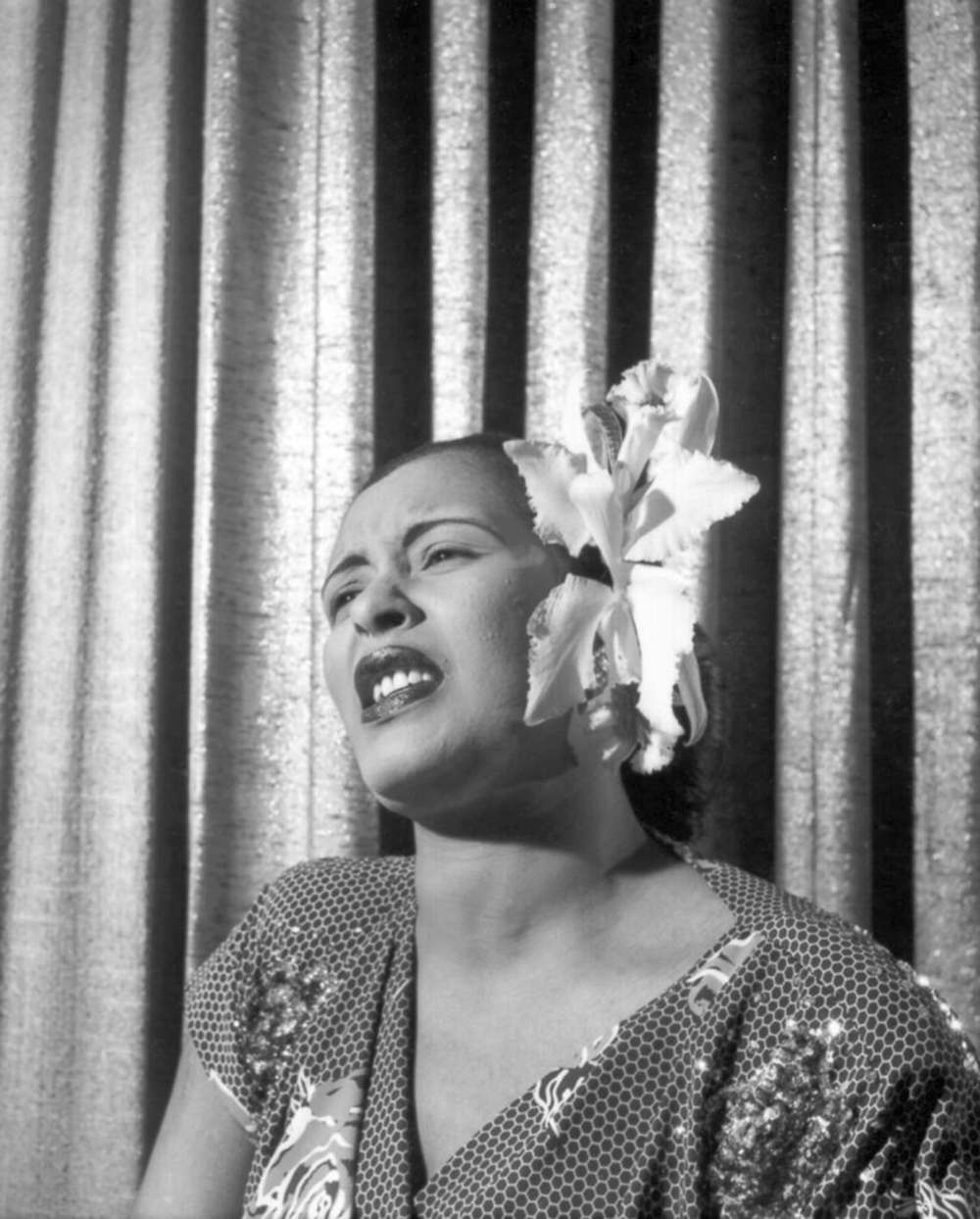
Billie Holiday’s tumultuous life story surely has been told more often, and in more ways, than that of any other female jazz singer.
Books, films, plays, articles — the avalanche was underway long before her death in 1959 at age 44. The combination of a singular art and a dramatic narrative (complete with prostitution, drug abuse, crime, imprisonment and more) never seems to lose its drawing power.
Which may make the prospect of another Holiday documentary seem redundant. Yet Billie, written and directed by James Erskine and streaming on Amazon Prime starting Friday, takes us deeper and more unflinchingly than most into the darker corners of Holiday’s life.
The film also offers a most unusual and fascinating approach, interweaving Holiday’s epic tale with a smaller but similarly disturbing one: the life and death of a writer on whose mountain of recorded interviews the film is based.
“In the early hours of February 6th, 1978, the body of a young journalist was discovered on a street in Washington, D.C.,” reads a supertitle at the film’s start. “Her name was Linda Lipnack Kuehl. For the past decade, she’d devoted her life to uncovering the true story of legendary singer Billie Holiday.”
Of course, there is no one “true” story of Holiday or any other artist. Instead, these great figures invite endless contemplation, especially as new information emerges. Writer Kuehl contributed more than her share, through the audio interviews excerpted in the film.
Though Holiday’s prostitution in her youth is well known, for instance, we learn how she viewed this part of her autobiography toward the end of her life.
“She would call me up, maybe 3, 3:30, 4 o’clock in the morning,” says pianist Memry Midgett in one of Kuehl’s recorded interviews. “It seemed like she was almost hallucinating. And she would say: ‘Oh, I’m here all by myself.’
“Like she would talk to me for hours and tell me about how she got started in prostitution. She was 13 years old … (eventually) she had her own girls on the street. She was terribly worried about whether or not God would forgive her.”
Holiday went on to become a legendary jazz singer, of course, routinely getting involved with men who abused her, among them a manager.
“If she asked him for $50, he’d knock her down,” says pianist and witness Bobby Tucker in one of Kuehl’s interviews. “With his fist.”
“With his fist in her face?” asks Kuehl, incredulously.
“You’re darn right. In the stomach. Anywhere.”
Even after a triumphant 1950s Carnegie Hall concert — years after Holiday’s conviction and imprisonment for narcotics possession — she was pummeled again, this time by a future husband.
“He literally knocked her across the street,” remembers pianist Midgett in Kuehl’s interview. The man “had a technique going of trying to control her mind. It was like hypnotism: You can’t depend on anyone but me; you have no friends but me; you must stay in here and keep yourself from everyone but me. There were days when he just kept her under lock and key.”
Why an artist of Holiday’s stature, achievement and fame would subject herself to such abuse, all the while mixing heroin and cocaine in ample amounts, is open to interpretation. We can only speculate whether Holiday’s impoverished, harsh childhood set the tone for troubles yet to come.
Decisions that seem reckless to us from a distance are interpreted in another Kuehl interview. A psychiatrist who treated the singer, Dr. James Hamilton, cites the “impulse drive” of a “strong, talented but not dependable individual who does this because this is what she has the impulse to do right now, and she gets into all sorts of trouble.”
To hear these perspectives as Kuehl recorded them, the interviewees speaking with considerable conviction, is to perceive Holiday through the sensibilities of those who were there.

Lest all this seem relentlessly bleak, the film also offers illuminating video clips of Holiday performances, plus analysis from the likes of Tony Bennett, Sylvia Syms and lesser known artists Kuehl interviewed. Amid all this material, meticulously edited to intertwine Holiday’s and Kuehl’s stories, we also encounter Holiday’s own words as recorded by others.
“I always wanted to sing like Louis Armstrong played,” says Holiday in one segment. “I always wanted to sing like an instrument.”
Asked by one interviewer why so many jazz greats die young, Holiday summed it up as well as anyone:
“The only way I can answer that question is: We try to live 100 days in one day. I myself have tried to please so many people. I guess we all suffer.”
— Chicago Tribune