New music: The Paranoid Style, Satoko Fujii’s Tokyo Trio, Olivier Messiaen
Reviews of this week’s releases
Advertisement
Read this article for free:
or
Already have an account? Log in here »
To continue reading, please subscribe:

Digital Subscription
One year of digital access for only $205*
- Enjoy unlimited reading on winnipegfreepress.com
- Read the E-Edition, our digital replica newspaper
- Access News Break, our award-winning app
- Play interactive puzzles
*First annual payment billed as $205.00 + GST for one year. This annual subscription will automatically renew at $233.00 + GST every 52 weeks (10% off the regular annual price of $259.35). Offer available to new and qualified returning subscribers only. Cancel any time.
To continue reading, please subscribe:
Add Free Press access to your Brandon Sun subscription for only an additional
$1 for the first 4 weeks*
- Enjoy unlimited reading on winnipegfreepress.com
- Read the E-Edition, our digital replica newspaper
- Access News Break, our award-winning app
- Play interactive puzzles
*Your next Brandon Sun subscription payment will increase by $1.00 and you will be charged $17.95 plus GST for four weeks. After four weeks, your payment will increase to $24.95 plus GST every four weeks.
Read unlimited articles for free today:
or
Already have an account? Log in here »
Hey there, time traveller!
This article was published 16/02/2024 (942 days ago), so information in it may no longer be current.
Pop & Rock
The Paranoid Style
The Interrogator (Bar/None Records)
The Paranoid Style first came to this reviewer’s attention via X (formerly Twitter), where @paranoiacs is the account of Elizabeth Nelson, a Washington, D.C.-based journalist and music critic who regularly posts 280-character reviews of classic albums.
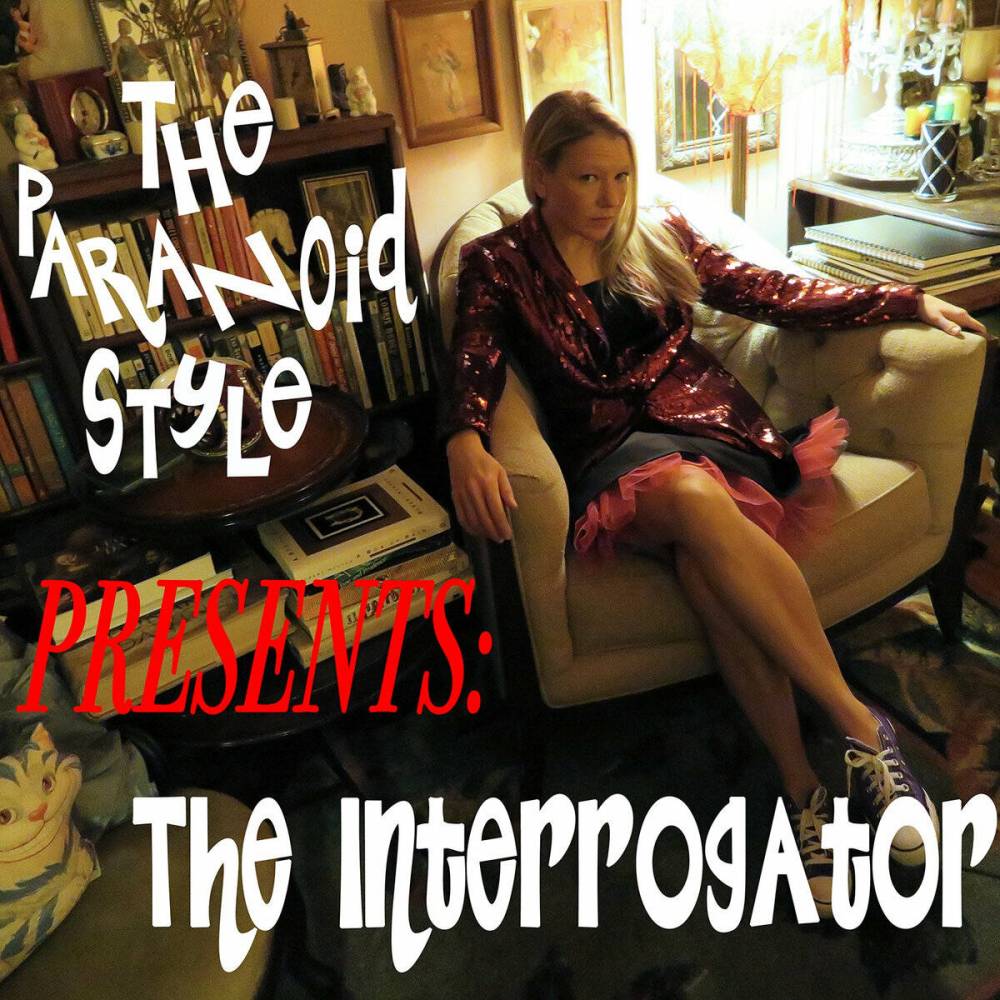
Only after following for a few months did it becomes clear the Paranoid Style is a band and Nelson is its lead singer and primary songwriter. Duh!
What a band it is, too. Over a decade’s worth of albums, singles and EPs, Nelson and her guitarist husband, Timothy Bracy, who form the core of the Paranoid Style, have created an impressive canon of hyperliterate songs, rooted in guitar-based rock styles that run the gamut from scrappy garage to hyperkinetic power-pop, jangly roots-rock to icy ’80s new wave.
The Interrogator is the Paranoid Style’s fourth full-length and it’s been hailed as the band’s best, especially as former collaborator Peter Holsapple (the dB’s, Continental Drifters) has joined as lead guitarist, bringing a crunching tone to the riffs, adding tasteful texture to the songs and contributing expressive lead breaks to every track.
Over 13 tracks, Nelson’s sing/speak alto clearly enunciates a litany of clever post-modernist wordplay, creating imagistic poetry and satiric allegories, and tossing off musical references galore.
The album begins with the adrenalized boogie-woogie of its title track (keyboardist William Matheny deserves a mention here for his playing across the record), and almost before you can take a breath, switches gears to the ironic, post-punk pop of I Love the Sound of Structured Class, which recalls Martha and the Muffins (for listeners of a certain age).
A distinctly Cars-like riff opens The Ballad of Pertinent Information, which deliciously skewers the idea of “making the best of the worldwide emporium” in the age of disinformation. Last Night in Chickentown steals a dead-end location from John Cooper Clarke, transplants it to North America and uses it as the setting for a vamping Tamla-Motown song about leaving one’s past behind.
Other song titles here include Styles Make Fights, Are You Loathsome Tonight?, Bad Day for the Group Chat and Print the Legend — so you get the idea. This is clever, righteous stuff.
★★★★ out of five
STREAM: I Love the Sound of Structured Class, Last Night in Chickentown, Print the Legend
— John Kendle
Jazz
Satoko Fujii’s Tokyo Trio
Jet Black (Libra)
The trio of piano, bass and drums has been a staple of the jazz world since the beginning. Through numerous wonderful iterations it has inspired generations of musicians.
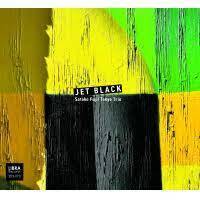
This album now continues that evolution in stunning ways. Pianist Satoko Fujii’s Tokyo Trio, with bassist Takashi Sugawa and drummer Ittetsu Takemura, has released several albums, but with this one they simply redefine the whole concept of the jazz trio.
The music here is exciting, challenging and constantly surprising. There is tension and complexity — extremely dissonant passages coupled with shifting mood and gentle moments of remarkable beauty. Each track is a jaw-dropping lesson in the huge range of improvisational possibilities delivered by three people who work together with a compassion and skill that beggar description.
Trumpet player (and Fujii’s partner) Natsuki Tamura writes in the liner notes that the listener gets drawn into the sheer intensity and emotion of the music with basically no alternative but to simply experience it.
The opening track, Along the Way, drifts from constantly shifting metres and an arco bass solo with tangible energy. Its quirky rhythmic changes and wildly twisting solos work with the written passages in a way that reflects the pattern of the album.
Gentle Slope has a stunning opening solo by bassist Sugawa before the drums and piano build on the melody. Sky Reflection is a highlight: over 11 minutes, it moves from a quiet sonic opening, also by Sugawa, until Fujii moves in at about four minutes to offer a truly remarkable solo. The movement from written foundation to improvisation is seamless and wonderful. Fujii’s solo here is beautiful — gentle and increasingly complex.
The title track is the final number and perhaps the most melodic. Throughout, the uniformity in approach of all three members here is almost surreal. This album checks boxes that were previously not even there. It is brilliant.
★★★★★ out of five
STREAM: Take a Step, Sky Reflection
— Keith Black
Classical
Olivier Messiaen: Turangalîla-Symphonie
Toronto Symphony Orchestra (Harmonia Mundi)
Toronto Symphony Orchestra music director Gustavo Gimeno marks the TSO’s 100th anniversary with Olivier Messiaen’s Turangalîla-Symphonie, originally commissioned by Serge Koussevitzky in his wife’s memory as a monumental hymn to love. The work received its première by the Boston Symphony Orchestra in December 1949, with maestro Leonard Bernstein filling in for the ailing composer/conductor.
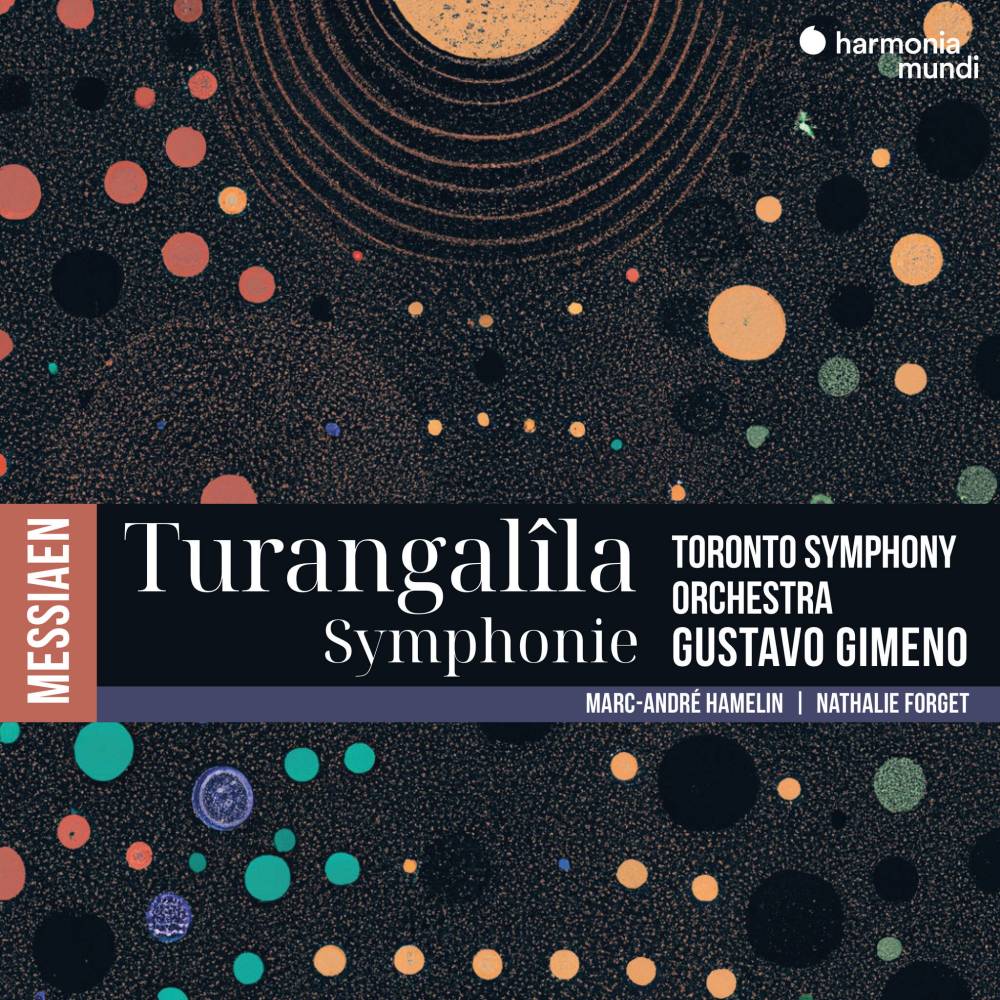
The 20th-century composer’s sole symphony is particularly memorable for its use of an ondes Martenot, an early electronic keyboard generating otherworldly “waves” of sound akin to a Theremin. In this case, France’s Nathalie Forget performs on the rarely heard instrument invented by Maurice Martenot in 1928, while incomparable Canadian artist Marc-André Hamelin — known worldwide for his thirst for musical adventure — is the featured pianist.
Gimeno’s bold direction brings muscularity to each of the work’s 10 individual movements, heightened further by an expanded percussion section. This performance also brims with dynamic contrasts, including the ondes Martenot’s first utterance of the “love theme” underscored by strings in II: Chant d’amour 1, (Song of Love), juxtaposed with Hamelin’s punched-out accents also heard in the brass. The subsequent IV: Chant d’amour takes listeners deeper into the composer’s evocative sound world.
Other highlights (of many) include V: Joie du sang des étoiles (Joy of the Blood of Stars), a dreamy VI: Jardin du sommeil d’amour (Garden of Love’s Sleep) — laced with the composer’s idiosyncratic “bird calls” sensitively brought to life by Hamelin — and a striking VII: Turangalila 2 showcasing the percussion ensemble.
The work comes full circle with X: Finale, bursting with rapid-fire shifts in timbre and meter, before ending on a massive F-sharp chord, asserting, in the composer’s own words, “glory and joy are without end” in this compelling addition to the Messaien discography.
★★★★★ out of five
STREAM: Any of the 10 movements, but in particular II: Chant d’amour 1; VI: Jardin du sommeil d’amour; or VII: Turangalila 2
— Holly Harris
History
Updated on Friday, February 16, 2024 7:51 AM CST: Adds headings, formats text, rearranges images