Album reviews
Advertisement
Read this article for free:
or
Already have an account? Log in here »
To continue reading, please subscribe:

Digital Subscription
One year of digital access for only $205*
- Enjoy unlimited reading on winnipegfreepress.com
- Read the E-Edition, our digital replica newspaper
- Access News Break, our award-winning app
- Play interactive puzzles
*First annual payment billed as $205.00 + GST for one year. This annual subscription will automatically renew at $233.00 + GST every 52 weeks (10% off the regular annual price of $259.35). Offer available to new and qualified returning subscribers only. Cancel any time.
To continue reading, please subscribe:
Add Free Press access to your Brandon Sun subscription for only an additional
$1 for the first 4 weeks*
- Enjoy unlimited reading on winnipegfreepress.com
- Read the E-Edition, our digital replica newspaper
- Access News Break, our award-winning app
- Play interactive puzzles
*Your next Brandon Sun subscription payment will increase by $1.00 and you will be charged $17.95 plus GST for four weeks. After four weeks, your payment will increase to $24.95 plus GST every four weeks.
Read unlimited articles for free today:
or
Already have an account? Log in here »
Hey there, time traveller!
This article was published 10/05/2024 (874 days ago), so information in it may no longer be current.
ROCK
Kings of Leon
Can We Please Have Fun (Capitol)
Kings of Leon pose an existential question to listeners on the first single from their new album: are you a mustang or are you a kitty? Well, turning that around: which Kings of Leon are we getting now? The purring arena-rockers or an edgy, untamed stallion?
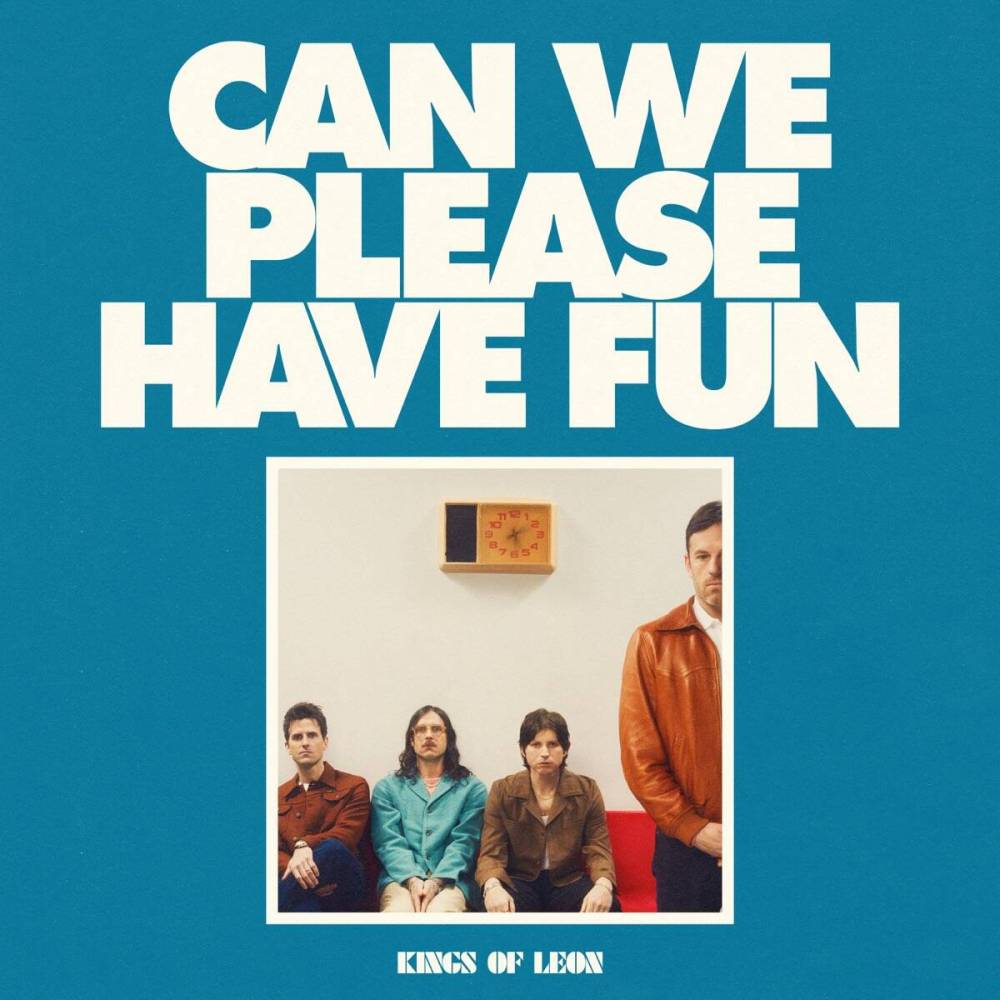
Judging from the 12 tracks on Can We Please Have Fun, it’s time to pull out a saddle. There’s a raw unpredictability to the band’s ninth album, a welcome return to the Kings’ early sawdust-and-spilled-beer days.
Yes, we can definitely have fun here.
Brothers Caleb, Jared and Nathan Followill, and cousin Matthew Followill have put out the new album 21 years after their debut, Youth & Young Manhood and it’s more like their first recordings and easily their best in years.
A punky, garage feel flows through many of the tracks, with the bass and drums cranking and Caleb Followill’s voice cracking on tracks such as Hesitation Generation and Nothing to Do. Actual Daydream has a country-infused indie vibe, and first single Mustang is angular and strutting, while Don’t Stop the Bleeding is a sultry arena banger.
But it’s Split Screen that is the album’s brightest track, a slow burn built around a guitar noodle with enigmatic lyrics that nod to a mid-life crisis and parental angst. It’s hypnotic, and easily one of the band’s best, the perfect mix of minimalist mixed with coiled power.
Lyric-wise, sex on fire has been replaced by crying babies on airplanes and hair extensions. But this is a band that even in midlife is embracing their inner mustangs, not kitties. “If I could be so bold all the time,” go the lyrics to Split Screen — perhaps a prayer for them, and for us. ★★★★ out of five
Stream: Split Screen; Nowhere to Run
— Mark Kennedy, The Associated Press
POP
Dua Lipa
Radical Optimism (Warner)
Dua Lipa’s Radical Optimism has an amusing album cover, two songs about illusionists and the year’s most succulent bass playing. What it doesn’t have is the kind of detailed celebrity meta-narrative that’s come to define — and to propel — the superstar pop LP in music’s parasocial age.

The 28-year-old London-born singer might disagree: Lipa has been talking up her third studio album as a meditation on hard-won emotional maturity à la Ariana Grande’s Eternal Sunshine or Kacey Musgraves’ Deeper Well.
Yet because Lipa’s lyrics are very bad — “If these walls could talk, they’d tell us to break up,” she sings at one point — this concept doesn’t really come together. And, besides, a quest for emotional maturity really misses the whole point of Dua Lipa, which is being coolly above it all in the pursuit of earthly pleasure.
So Radical Optimism raises an interesting question: in this era of the endlessly annotated The Tortured Poets Department can a pop album succeed without functioning as a referendum on fame or as a work of musicology? Is it enough just to deliver a bunch of loosely connected bangers and bops?
At its best, Radical Optimism answers yes. Lipa has style and attitude to spare; her singing is sly, throaty, slightly Bond-girl conspiratorial. Working with a crafty studio team, the 11 songs are filled with a wonderful array of sounds and textures: tick-tocking drums, silky guitars and synths that sparkle and growl. And those bass lines! Truly nasty stuff.
The album is firmly rooted on the dance floor. These Walls is a shimmering soft-rock jam with echoes of Fleetwood Mac, while Anything for Love starts out as a spare piano ballad before blossoming into chewy, Off the Wall-ish funk.
There’s something refreshing about the opportunity Radical Optimism offers to ignore all the superstar mythologizing and simply take in Lipa’s music as theatre — to savour its energy and colour the way we once did ABBA, to name one clear influence from a time when music made far more room for fantasy. ★★★ out of five
Stream: Houdini; Illusion
— Mikael Wood, Los Angeles Times
Andy Milne and Unison
Time Will Tell (Sunnyside)
Hamilton-born pianist/composer Andy Milne’s new album is simply a stunner. His trio, Unison, features bassist John Hébert and drummer Clarence Penn, who are joined by Ingrid Laubrock on saxophone and koto player Yoko Reikano Kimura at various points. They are both long-time colleagues of Milne and add a wonderful scope to the music.
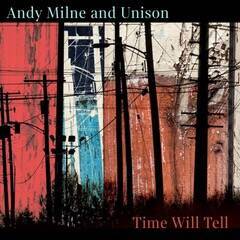
Aside from the fact this is beautiful, complex and fascinating trio jazz, there is a tangible depth of emotion. Milne’s previous release acknowledged his (successful) fight with cancer. This one chronicles his search for his birth family, having been adopted as an infant. His wife’s gift of an Ancestry.com test changed his life, and he displays powerful feelings in a lovely gift of music.
The music itself is complex harmonically and rhythmically. Overwhelmingly introspective and meditative, the mood is still “up.” The track Lost and Found — Reprise can only be described as joyful. The other members of the trio offer their own compositions, such as drummer Penn’s Papounet, his children’s name for their grandfather. The opening track, Purity of Heart, has saxophonist Laubrock trading ideas with Milne within a shifting metre.
I was struck throughout with the sense of family that underpins the music. The “family” here is obviously the lost connection he has just found, but it includes the members of his band as they link ideas and mood in a way that confirms their affection for each other. It makes the album not only a treat to listen to but a confirmation of the power of family and shared appreciation for others. The listener simply feels better for having heard it.
The final track, Apart, offers an exquisite, gentle coda to the album. Highly recommended. ★★★★½ out of five
Stream: Beyond the Porcelain Door; Lost And Found – Reprise
— Keith Black
CLASSICAL
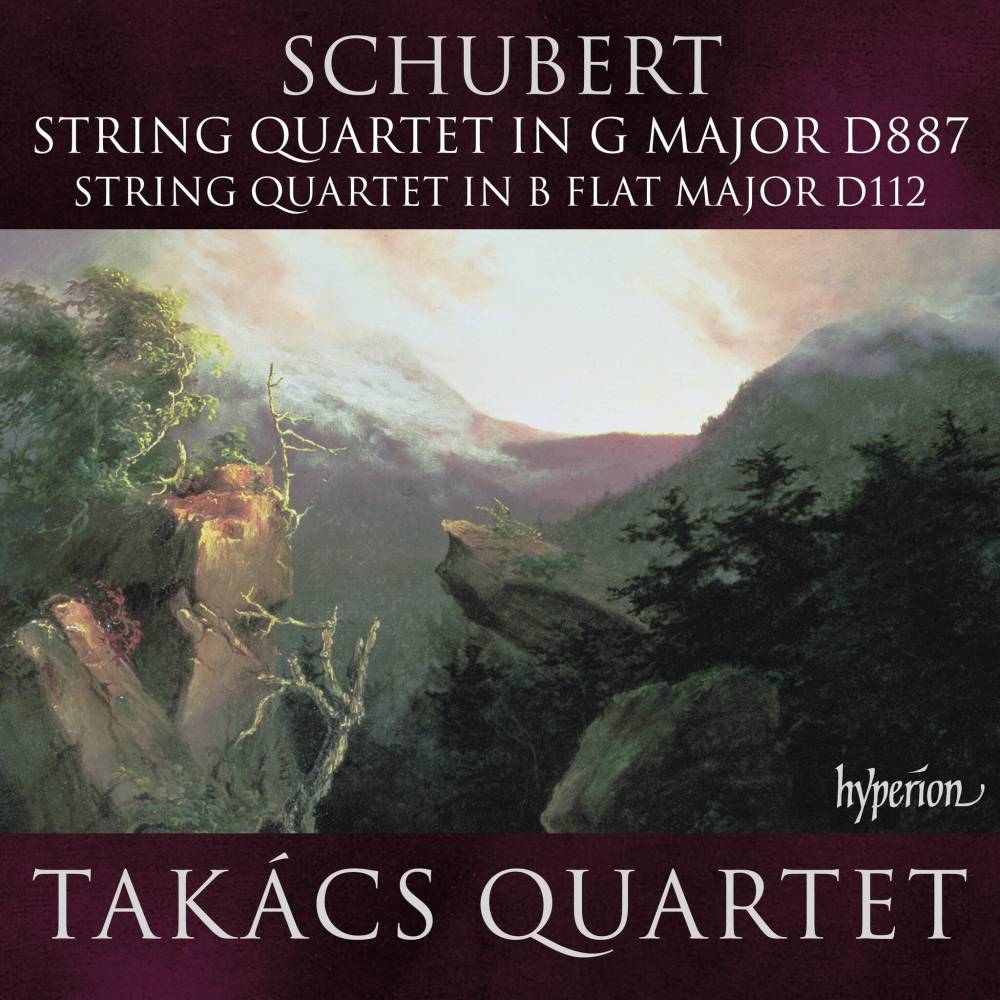
Schubert: String Quartets D112 & 887
Takács Quartet (Hyperion)
The acclaimed Takacs Quartet performs a pair of string quartets by Schubert on this upcoming release — Hyperion’s June Record of the Month — showing the breadth of the Austrian composer’s artistry throughout his all-too-brief career.
First up is String Quartet No. 15 in G major, D887, dated 1826 and on par with Schubert’s beloved masterpiece, his string quintet a.k.a. the Trout, or his Great C major symphony.
The well-knit ensemble — comprised of Edward Dusinberre, violin I; Harumi Rhodes, violin II; Richard O’Neill, viola; and Andras Fejer, cello — infuse each of its four movements with dramatic intensity, including its fiery opener, Allegro molto moderato, replete with dotted rhythms. Another highlight is the crisply rendered finale, Allegro assai, that hurtles forward as a bristling tarantella.
String Quartet No. 8 in B flat major, D. 112, penned by Schubert at age 17, sees the players tackling its virtuosic technical demands with aplomb, while bringing to life its more expansive, sonorous textures, including Dusinberre’s opening theme in the Allegro ma non troppo. Its second movement, Andante sostenuto, particularly highlights the group’s well-honed lyricism, with the violins sharing its subdued theme, recalling Haydn’s Seven Last Words of Christ.
This is followed by a rollicking Menuetto: Trio, before ultimately leading to the Presto finale, its rapid figuration tossed off like child’s play while affirming the prodigious gifts of this young composer with so much more to say. ★★★★ out of five
STREAM THIS/THESE: String Quartet No. 15 in G major, D887, ‘Allegro Assai’; String Quartet No. 8 in B flat major, D. 112, ‘Allegro ma non troppo’
– Holly Harris
History
Updated on Friday, May 10, 2024 6:20 AM CDT: Rearranges images